Shiur summary (draft from the recording)
R' Yehuda, Natural Ohel, and the Oxen
מודה ר׳ יהודה כמלא אגרוף
Sukkah 21a · lines 10–15 · Tuesday, October 28, 2025
The sugya
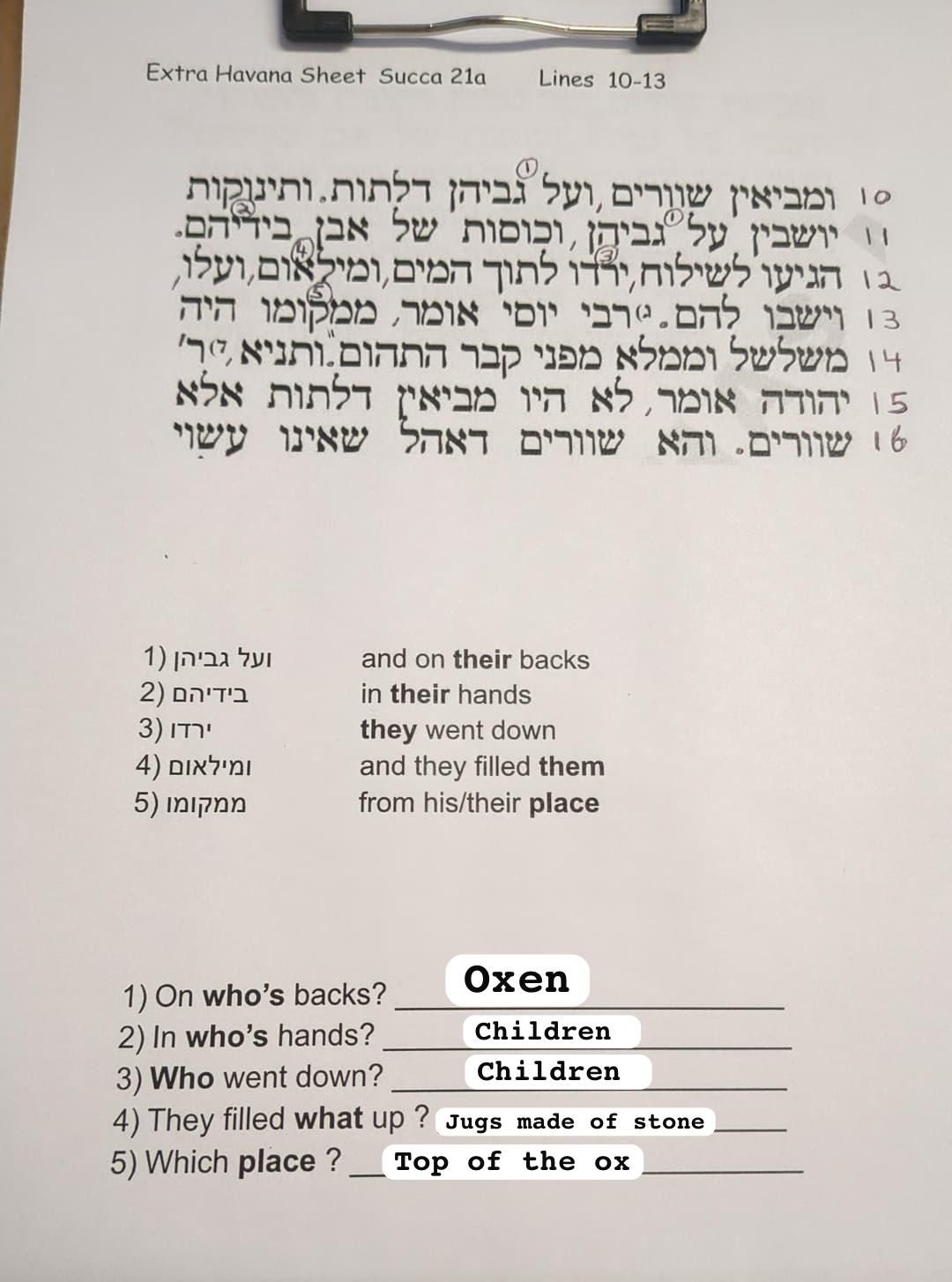
The shiur finished the Mishnah in Parah about the children who were carried on oxen to the Shiloach to draw water for the Parah Adumah. It then learned the Gemara's contradiction in R' Yehuda: he holds an ohel not made by man is not an ohel, yet he says they used only oxen, which are not man-made. Rav Dimi in the name of R' Elazar answers that R' Yehuda concedes when it is the size of a full fist, and a Braisa supports this. The shiur began the next kasha, that a door is many fists in size, then stopped and reviewed.
Step by step (shakla v’tarya)
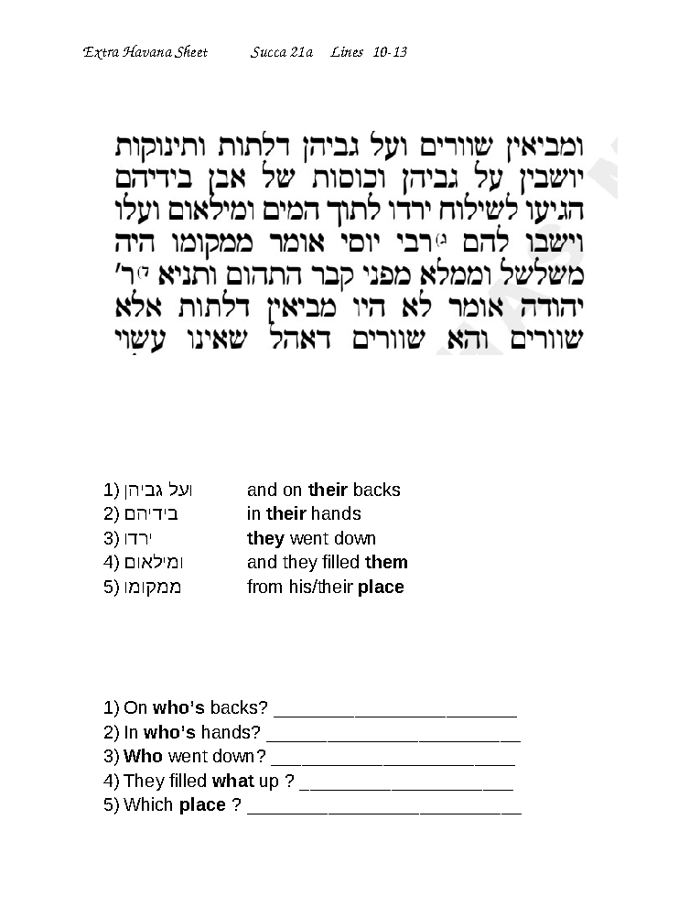
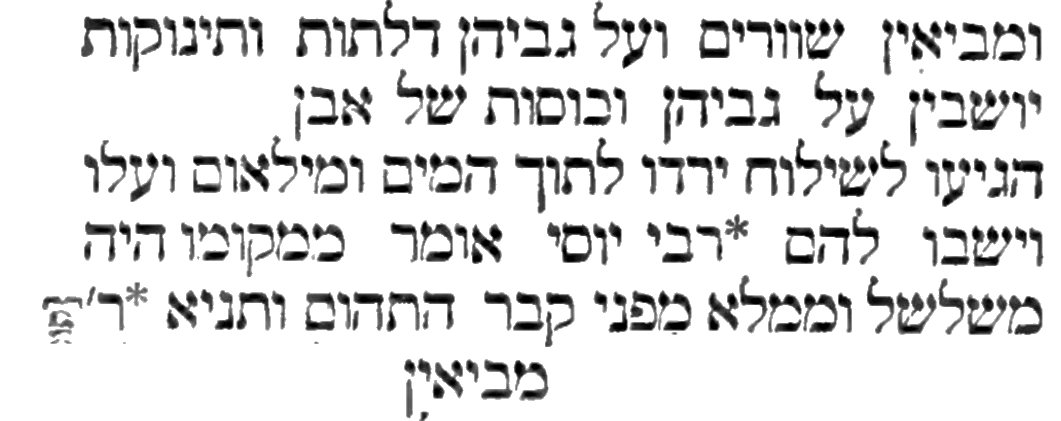
- MishnahContinuing the Mishnah in Parah: they brought oxen with doors on their backs, and the children sat on top holding stone cups. They reached the Shiloach, went down into the water, filled the cups, came up and sat back down.
- Placeholder removed
- ShitahR' Yosi says each child would lower the cup from his place and fill it, because of kever hatehom.
- The RebbiThe Rebbi said this can be learned two ways. One is that it was about the concern of kever hatehom. The other is a separate issue of not filling the keli by hand.
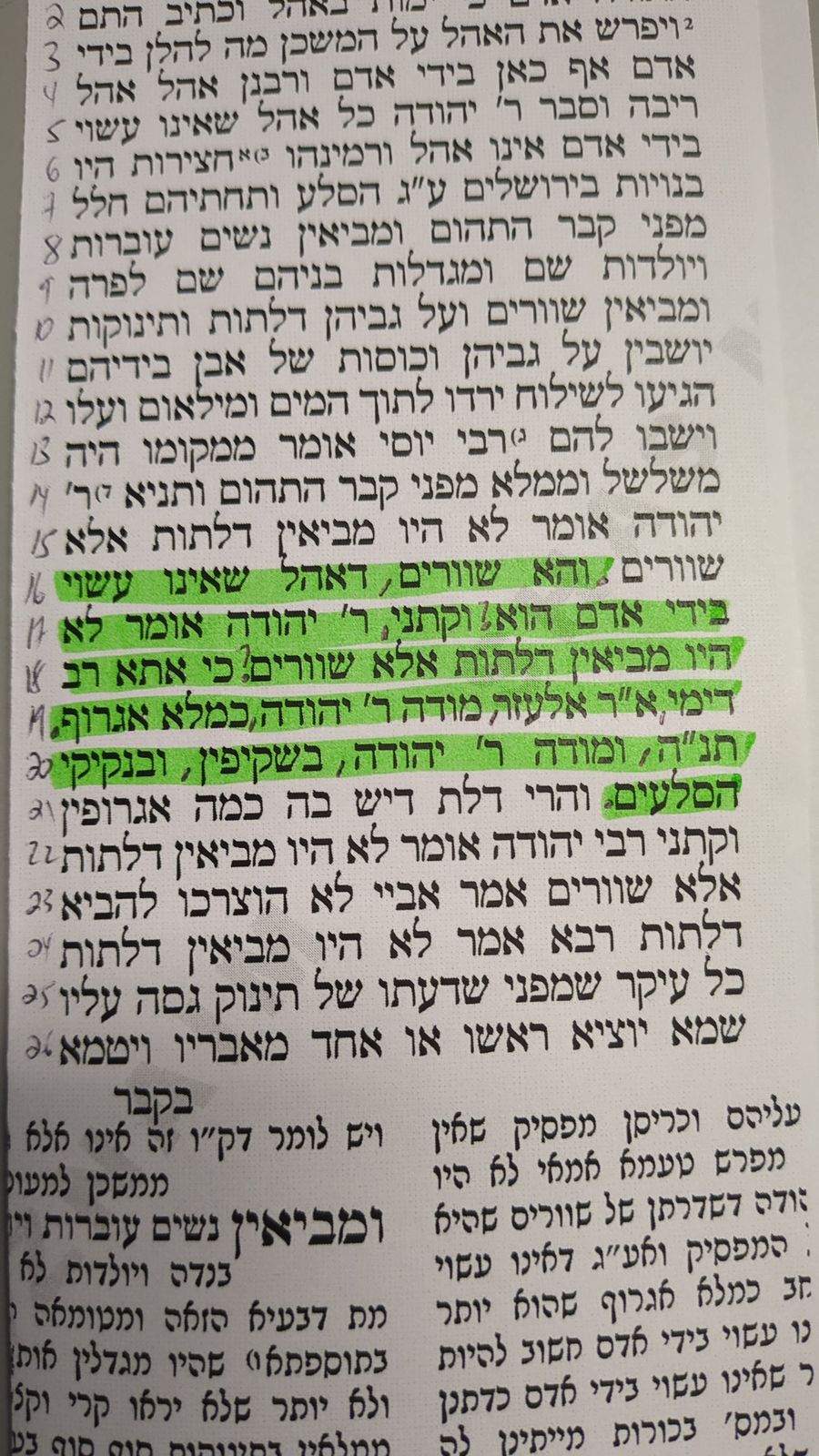
- GemaraLine 14, Braisa: R' Yehuda says they did not bring doors to put on the oxen, only oxen. The children sat directly on the oxen.
- KashaLine 16: but oxen are an ohel not made by man, and R' Yehuda says they would not bring doors, only oxen?
- ChazarahThis is the contradiction set up on line 5. R' Yehuda held, from what was learned at the end of last week, that ohalim formed naturally or haphazardly are not an ohel because they are not made by man.
- The RebbiAn ohel works two ways. It contains tumah so everything under it becomes tamei. It also separates what is underneath from what is on top. Here the ox would be the ohel separating the child on top from tumah that might be beneath.
- TeirutzLine 18: when Rav Dimi came, he said in the name of R' Elazar that R' Yehuda concedes when the ohel is the size of a full fist (k'melo egrof).
- The RebbiAll the natural cases the Chachamim call an ohel are a tefach, and a tefach is technically a fist. R' Yehuda agrees that a bigger, natural ohel the size of a big fist is an ohel.
- Ra'ayahLine 20, Tanya nami hachi: R' Yehuda concedes regarding shkifin (uprooted boulders) and nikikei hasla'im (large crevices of rocks).
- MaskanaRock crevices and uprooted boulders are not made by man, yet R' Yehuda agrees they are an ohel because they are larger. So R' Yehuda is not inconsistent.
- The RebbiR' Yehuda is generally stricter regarding ohel, as seen in the Mishnah about sleeping under the bed. Here too, a natural, haphazard ohel can work, but only if it is bigger than a small crack.
- KashaLine 21: but a door has many fists in it. Why then does R' Yehuda say not doors, only oxen?
- Discussion with the talmidim on what the problem with doors could be: their height off the ground, or the width of the ohel. The Rebbi said that at this stage the Gemara reads R' Yehuda as saying doors are no good, though doors should be at least as good.
- The RebbiA door has both: it is wider and it is deeper. It is also not made out of an animal. The shiur stopped here, to continue tomorrow.
- ChazarahReview of lines 14-20: the Braisa, the kasha from the oxen, Rav Dimi's teirutz, and the supporting Braisa.
Kashas
- R' Yehuda holds an ohel not made by man is not an ohel. Yet he says they brought only oxen, which are an ohel not made by man.
- A door has many fists in it, so why does R' Yehuda say they did not bring doors, only oxen?
Teirutzim
- Rav Dimi in the name of R' Elazar: R' Yehuda concedes when the natural ohel is the size of a full fist.
Mareh mekomos
- Mishnah in Maseches Parah: the children on the oxen drawing water from the Shiloach. The perek and mishnah number are unclear in recording.
- Braisa: R' Yehuda concedes regarding shkifin and nikikei hasla'im. Brought as support for Rav Dimi's teirutz.
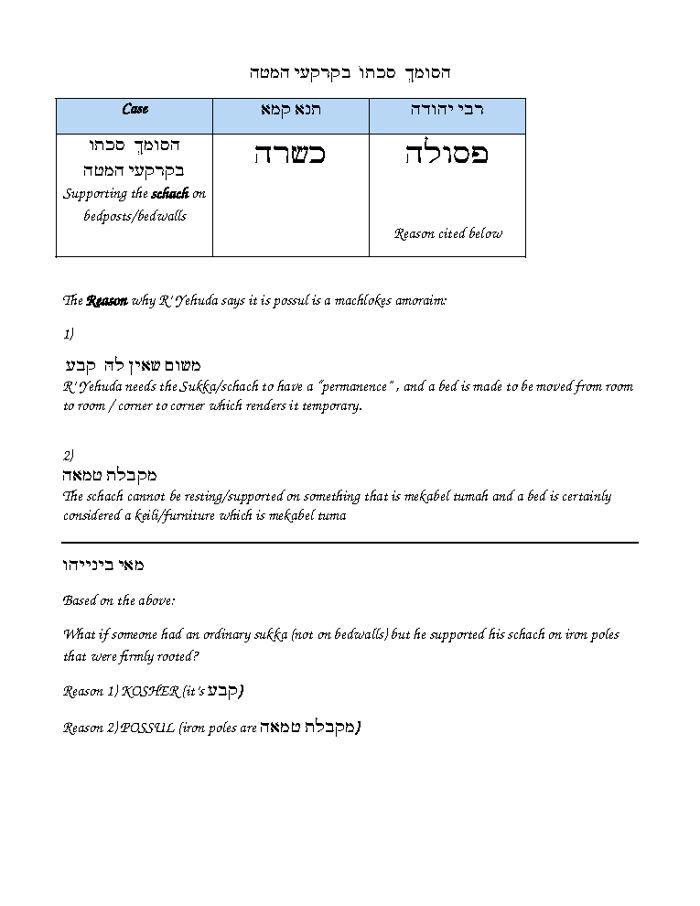
- The Mishnah of sleeping under the bed. Shows R' Yehuda is stricter regarding ohel.
- One of the Rishonim on the size of the fist. The Rebbi was unsure, and the wording is unclear in recording.
The Rebbi’s chiddushim
- An ohel both contains tumah within it and separates what is above it from what is below it. Here it is used as a separation between the child and tumah underneath.
- 'Modeh' is like 'modim': both admitting and thanking Hashem are a kind of submission. So 'modeh R' Yehuda' means R' Yehuda concedes.
- Example of shkifin: when a highway is cut through a mountain of rock, the large gaps that form are a bigger natural ohel.
- Tip: underline all the names when learning. It shows the players and how much of the amud is names.
- A door is wider and deeper than the ox, and it is not made out of an animal.
Unclear in recording
- Which perek and mishnah in Parah was cited.
- The exact citation about the size of the fist, and which Rishon says 'size of a small face'.
- The talmidim's discussion of the difference between a crevice and an animal, and whether a door would help if the animal died.
- The back-and-forth on whether the door's problem was height off the ground or width. No firm conclusion was reached.
Drafted from the recording of the shiur, for chazarah. Torah terms follow the Rebbi’s own words; anything that could not be made out is marked “unclear in recording”. Tap a time to hear that point. Corrections welcome.