Shiur summary (draft from the recording)
Oxen, Doors and Beds as Ohel for R' Yehuda
והרי מטה
Sukkah 21a line 21 – 21b · Thursday, October 30, 2025
The sugya
The shiur reviewed the kasha from the door: R' Yehuda holds that anything k'melo egrof is an ohel even if not man-made. It covered Abaye's and Rava's answers and the Braisa that supports Rava. It then went through the new kasha from the bed, under which R' Yehuda slept in the sukkah. The Gemara goes back and forth: a bed is made for its top, oxen shelter shepherds, a bed shelters shoes. It ends with Rava: oxen are made to shield their own innards, learned from the pasuk 'Or uvasar talbisheni'.
Step by step (shakla v’tarya)
- ChazarahReview of yesterday's kasha (line 21): R' Yehuda holds anything k'melo egrof need not be man-made to be an ohel. A door has many egrofim, so why does R' Yehuda say they did not bring doors, only oxen?
- TeirutzAbaye (line 23): they did not need to bring doors. Oxen were good enough. Doors would have been fine too.
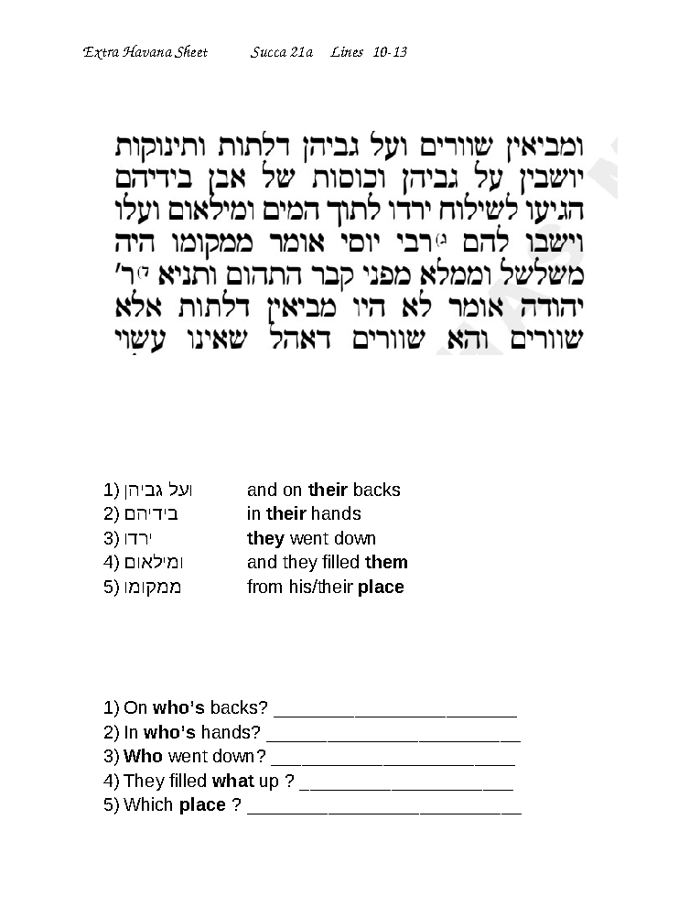
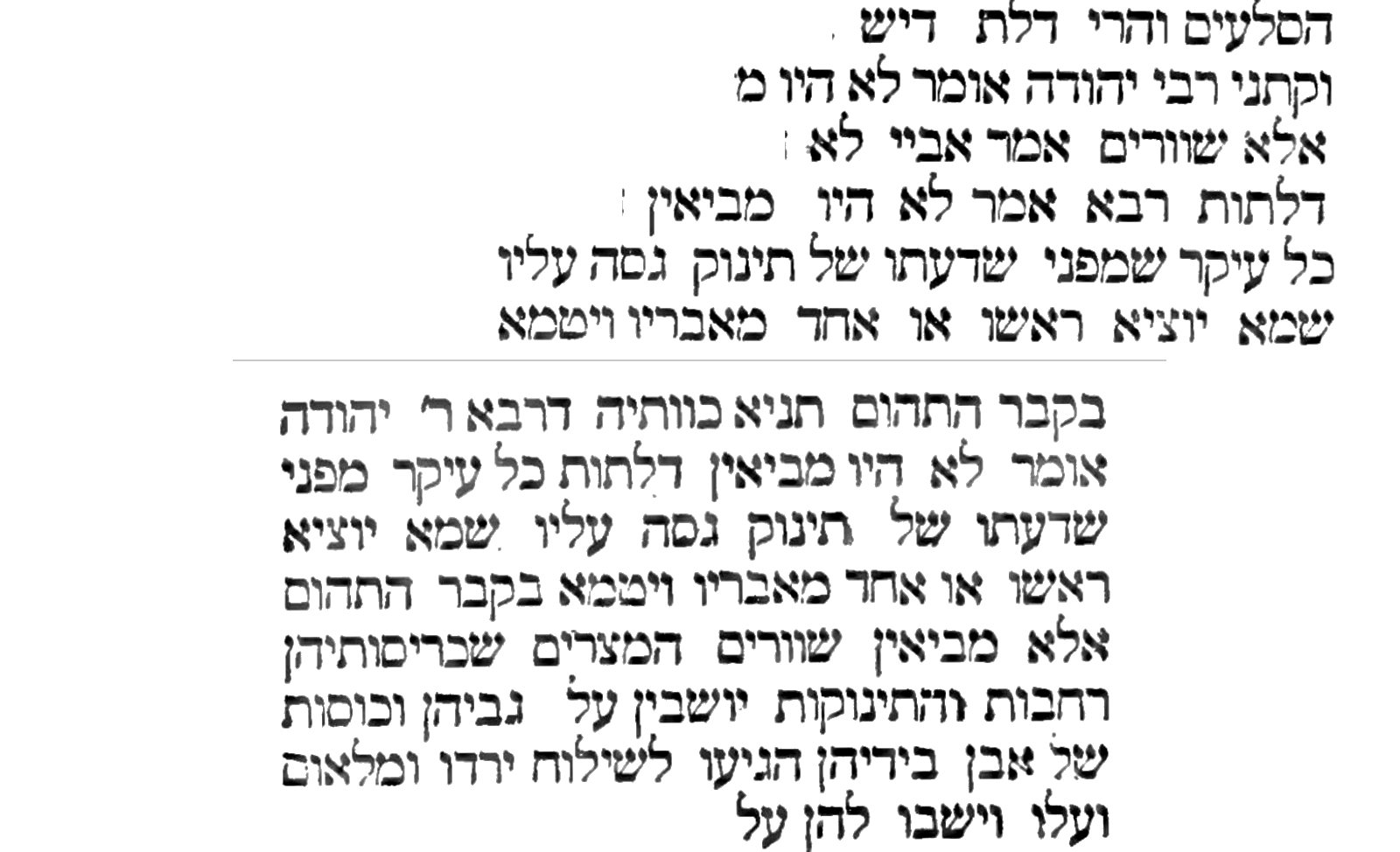
- TeirutzRava: a completely different, practical reason that has nothing to do with whether it is an ohel. A child's mind is too confident (da'ato gasah) on a door. He may stick out his head or a limb and become tamei from the kever hatehom.
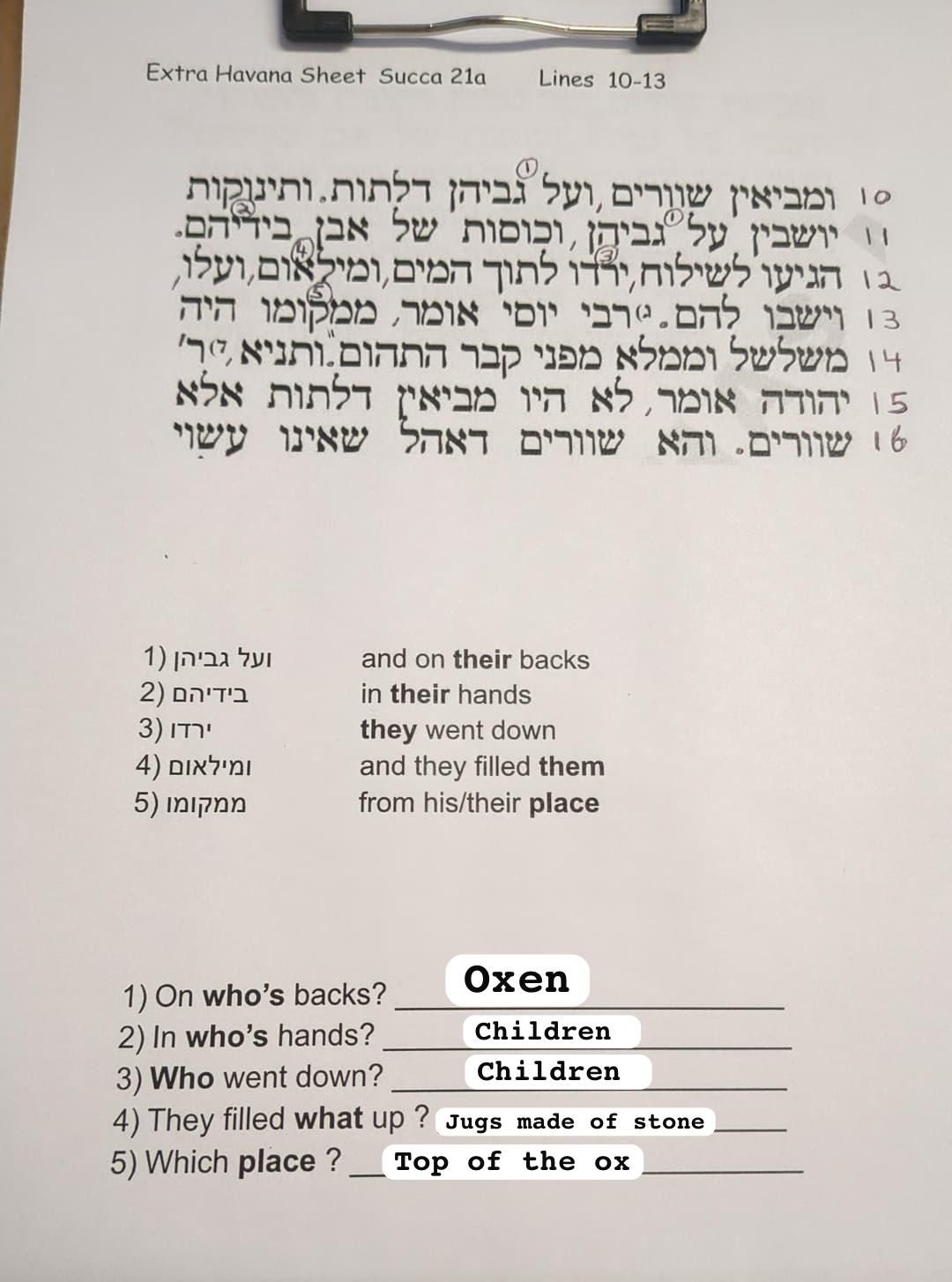
- Ra'ayahA Braisa like Rava (lines 1-8). R' Yehuda says no doors at all, because of the child's confidence. Instead they brought Egyptian oxen with wide bellies. The children sat on top holding stone cups, went down at the Shiloach and filled them, came back up and sat on top, and brought the water back to the Mikdash.
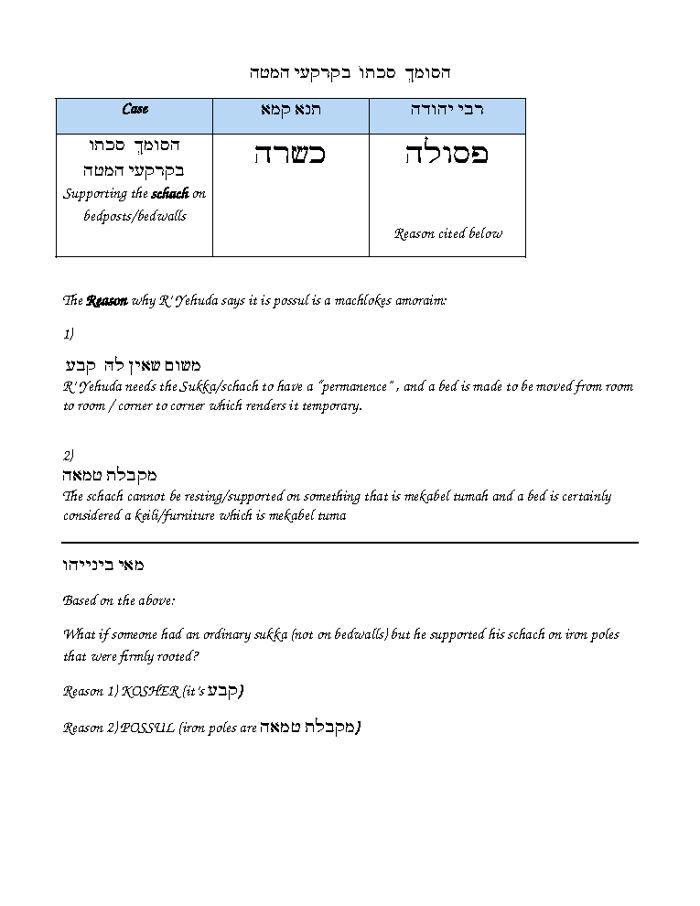
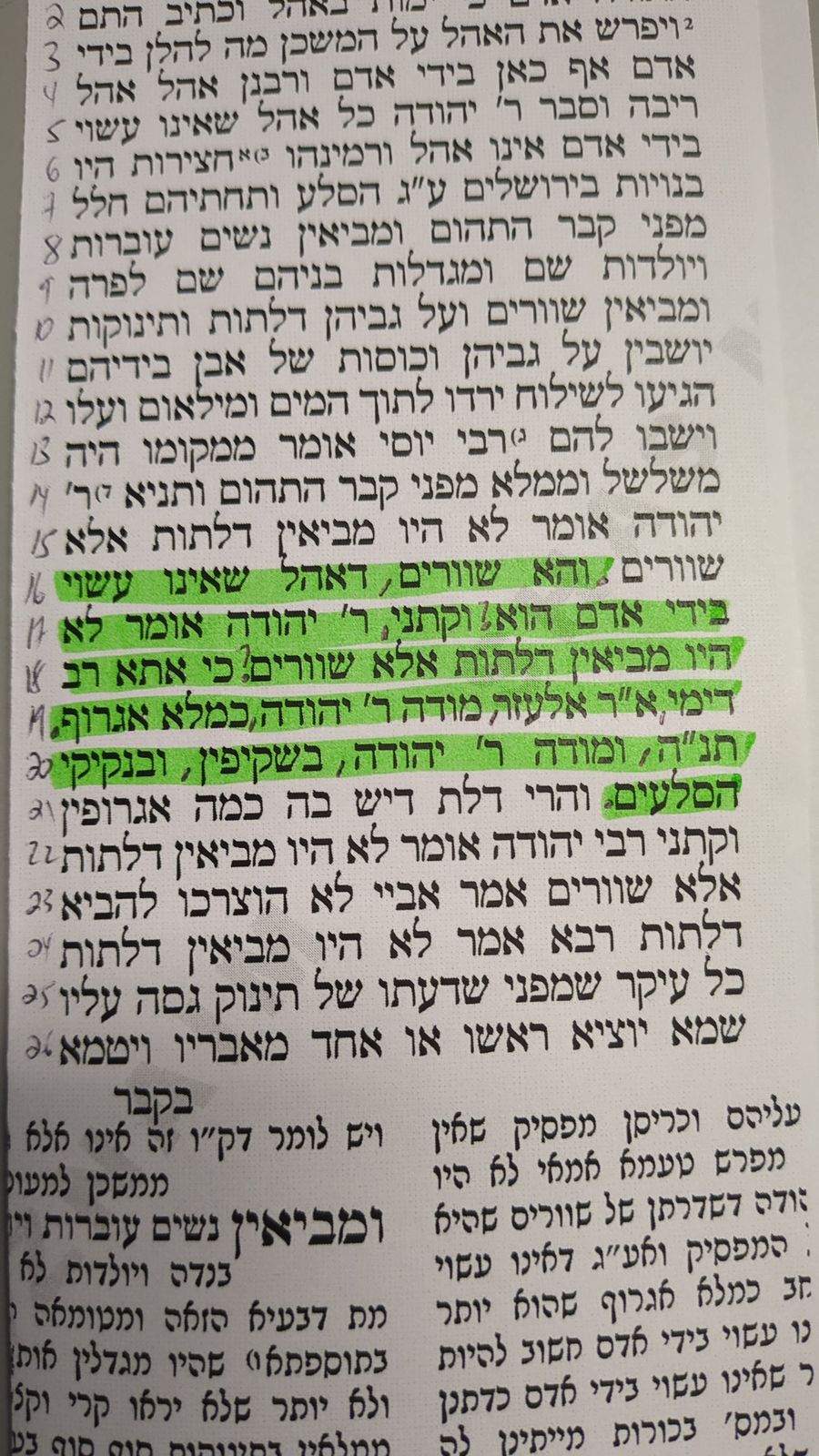
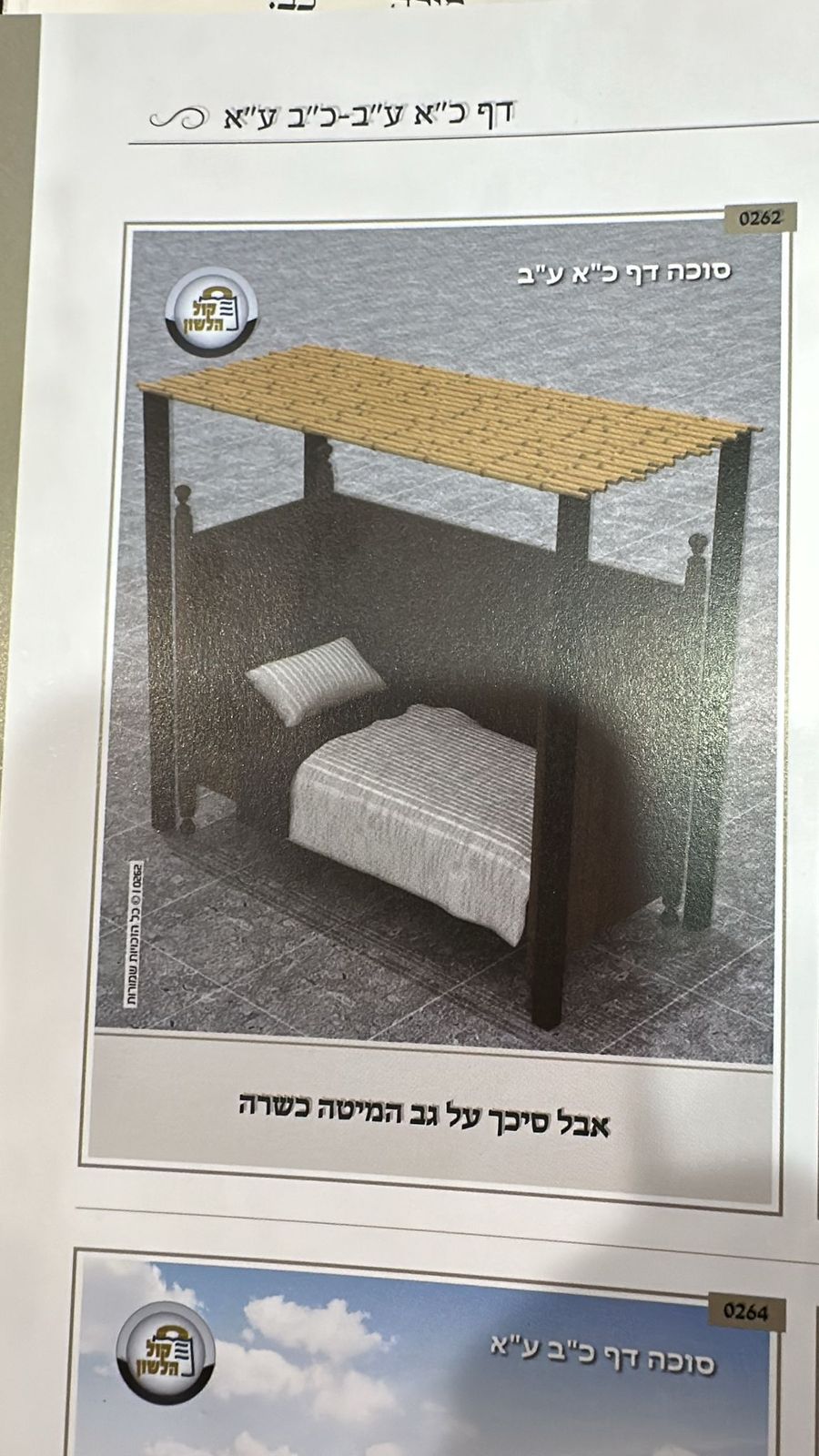
- KashaThe kasha on line 8, going back to the first Mishnah (machlokes Tanna Kamma, R' Yehuda and R' Shimon): v'harei mitah. A bed has many egrofim. Yet our Mishnah quotes R' Yehuda (line 10): we used to sleep under the bed before the zekeinim.
- The Rebbi explains the difficulty: by R' Yehuda's own parameters a bed is a large ohel, so why was it allowed? Clearly R' Yehuda has more considerations for what makes an ohel. The Chachamim and R' Shimon say it is a problem to sleep under a bed.
- TeirutzLine 11: shani mitah, hoil u'legabah asuyah. A bed is different, since it is made for its top. The purpose of a bed is not to be an ohel.
- The RebbiIn discussion with a talmid about crevices: a crevice has no existence other than being a crevice. Something naturally occurring differs from something a person makes specifically not for an ohel. So we must look at the purpose of the item, not just its size.
- KashaLine 12: shvarim nami l'gabam asuyim. Oxen too are made for their top, to be ridden on or eaten. So why are they an ohel?
- TeirutzKi asa Ravin amar R' Elazar: oxen are different, since they shield the shepherds in the sun from the heat and in the rains (the rainy season) from the rain. The shepherds would lie down under the oxen's bellies in the open fields. So an ox is also meant for the cavity underneath it.
- KashaLine 15: i hachi, mitah nami. A bed also shields the shoes and sandals underneath it. It is not a human purpose, but it is still a purpose. So R' Yehuda's allowing sleeping under a bed again does not fit.
- TeirutzElla amar Rava: oxen are different, since they are made to shield their own bnei me'ayim (intestines, innards). This is a scriptural reason.
- Ra'ayahRava brings a pasuk: 'Or uvasar talbisheni uva'atzamos vegidim…' You clothe me with skin and flesh, and with bones and sinews. The Rebbi said he was not sure of the context.
- MaskanaWhat makes the ox an ohel is not the shepherds under it, and the shoes under a bed do not make it one. Rather, the pasuk calls a body of bones and sinews a shelter.
Kashas
- A door has many egrofim, so why does R' Yehuda say they did not bring doors, only oxen?
- V'harei mitah: a bed has many egrofim, yet R' Yehuda slept under the bed in the sukkah before the zekeinim.
- Oxen too are made for their top. Why should they be an ohel?
- I hachi: a bed also shields the shoes and sandals under it.
Teirutzim
- Abaye: they did not need doors, because oxen sufficed.
- Rava: no doors at all, because the child would feel too confident and stick out his head or a limb, becoming tamei from the kever hatehom.
- A bed is different, since it is made for its top.
- Ravin in the name of R' Elazar: oxen shelter shepherds from the sun and the rain.
- Rava: oxen are made to shield their own innards.
Mareh mekomos
- Braisa (lines 1-8) supporting Rava: no doors at all, only Egyptian oxen with wide bellies.
- Our Mishnah, R' Yehuda: we used to sleep under the bed before the zekeinim. Used as the kasha.
- Pasuk 'עור ובשר תלבישני ובעצמות וגידים…', the source for Rava's answer that a living body is called a shelter.
The Rebbi’s chiddushim
- A crevice exists only as a crevice. A man-made item made for another purpose differs, so the item's purpose matters, not just its size.
- Earlier R' Dimi reported in the name of R' Elazar, and now Ravin does. R' Elazar was no longer alive, but they reported what he used to say.
- The whole point of this Gemara is to find the difference between an ox and a bed.
- The pasuk is about a human being, but any living thing's body is called a sukkah, a shelter.
- The ox is an ohel not because of the space underneath it. The sheltering is really in the body itself: the skeleton protects what is inside.
Unclear in recording
- Counting and aligning the lines of the Gemara ('line 37'): unclear in recording.
- Part of the exchange with a talmid about crevices and oxen: unclear in recording.
- A talmid's question about the source, and the Rebbi's answer (sizes of ohel per everyone and per the Chachamim; so far it is a livestock animal used by people): partly unclear in recording.
- The Rebbi said 'here is the magic word' in the pasuk. The word itself was not captured in the recording.
Drafted from the recording of the shiur, for chazarah. Torah terms follow the Rebbi’s own words; anything that could not be made out is marked “unclear in recording”. Tap a time to hear that point. Corrections welcome.