Splitting a Chatzer; Lowering a Tall Sukkah
The sugya
The shiur finished the baraisa about a house smaller than four by four amos, with its last item: brothers and partners do not divide it. The Gemara reinterprets this to mean such a house gets no share in the chatzer, which led into the machlokes Rav Huna and Rav Chisda on how a chatzer is divided. After reviewing the whole list from the baraisa, the Rebbi began the next sugya: a sukkah taller than twenty amos cannot be lowered with pillows and blankets, even if he nullifies them for all of Yom Tov, but straw that he nullifies does count.
Step by step (shakla v’tarya)
- ChazarahReview: the baraisa listed what a house that is not four amos by four amos lacks. The last item is ein ha'achin v'hashutfin cholkin bo.
- GemaraThe Gemara says the reason they do not divide it is that it lacks four amos. This implies that if it had four amos, it could be divided.
- KashaKasha from a Mishnah: ein cholkin es hechatzer until there are four amos for this one and four amos for that one. You must end up with four amos each, not just start with four.
- TeirutzLine 29: rather, say ein bo din chalukah b'chatzer. Such a house has no right to a share in the chatzer.
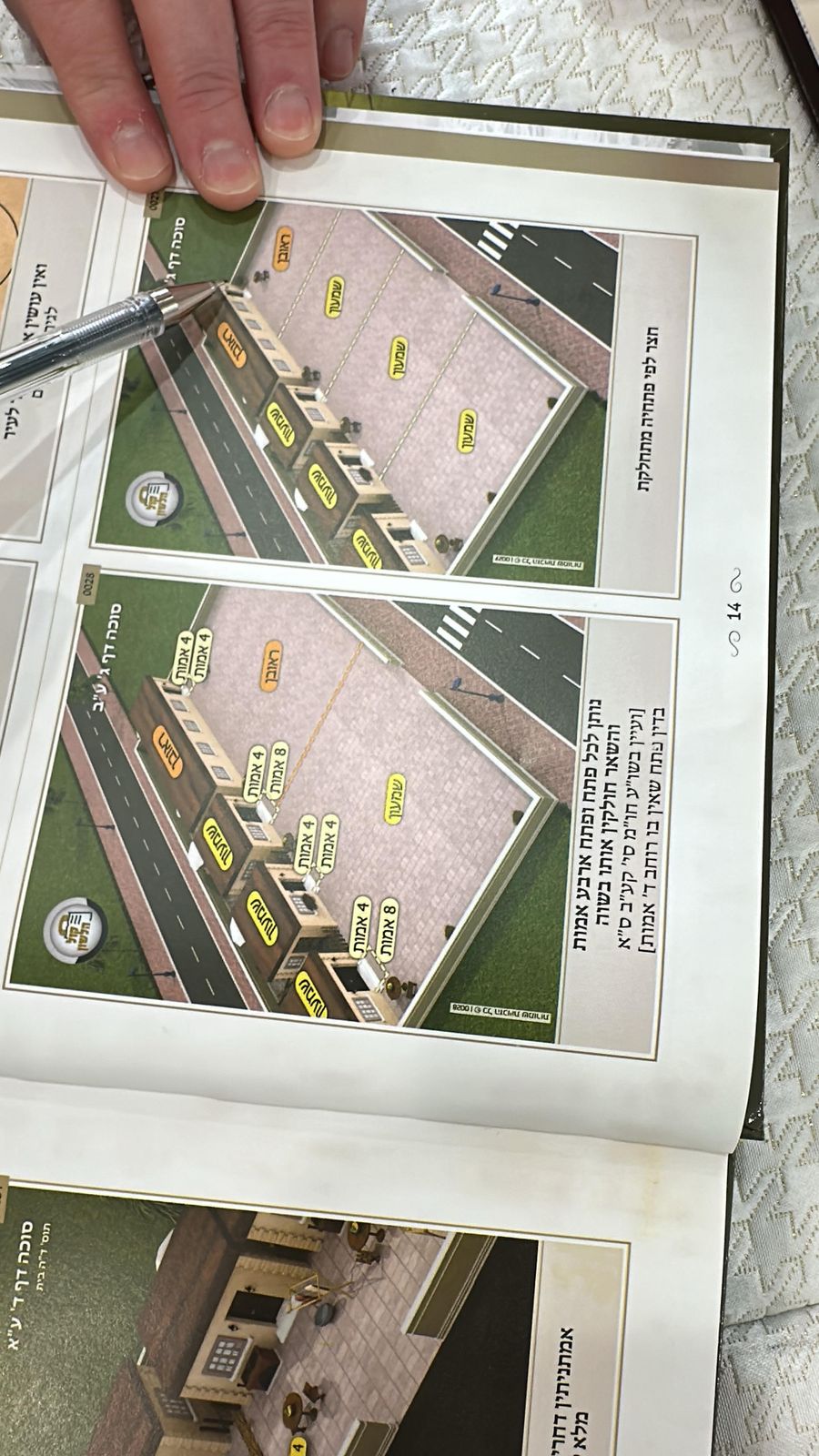
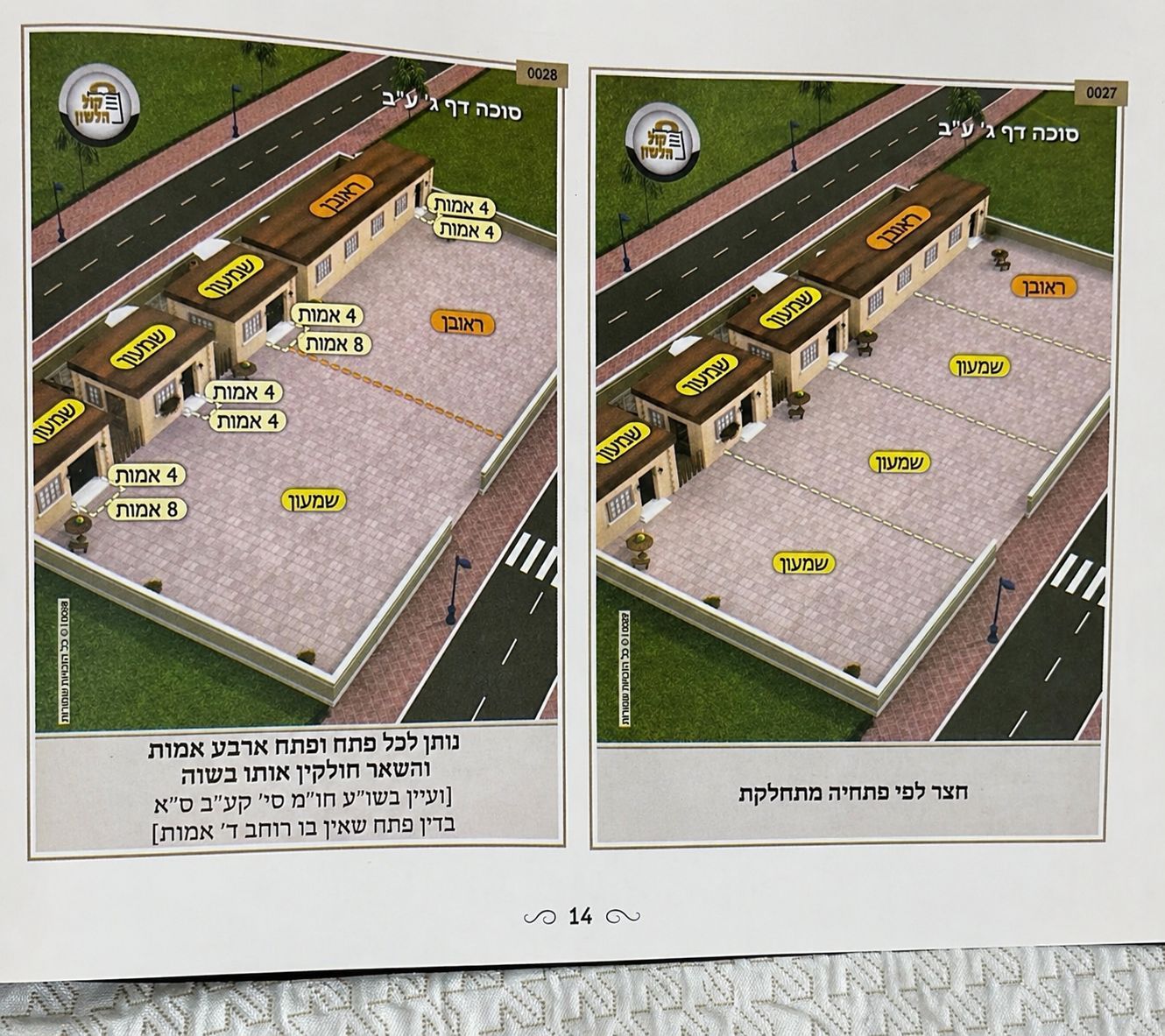
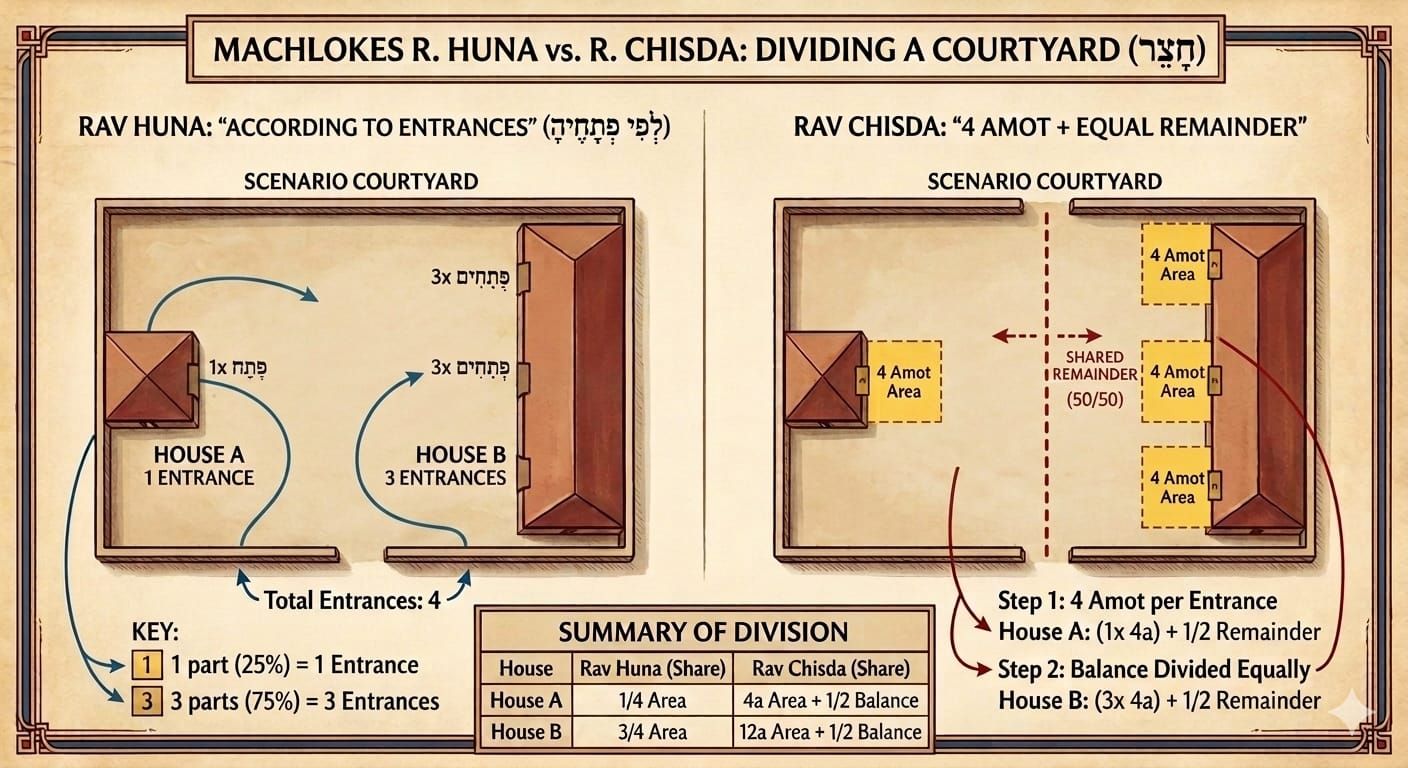
- ShitahRav Huna: a chatzer is divided according to its entrances, not by ownership. If one owner has three entrances and the other has one, the split is 75% to 25%.
- The RebbiThe Rebbi understands that the division will be done sensibly, so each person gets his share in front of his own entrance and can use his house.
- ShitahRav Chisda: each entrance gets four amos of depth, as wide as the entrance itself. The rest is divided equally among the owners, regardless of how many entrances they have or how big the houses are.
- The RebbiExample: one owner has 69 entrances and the other has one. Each entrance gets its unloading space, and the remainder is split 50-50. With three owners, the remainder is split three ways.
- ChazarahSimple summary: according to Rav Huna, each entrance gives you a right to part of the chatzer. According to Rav Chisda, the chatzer is divided by ownership, with room left in front of each door.
- Discussion with the chabura: this is a case of heirs, such as brothers who used one chatzer together and now must divide it. Partners who buy together can divide it however they want, and the Rebbi assumed stipulations could override these rules.
- MaskanaD'hani mili: only a house that stands to be lived in (d'l'mehevei kai) is given chatzer space. A house under four by four stands to be torn down (d'l'mistar kai), so it is not given chatzer space.
- The RebbiWhy it counts as 'for demolition': as with the ibbur case discussed earlier, a thing has to be what it is meant to be. Something sitting in a chatzer is meant to be a house, and a house must be four amos by four amos.
- ChazarahReview of the full list. Five items come from the word bayis in the Torah: mezuzah, maakeh, nega'im, orchei hamilchamah, and batei arei chomah. Three relate to eruvin: shitufei mevaos, eruvei chatzeiros, and placing the eruv. It cannot be an ibbur joining two cities. Last, it has no din chalukah in the chatzer.
- MishnahBack to the Mishnah's machlokes. Seemingly we pasken like the Chachamim, that a sukkah may not be taller than twenty amos. The next cases deal with lowering a sukkah that is too tall.
- GemaraLine 35: hasa gevohah me'esrim amah u'va l'ma'atah b'kesasos u'kesasos lo havei miyut. Raising the floor with pillows and blankets does not count as lowering the sukkah.
- The RebbiThe core question is what you can put down that halachically counts as your floor. Gravel or stones are more permanent and floor-like. Nobody would accept pillows as your floor.
- GemaraV'af al gav d'vatlinhu l'chulhu: even if he declared the pillows and blankets nullified to the floor for all seven days, it still does not work.
- TeirutzThe reason is mishum d'batlah da'ato etzel kol adam. His intent is void against how normal people think. A passerby would say no one leaves pillows and blankets on the floor for seven days.
- GemaraTeven u'vitlo havei miyut: straw that he nullifies does count as lowering the sukkah.
- The RebbiStraw is a legitimate floor. Someone might take it for his animals, but leaving it down for seven days is not strange, so we do not say batlah da'ato for straw.
- The RebbiThere is a scale of what counts as floor: the more earthy, the more likely it works. The less floor-like, the more bittul is needed. Pillows never work, even if he puts up a sign declaring them his floor.
- ChazarahClosing review: the reading of d'hani mili bayis d'l'mehevei kai through teven u'vitlo havei miyut.
Kashas
- The baraisa implies a house with four amos could be divided. But the Mishnah says a chatzer is not divided unless each person ends up with four amos.
- He nullified the pillows and blankets for all seven days. Why can't they be his floor?
Teirutzim
- Rather, say ein bo din chalukah b'chatzer. The house has no right to a share of the chatzer.
- A house meant to be lived in is given chatzer space. One meant to be torn down (d'l'mistar kai) is not.
- Batlah da'ato etzel kol adam. His personal intent does not count against the way everyone else views pillows and blankets.
Mareh mekomos
- Mishnah: ein cholkin es hechatzer ad sheyehei bah arba amos l'zeh v'arba amos l'zeh. Brought as the kasha on the baraisa.
- The Mishnah's machlokes on a sukkah taller than twenty amos. The Rebbi said that seemingly we pasken like the Chachamim.
The Rebbi’s chiddushim
- Under Rav Huna, the proportional split is done sensibly, with each person's share in front of his own entrances.
- The division rules apply to heirs, such as brothers splitting a family chatzer. Partners or stipulations can set the split differently.
- He noted the Gemara's interesting choice of the word d'l'mistar kai: the small house has no purpose and is meant for demolition.
- Like the ibbur case, the small house fails because it is not what it is meant to be. Something in a chatzer is meant to be a house, and a house needs four by four.
- The sugya is really asking what we would accept as your floor.
- Floor material works on a scale. The more earthy the material, the less bittul is needed. Pillows and blankets are too extreme to ever work.
Unclear in recording
- Part of the discussion on why a small house counts as d'l'mistar kai (a caretaker's room, an entrance with no house) was a back-and-forth with the chabura and is unclear in recording.
- In explaining bittul he compared it to something 'melted in'. The thing being compared is garbled and unclear in recording.
- He mentioned mefarshim who work through the different amora'im on this question, but the names and their points are unclear in recording.
- The names of the parties to the Mishnah's machlokes on twenty amos are garbled and unclear in recording.
Drafted from the recording of the shiur, for chazarah. Torah terms follow the Rebbi’s own words; anything that could not be made out is marked “unclear in recording”. Tap a time to hear that point. Corrections welcome.