Shiur summary (draft from the recording)
Sukkah Meduvleles: Rav and Shmuel
סוכה המדובללת
Sukkah 21b line 46 – 22a · Thursday, November 6, 2025
The sugya
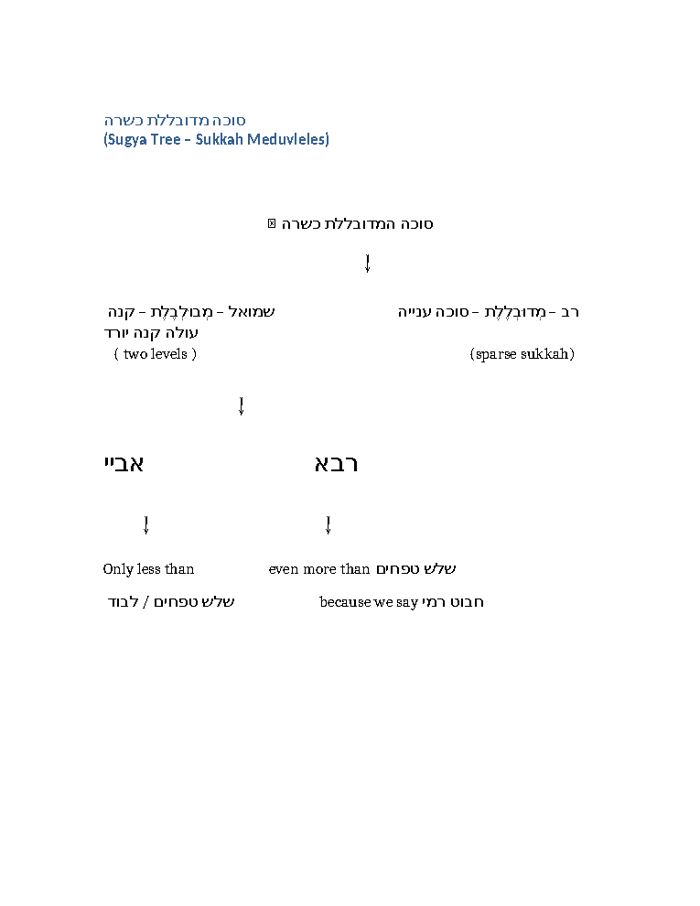
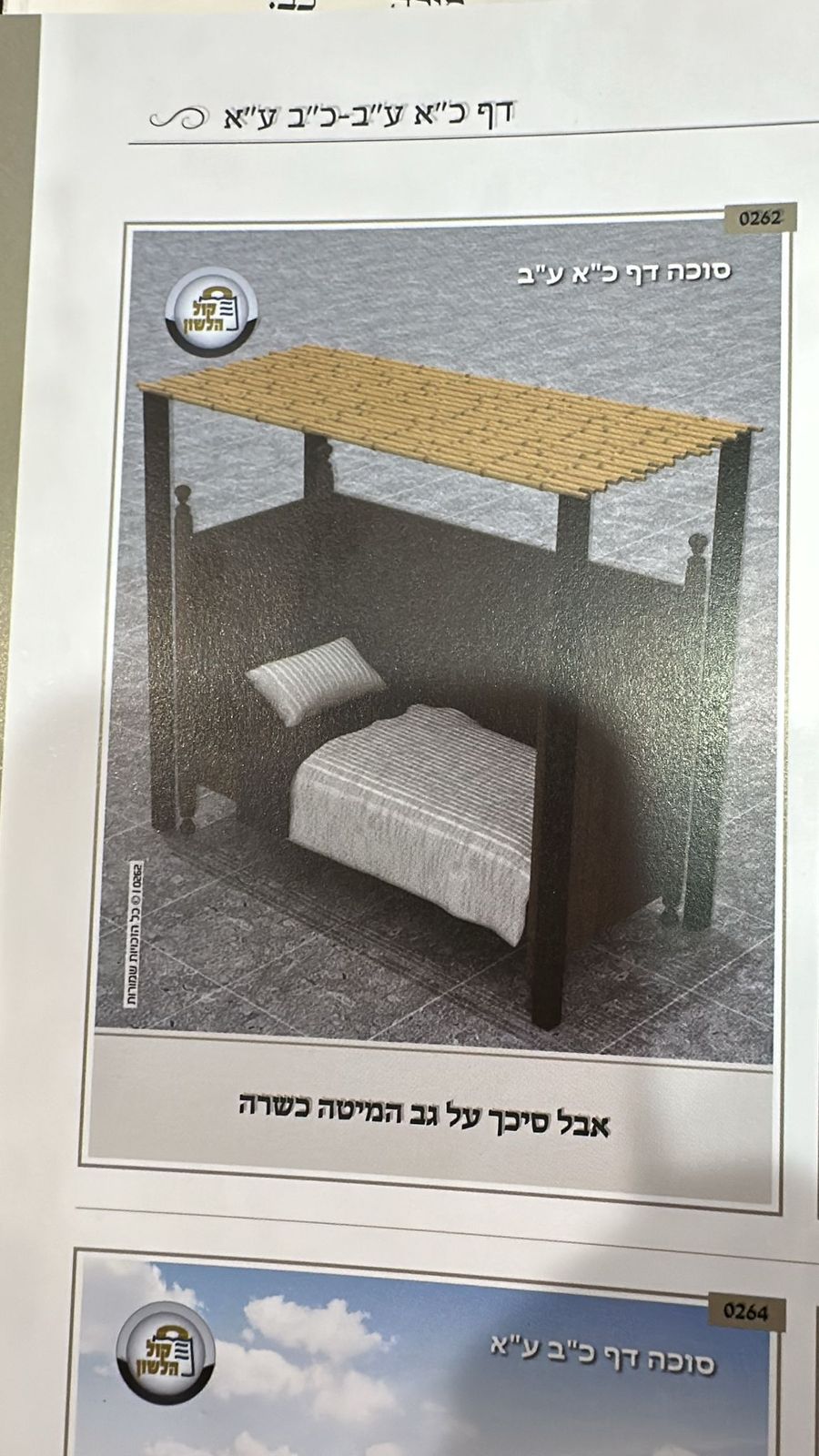
The shiur finished the previous Mishnah with Abaye: Rabbi Yehuda's psul applies only when the schach is supported by the bed, not when it is simply over the bed. The new Mishnah teaches that a sukkah meduvleles, one whose shade is more than its sun, and one so thick that the stars cannot be seen are all kosher. The Gemara brings a machlokes Rav and Shmuel on what meduvleles means: a poor, skimpy sukkah, or staggered schach on two levels. This leads to whether the first part of the Mishnah is one case or two.
Step by step (shakla v’tarya)
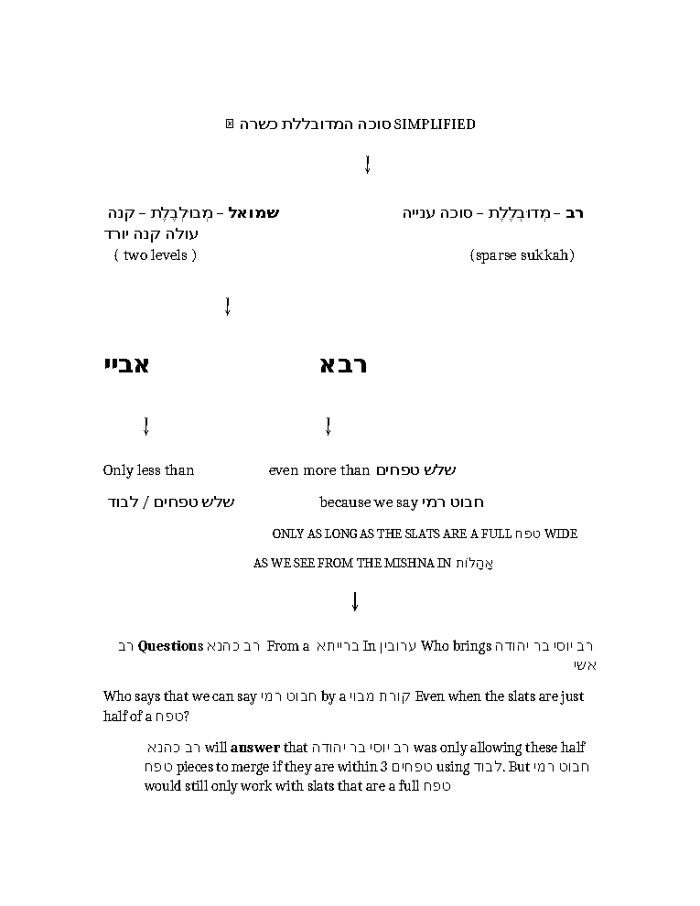
- GemaraAbaye: לא שנו אלא סמך. Rabbi Yehuda's psul is only when the schach actually leans on the bed. If the schach is put up in a regular kosher way over the bed and is not supported by it, it is kosher.
- GemaraNeither reason applies. For the one who says the problem is that it is not permanent: moving the bed does not move the schach, so it is permanent. For the one who says the problem is supporting it with something mekabel tumah: it is not supported by the bed.
- The Rebbi introduced the new Mishnah as a series of small, interesting sugyos with new dinim of sukkah that come together when seen as a whole.
- MishnahMishnah: סוכה המדובללת ושצילתה מרובה מחמתה כשרה. The meaning of meduvleles is left open for now, and whether this is one case or two will be seen.
- The RebbiUsually Amoraim argue about what the Tannaim meant. Here Rav and Shmuel argue about what a word in the Mishnah means.
- KashaWhy does the Mishnah need to say that shade more than sun is kosher? We already know this from the first perek.
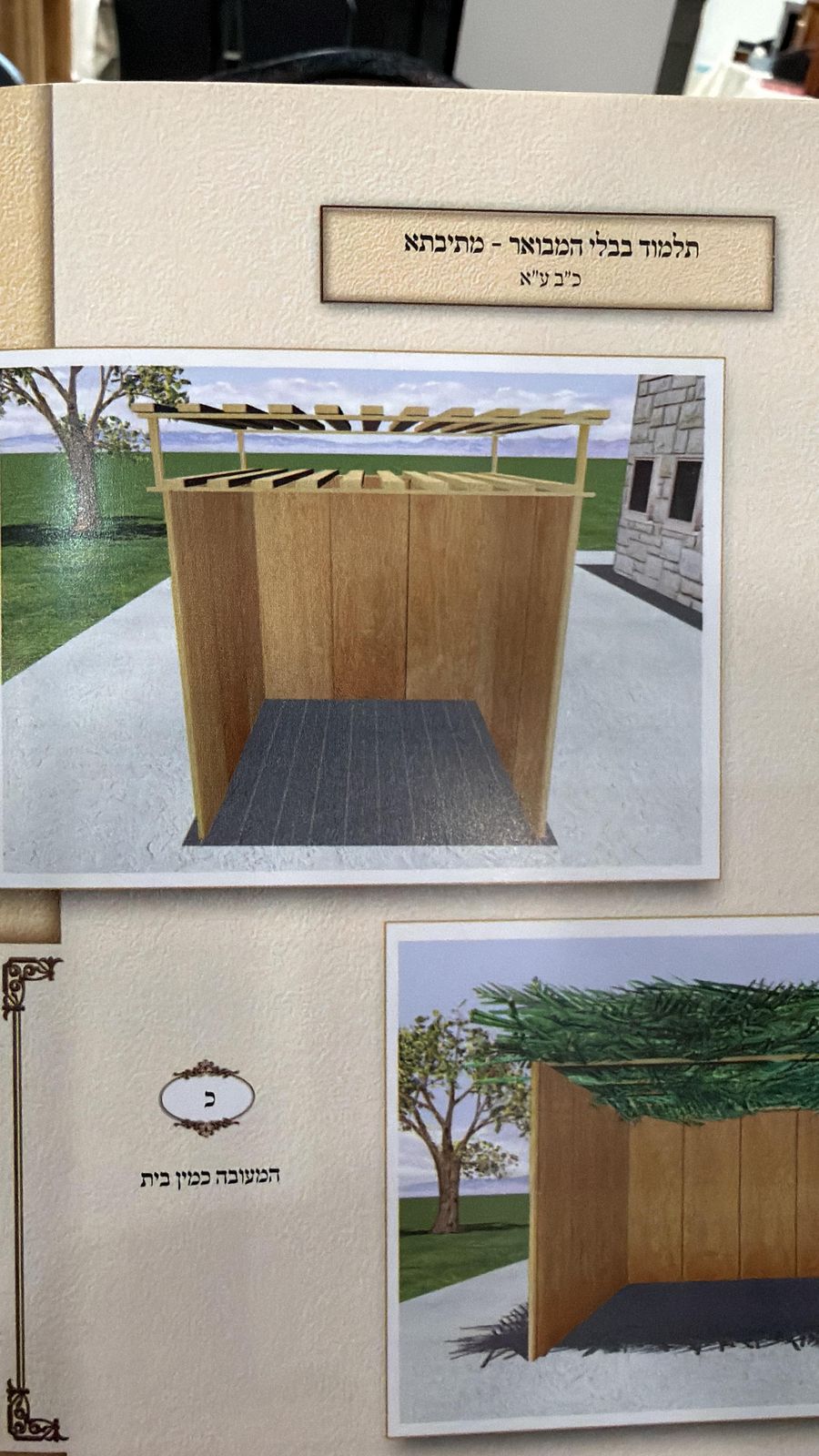
- Mishnahהמעובה כמין בית, schach as thick as a house roof: even though the stars cannot be seen from inside, it is kosher, even though you might think it is too much like a house.
- GemaraGemara: מאי מדובללת?
- Background: Rav and Shmuel were the first Amoraim after Rebbi compiled the Mishnayos, and the Gemara records the discussions of their batei medrash.
- ShitahRav: סוכה ענייה, a poor, skimpy sukkah, weak in its ability to give shade.
- RashiRashi: in Rav's case the gaps are surely less than three tefachim, because of lavud.
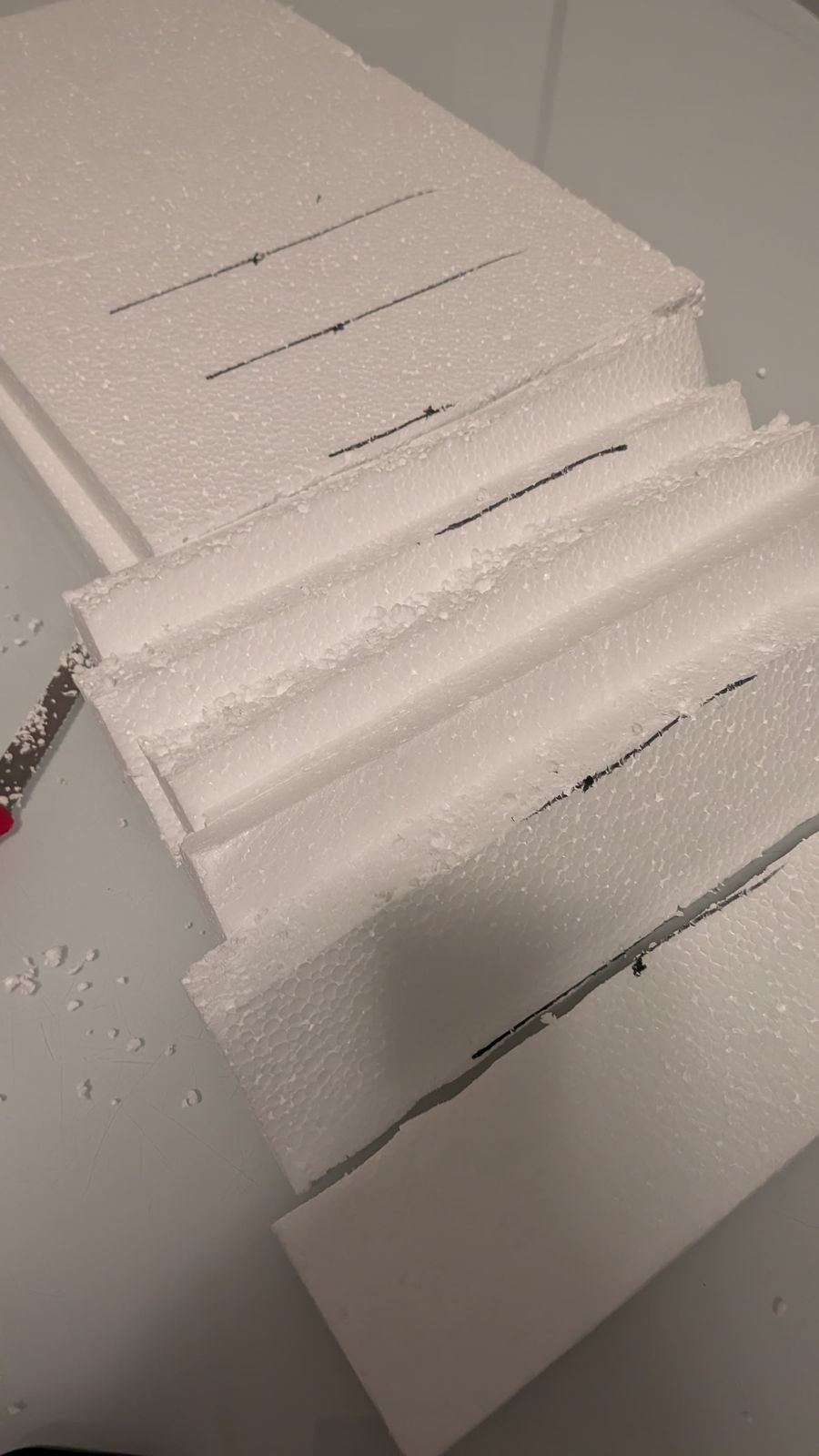
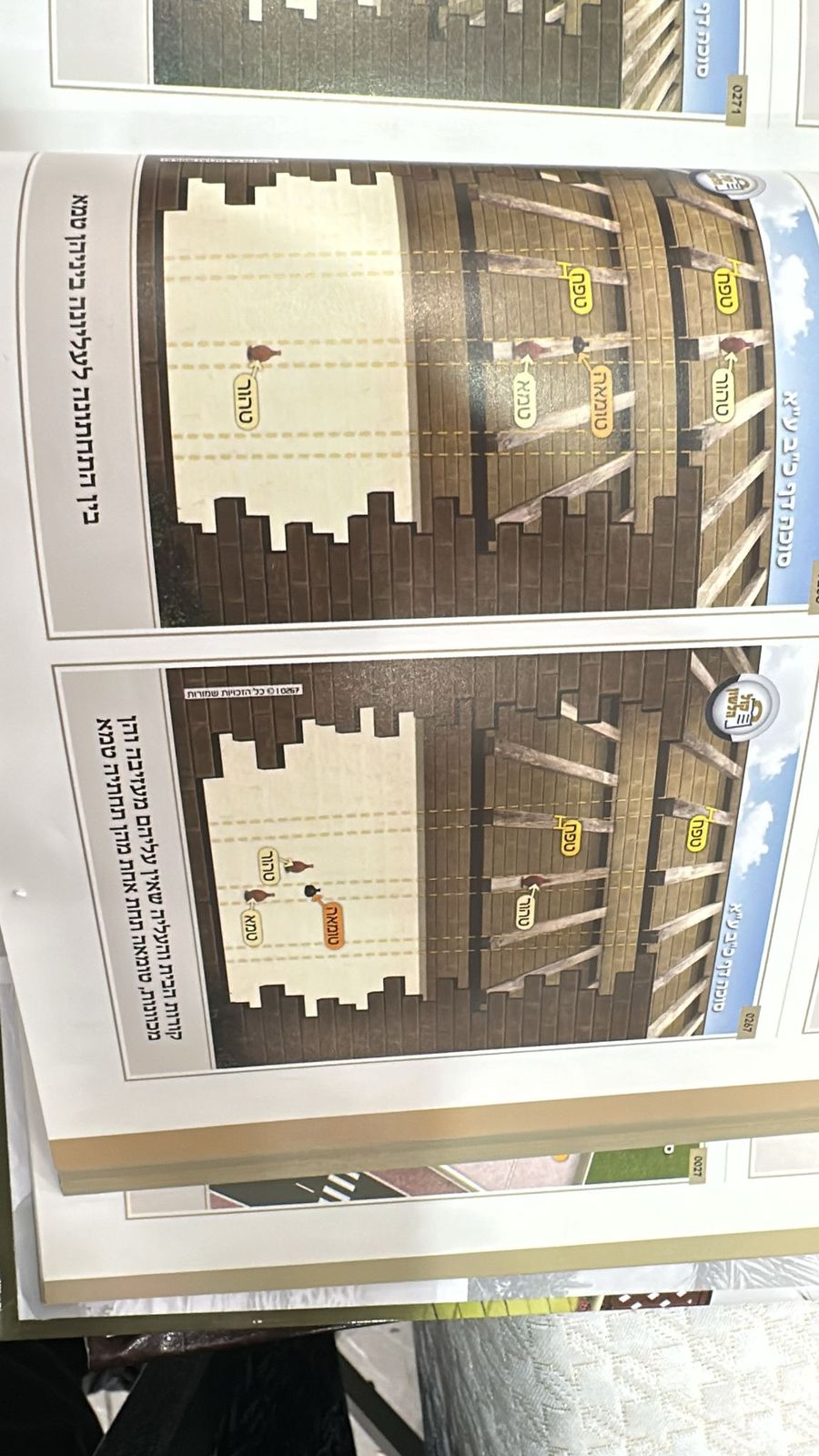
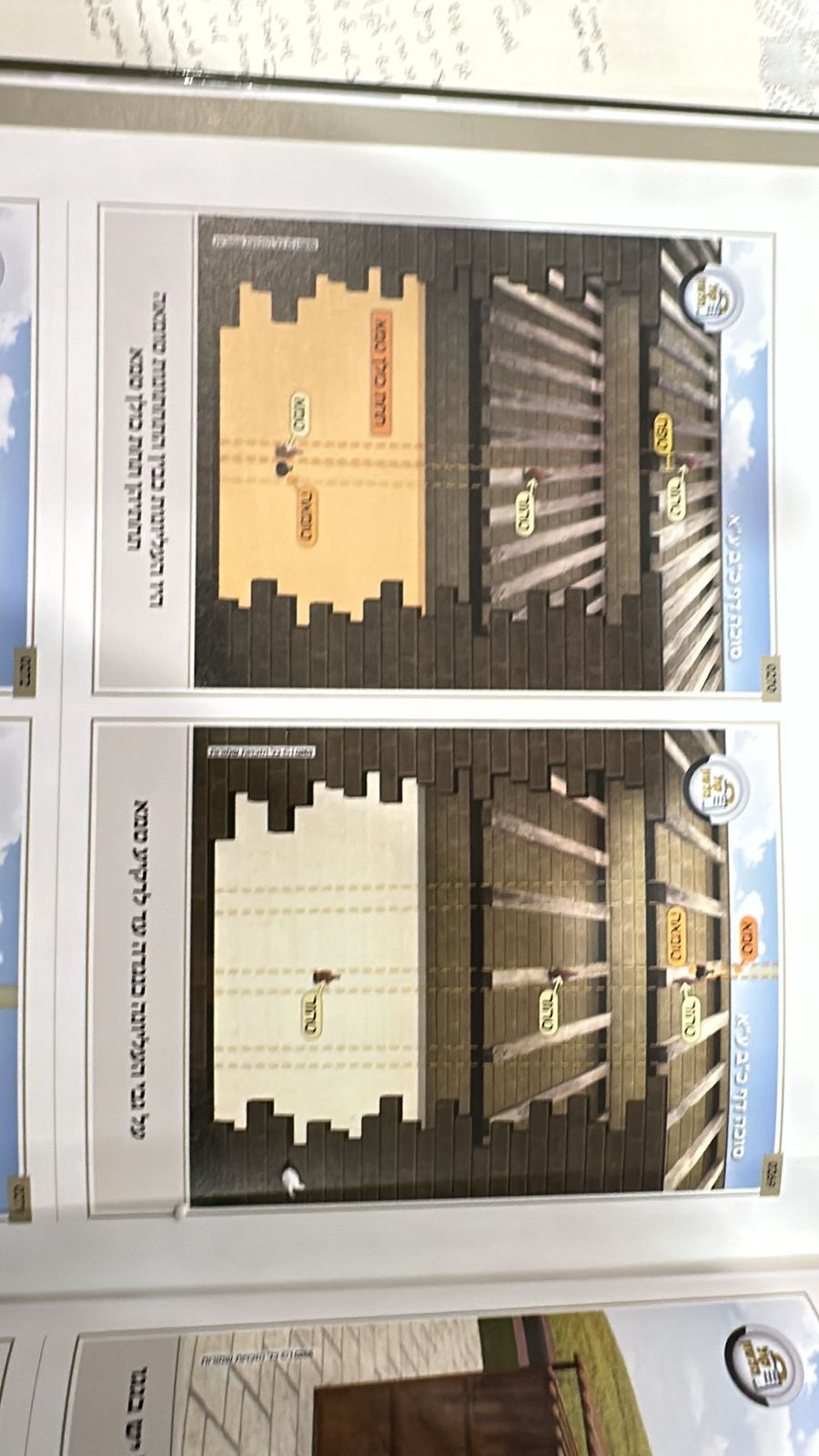
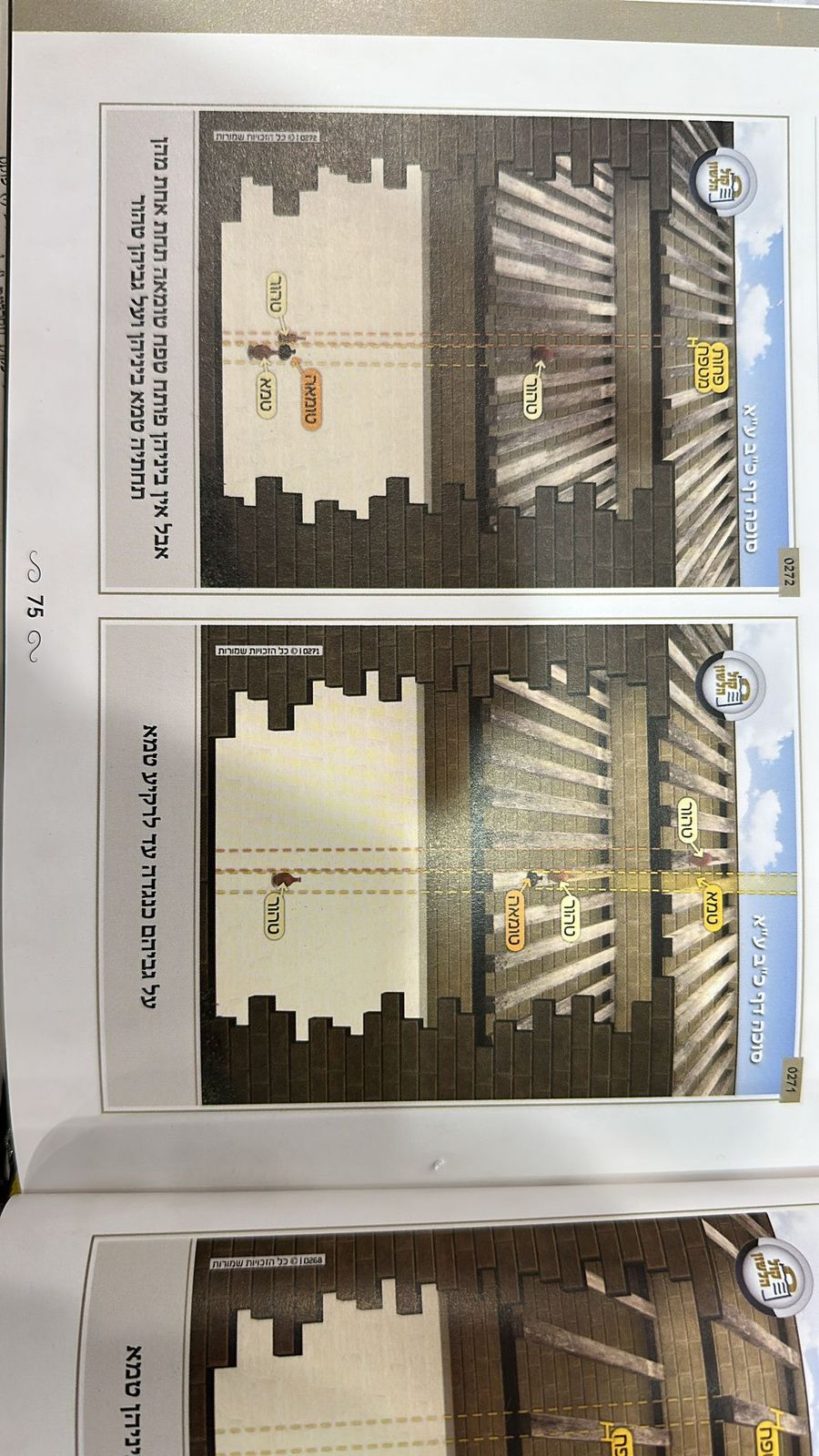
- ShitahShmuel: קנה עולה וקנה יורד. The schach is on two staggered levels, slat up and slat down like a zigzag. On one level it would be fine, but as it is, sun gets in.
- The RebbiIn both explanations you might think the sukkah is pasul, so the chiddush of the Mishnah is that it is kosher.
- Machlokesרב תני חדא ושמואל תני תרתי. Rav reads the first two clauses of the Mishnah as one case. Shmuel reads them as two.
- GemaraRav: מדובללת means מדולדלת, poor, so long as its shade is more than its sun. It is a skimpy sukkah, but if it has 50.1% shade it is kosher.
- The RebbiAccording to Rav there are fewer cases in the Mishnah, and the chiddush is that a bare majority of shade is enough. This also answers the kasha of why the Mishnah repeats shade more than sun.
- GemaraShmuel: מדובללת means מבולבלת, mixed up or staggered. ותרתי קתני: a staggered sukkah is kosher, and one whose shade is more than its sun is kosher. The Gemara adds the word כשרה twice to show these are two cases.
- The RebbiCount of cases in the Mishnah: according to Rav there are two cases, and according to Shmuel there are three. The thick sukkah is its own case according to everyone.
- The RebbiIn Shmuel's case there is in practice more sun, unless some halachic rule lets us view the two levels as one, like lavud and dofen akumah in the first perek. This will be seen soon.
- The RebbiBoth readings are a bit of a shoe-horn. Rav has to read the vav of ושצילתה as 'so long as'. Shmuel has to add an extra word, כשרה.
Kashas
- We already know from the first perek that shade more than sun is kosher, so why does the Mishnah need to say it?
Teirutzim
- According to Rav it is not a separate din. It qualifies the poor sukkah: as long as there is even a slight majority of shade (50.1%), it is kosher.
Rashi & Tosafos
- Rashi: In Rav's poor sukkah the gaps between the pieces are surely less than three tefachim (lavud), so the issue is only weak shade.
Mareh mekomos
- The pasuk about the dal (מקימי מעפר דל) is cited to connect duvleles with dal, poor, per Rav. The Rebbi later noted this comes from the Gemara's own word מדולדלת.
- Lavud and dofen akumah from the first perek are mentioned as the kind of rules that might let us view Shmuel's two levels as one.
The Rebbi’s chiddushim
- This is an unusual machlokes Amoraim about the meaning of a word in the Mishnah rather than about the Tanna's intent.
- Rav reads meduvleles from dal (poor), focusing on the dalet and lamed. Shmuel reads it from bilbul (mixed up, confused).
- The Rebbi's own thought, which he was unsure of: מרובה could mean a majority (50.1%, like an election) or a lot (70 to 80%).
- The core question in Shmuel's case may be whether we can view the two levels as combined. Combined they would be shady, but in practice there is more sun.
- Both Rav and Shmuel have to stretch the wording of the Mishnah: Rav with the vav, Shmuel by adding כשרה.
Unclear in recording
- A remark about what Rashi says on meduvleles at the start of the Mishnah is unclear in recording.
- The kasha is called 'Rashi's kasha' and later 'your kasha'. It is unclear in recording whether it is attributed to Rashi or to a talmid.
- A remark that the thick sukkah 'certainly helped for rain somewhat' is unclear in recording.
Drafted from the recording of the shiur, for chazarah. Torah terms follow the Rebbi’s own words; anything that could not be made out is marked “unclear in recording”. Tap a time to hear that point. Corrections welcome.