Shiur summary (draft from the recording)
Sukkah Medubeles: Two Layers of Schach, Chavut Rami
סוכה המדובללת
Sukkah 22a · Friday, November 7, 2025
The sugya
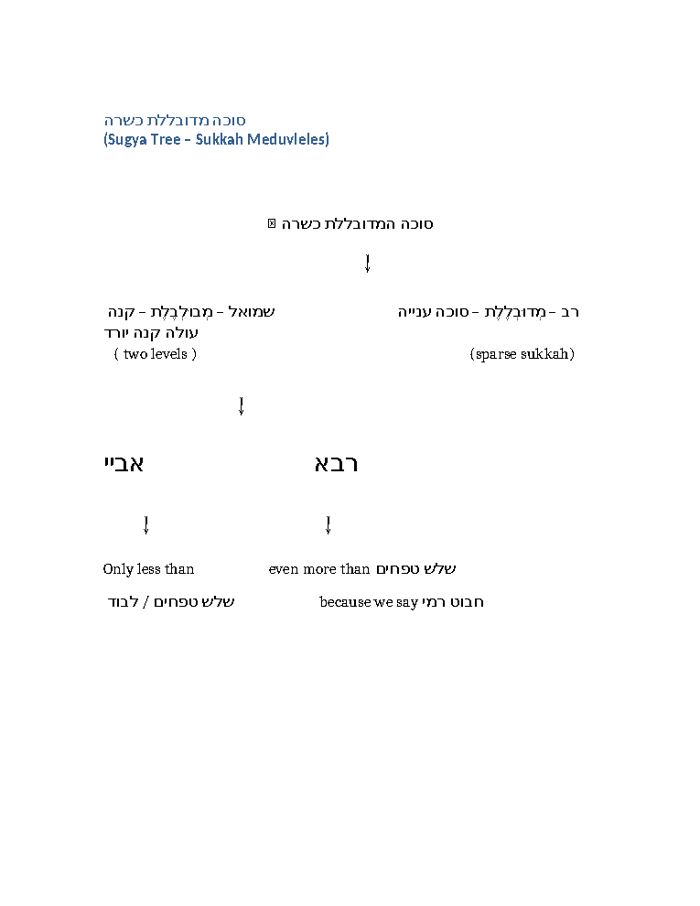
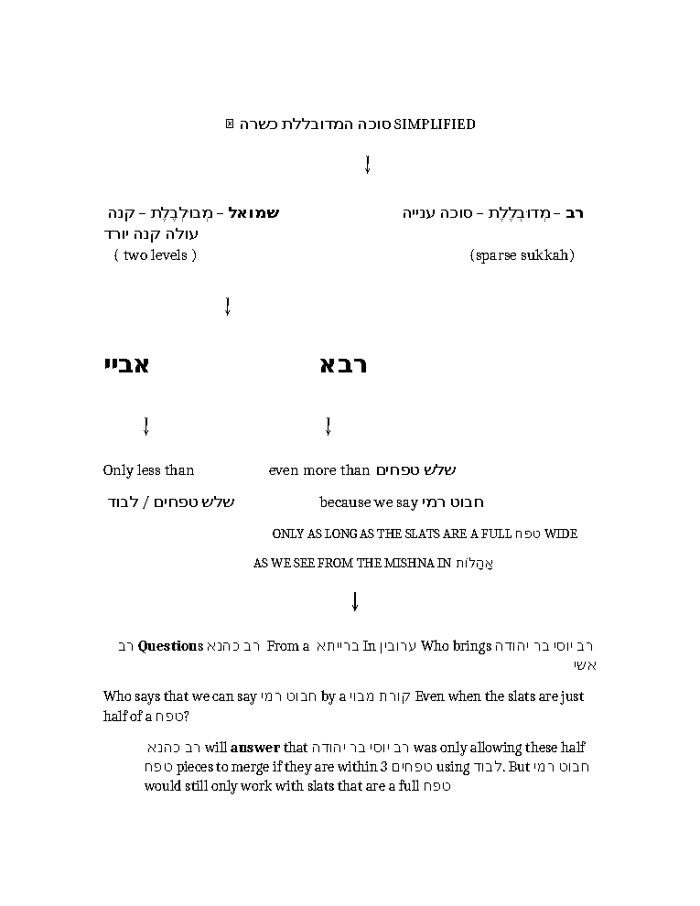
The Mishnah rules that a sukkah medubeles, one whose shade is more than its sun, and one thick like a house are all kosher. Rav and Shmuel argue over the meaning of medubeles, which affects whether the first half of the Mishnah is one case or two. Within Shmuel's case of two layers of schach, Abaye allows combining them only within three tefachim (lavud). Rava allows even beyond three tefachim if the top slats are a tefach wide, because of chavut rami. The shiur stopped as Rava begins to bring his source.
Step by step (shakla v’tarya)
- MishnahSukkah hamedubeles, and one whose shade is more than its sun, is kosher.
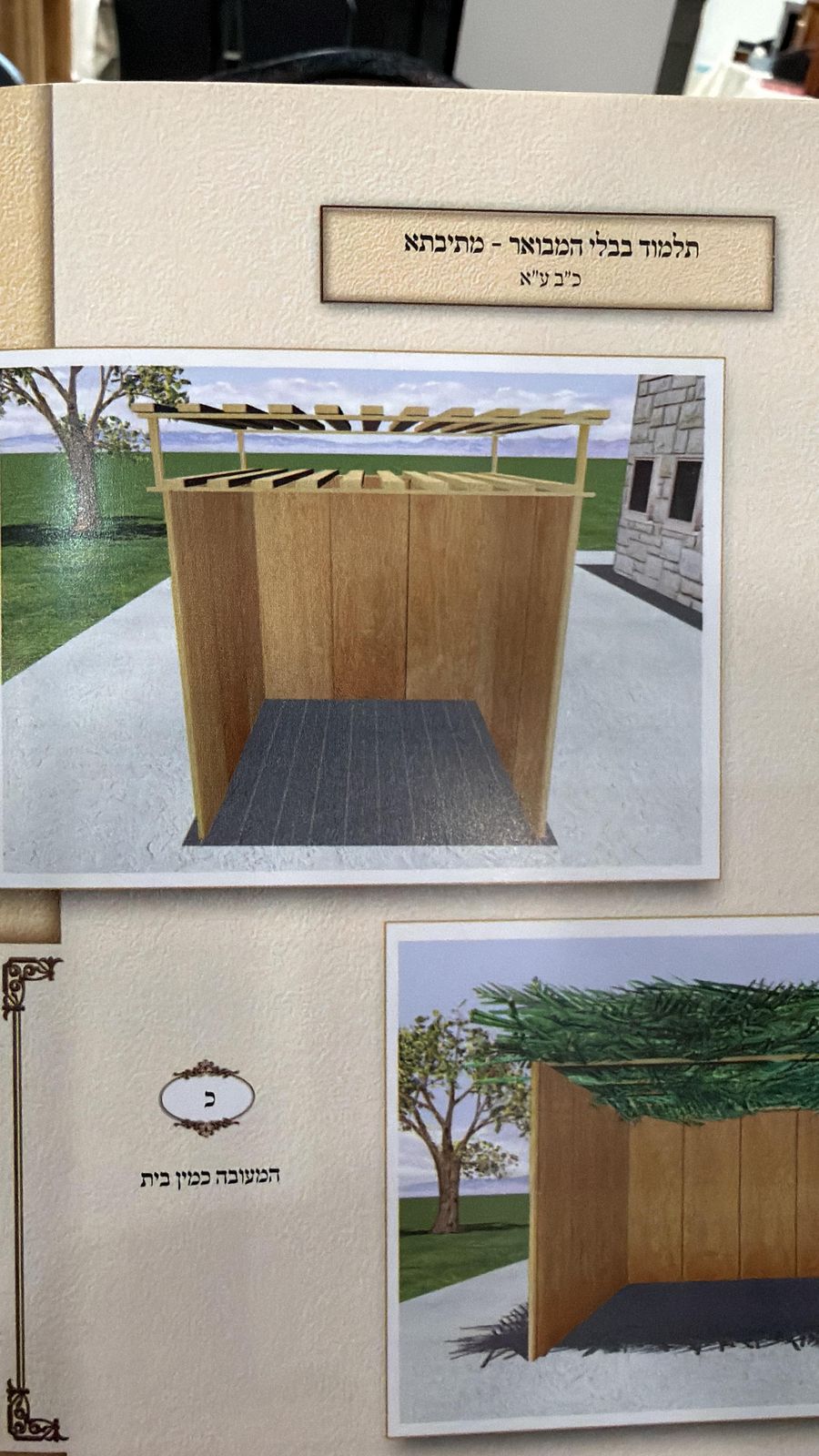
- MishnahMe'ubah k'min bayis: the schach is so thick and packed it is like a house. Even if the stars cannot be seen through it, it is kosher.
- The RebbiEvery case in the Mishnah is kosher. There is no machlokes in the Mishnah; it is a consensus.
- KashaThe Gemara's first question is simply on the word: what does medubeles mean?
- ShitahRav: sukkah aniyah, poor, weak, skimpy schach.
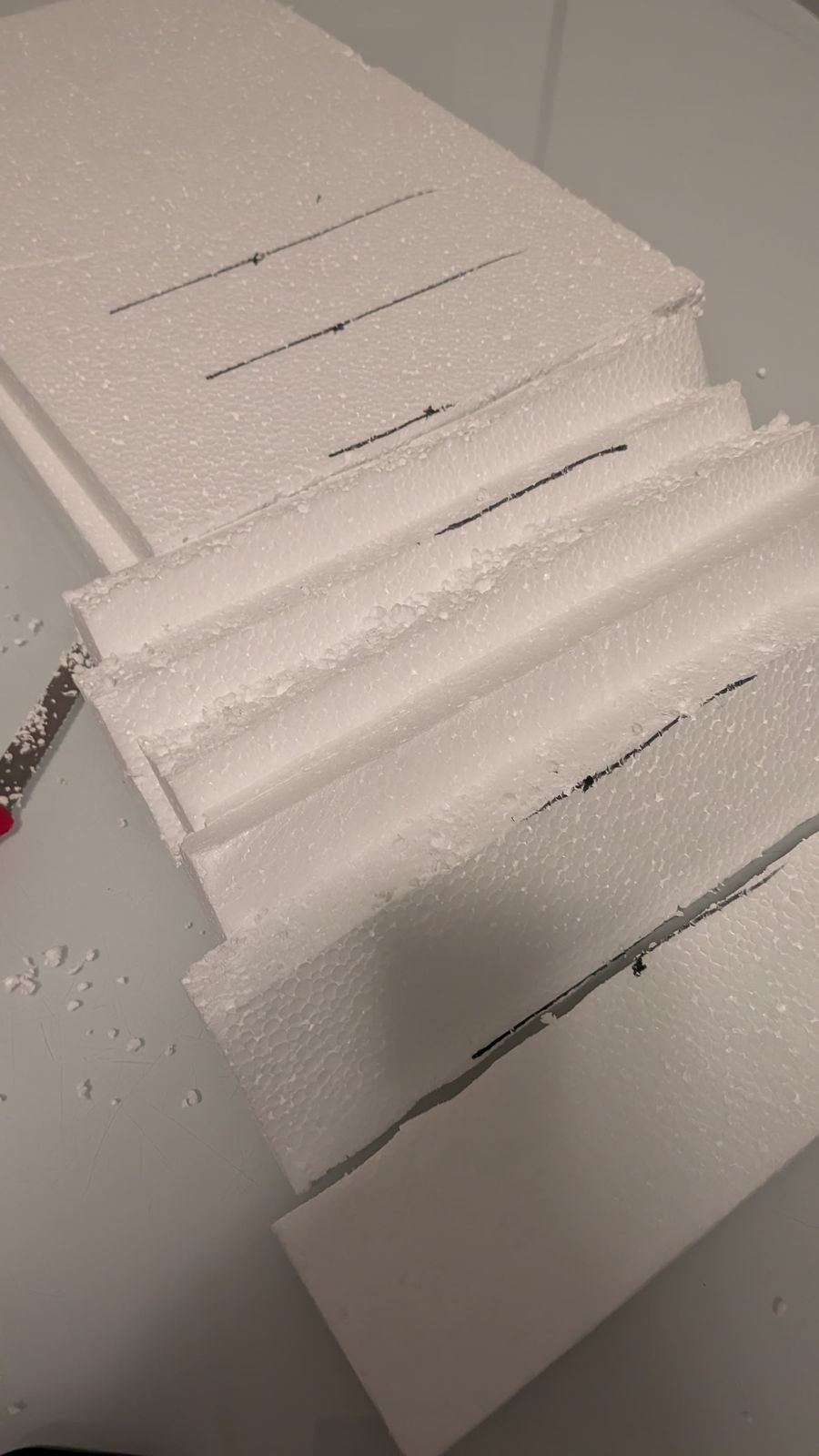
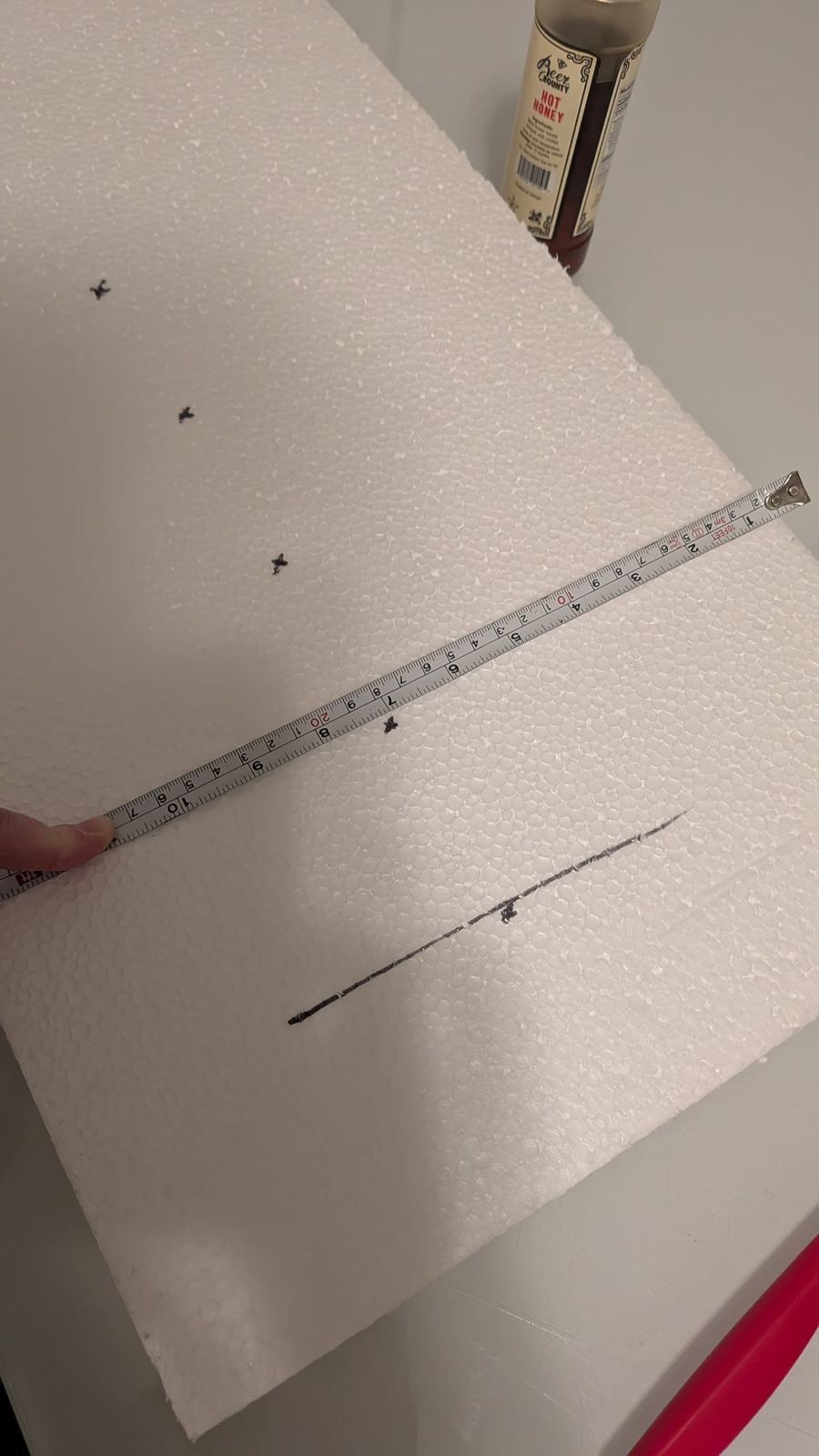
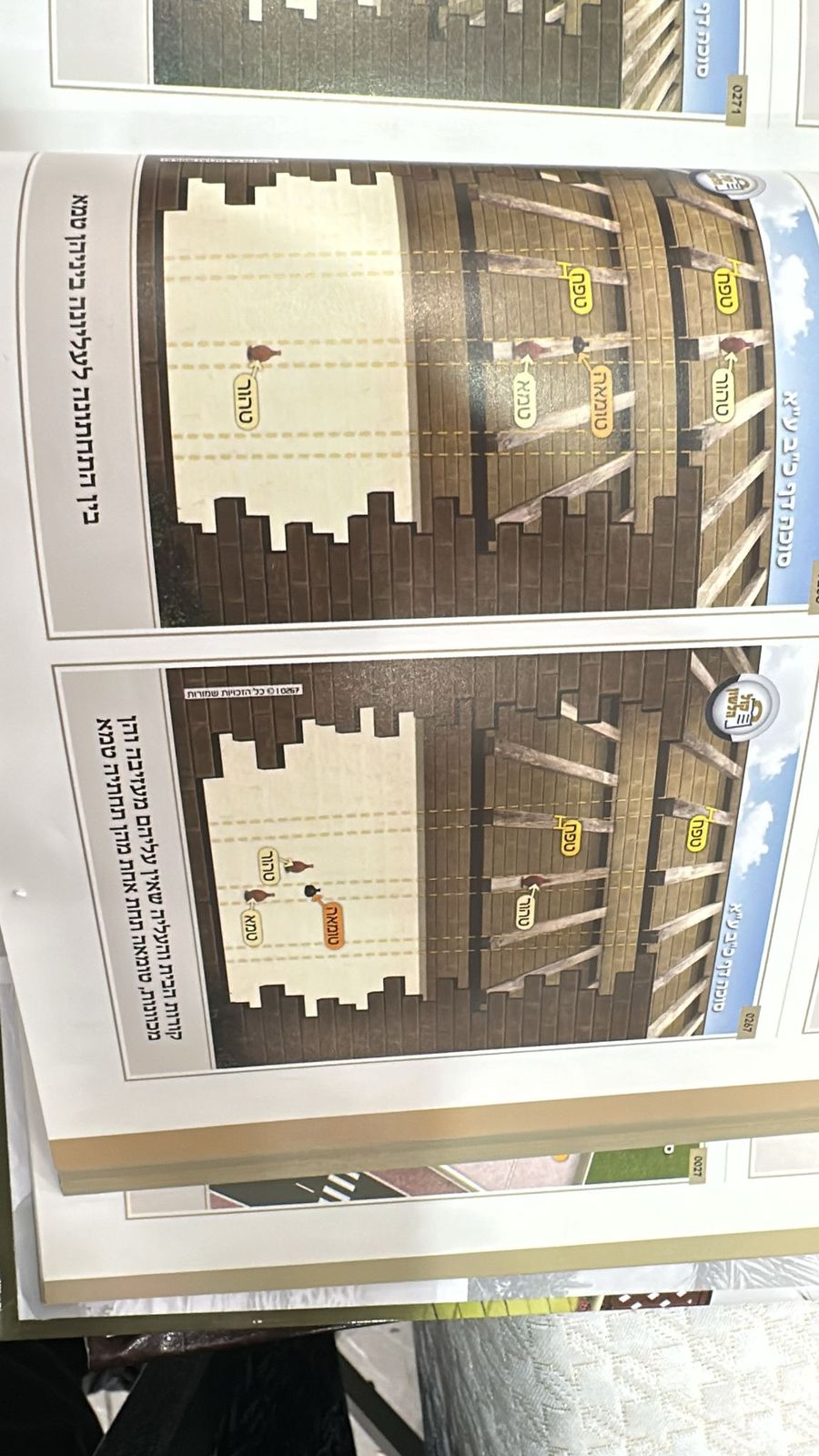
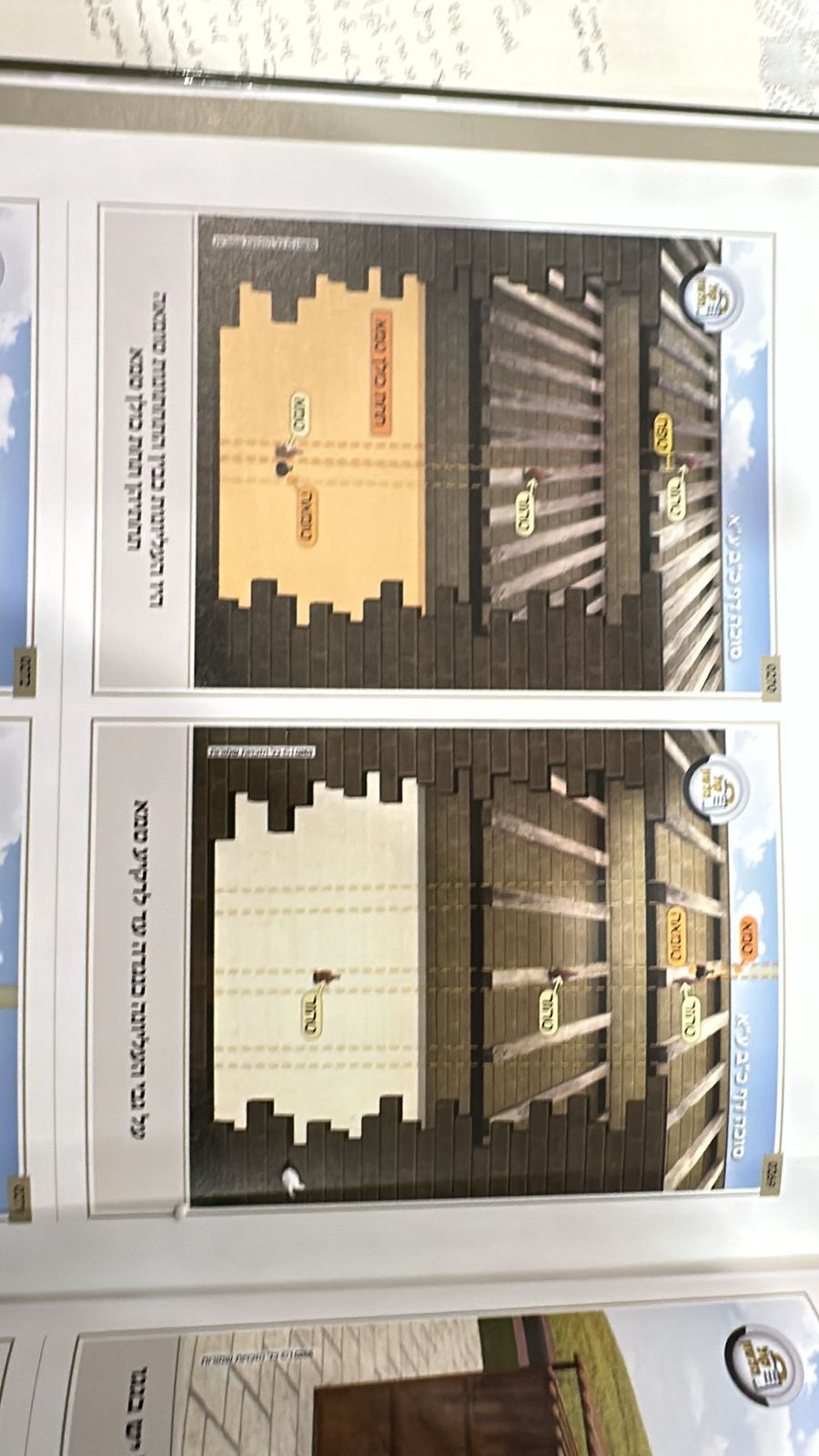
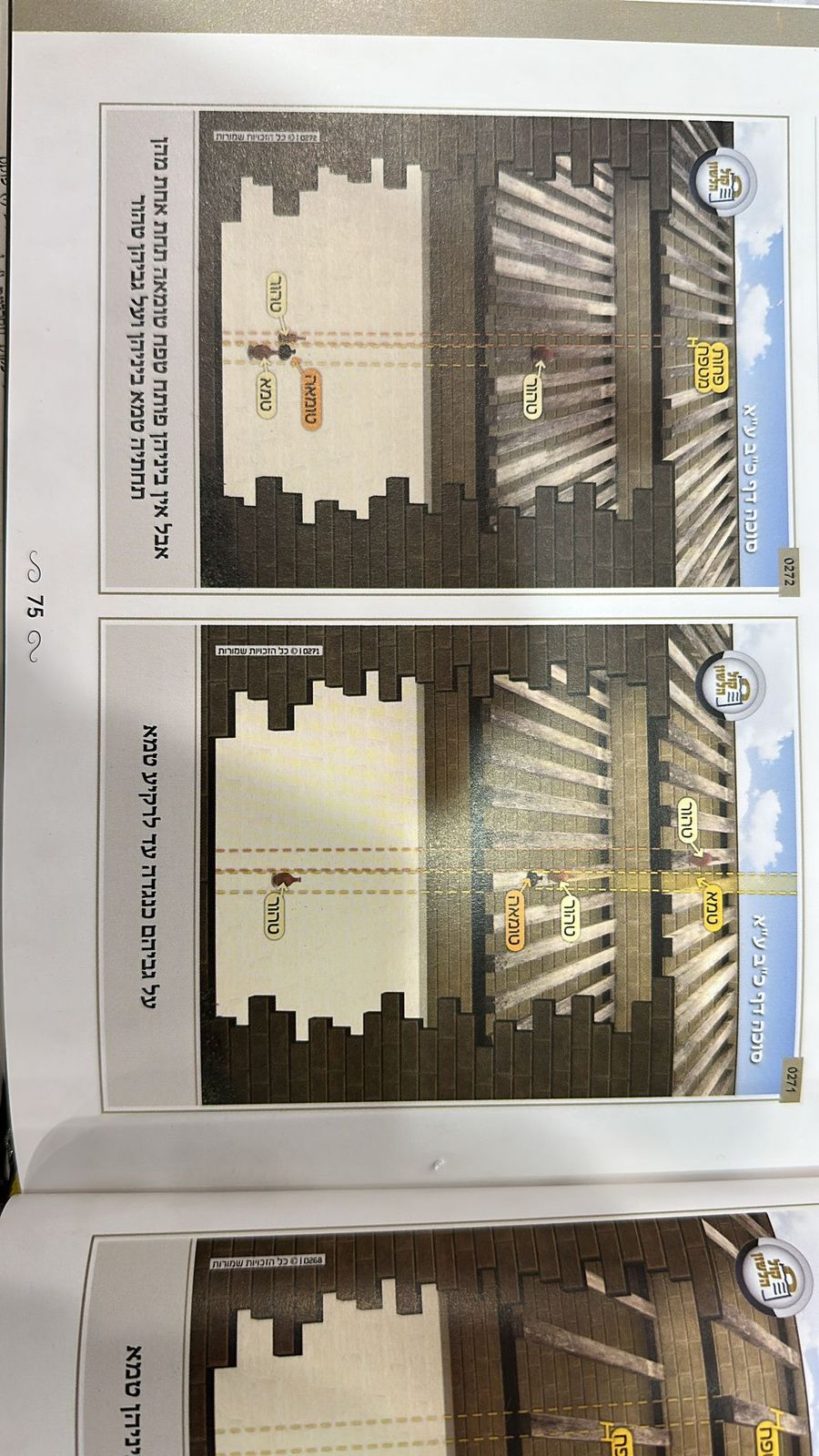
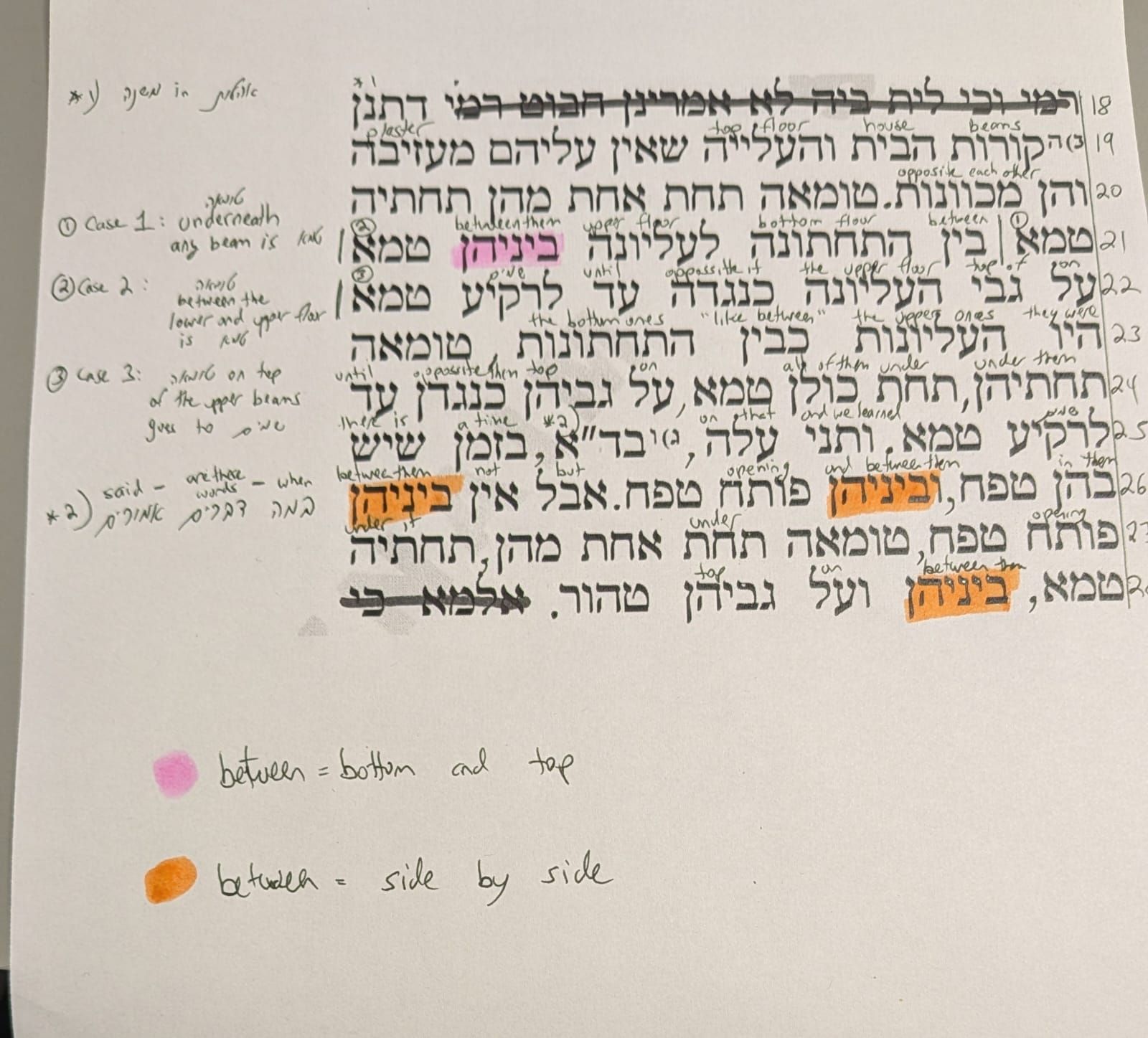
- ShitahShmuel: kaneh oleh, kaneh yored. One layer of schach is on top and another slightly underneath it, so from the side it looks like a zigzag. On the same level it would be fine; the issue is that they are on two levels.
- MachlokesBoth hold it is kosher, but they learn the Mishnah differently: Rav tani chada (one case), Shmuel tani tarti (two cases).
- ShitahRav reads it as one case: medubeles means skimpy, and it is kosher as long as the shade is more than the sun. So kesheirah appears only once, as in our print of the Mishnah.
- ShitahShmuel: medubeles means mevulbeles, confused or zigzagged. There are two cases. First, a zigzag sukkah is kosher. Second, shetzilasah merubah mechamasah, which is exactly Rav's case, is also kosher. So kesheirah is said twice.
- The RebbiThe rest of the Gemara is only within Shmuel's shita, like a family tree whose branches continue: Abaye and Rava are both in Shmuel. The Gemara does not say so, but it is obvious from Rashi and the flow.
- ShitahAbaye: lo shanu ella (read with a comma after shanu and after ella). Shmuel's kosher ruling applies only if there are less than three tefachim between the top and bottom layers.
- ShitahBut if there are three tefachim between them, it is pasul outright; they cannot be combined.
- The RebbiAnswering a question: each layer on its own is not enough to be more shade than sun, so the combination is needed. They can be combined only within three tefachim, which is the rule of lavud.
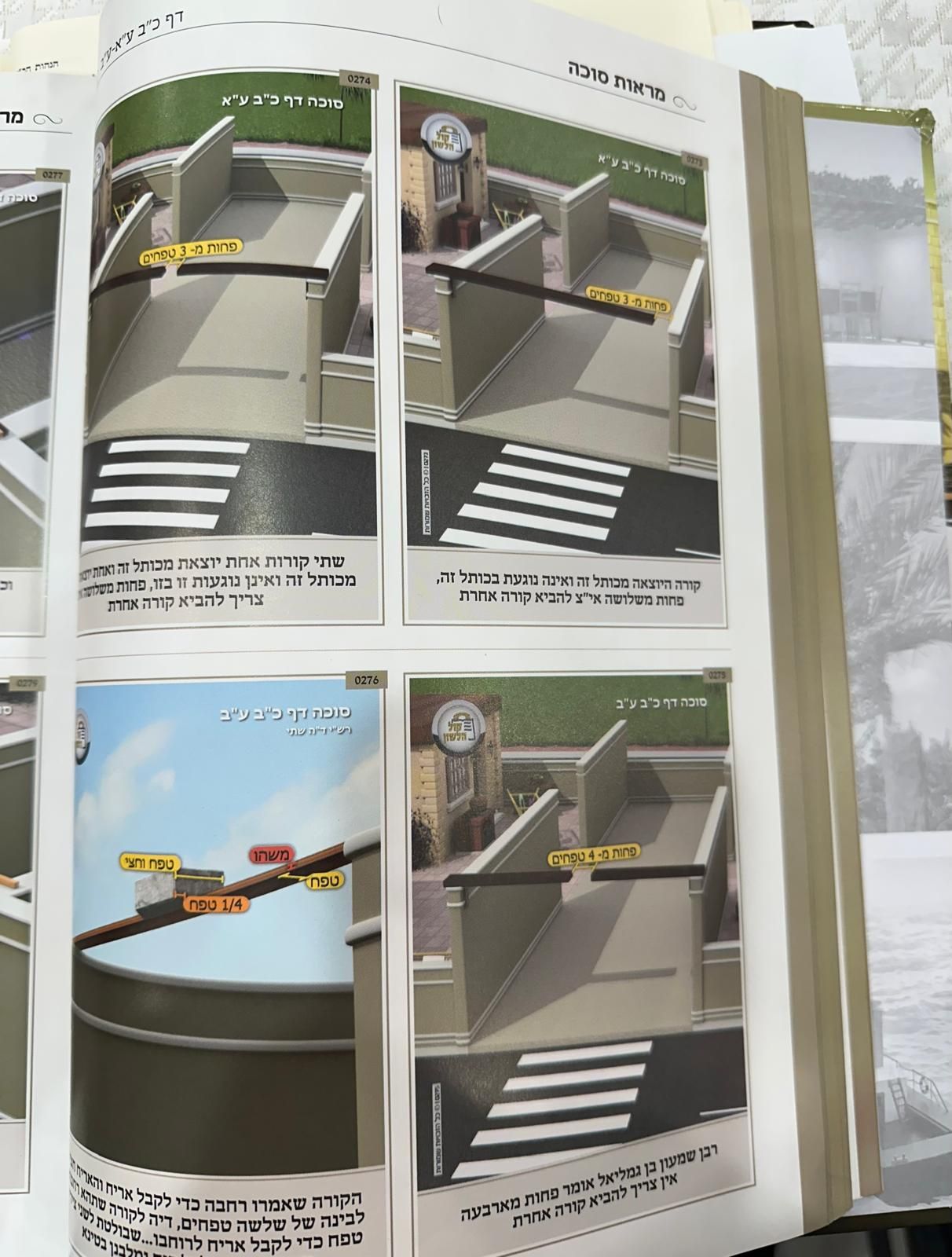
- The RebbiLavud also works for walls; for example, straps wrapped around sukkah poles within three tefachim make a halachically good wall. It works for a horizontal gap in schach too. Here the separation is vertical.
- ShitahRava is more lenient. Even with three tefachim or more between the layers, we did not say it is pasul, unless the top slats are not a tefach wide.
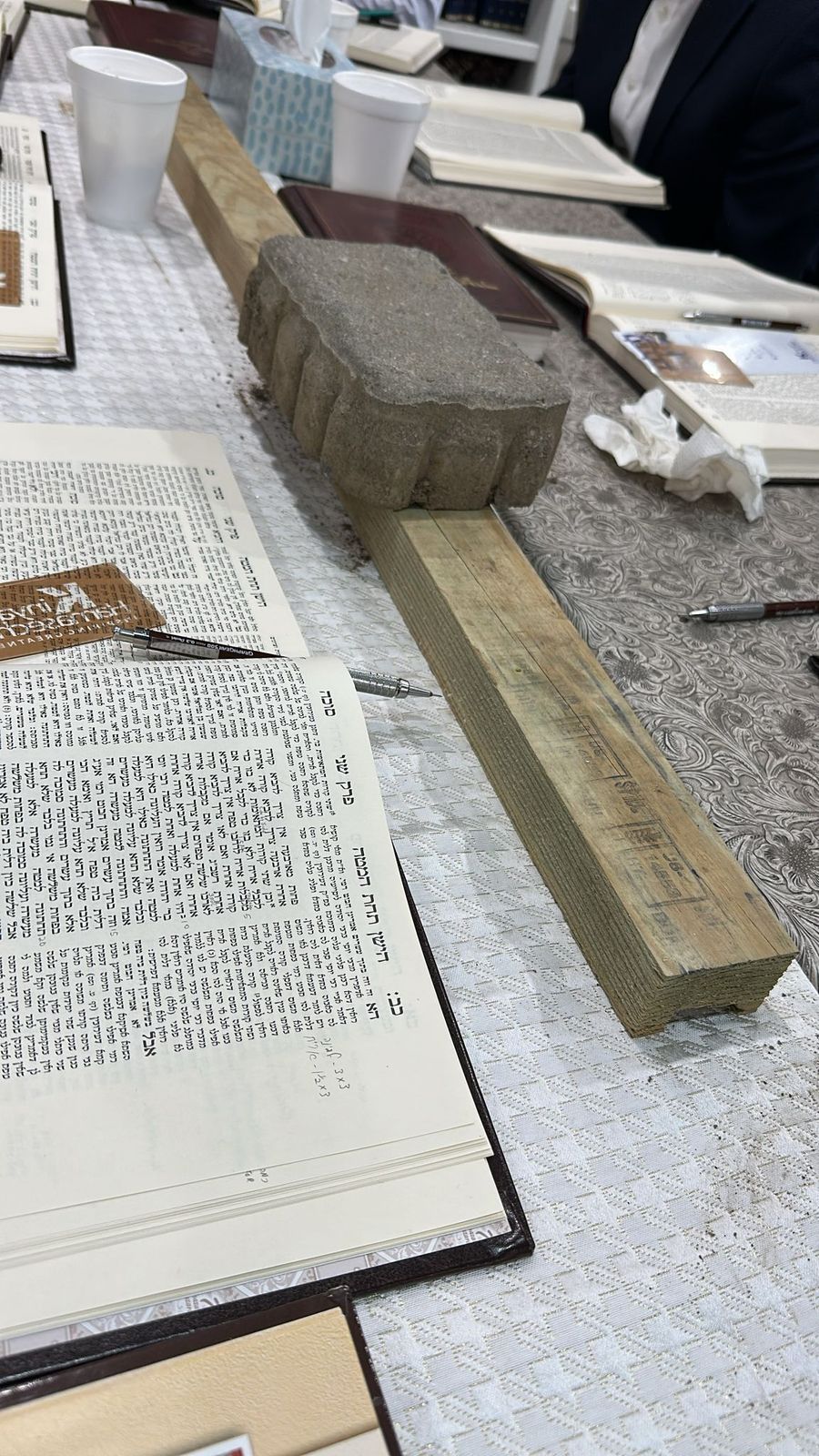
- ShitahIf the top slats are a tefach wide, it is kosher, because we say chavut rami.
- The RebbiChavut rami is another sukkah rule of closing spaces, like gud asik, gud achis and dofen akumah from the first perek. Chavut means slam down (as in chavitas ha'aravah) and rami means consider. A tefach-wide top layer is viewed as brought down into the lower layer.
- The RebbiThe Rebbi's view: for this purpose the bottom layer does not need to be a tefach wide. We find nowhere that slats must be a tefach; bamboo poles are not. Sparse bamboo below with tefach-wide kosher wood above can be viewed as down.
- ShitahAbaye does not hold of chavut rami. He requires the layers to be within three tefachim regardless of how wide the slats are.
- The RebbiEven with wide slats, if the sukkah has too much sun, we still need the layers to combine.
- KashaRava: mena amina lah? From where do I know that with a tefach we say chavut rami, and without a tefach we do not?
- Next time the Gemara brings a case from ohalos, since there are many similarities between sukkah and ohalos.
- The RebbiAnswering a question: even if the layers are far apart, such as a hotel sukkah with one layer 10 feet above the other, the tefach-wide top layer is viewed as one with the bottom. The sukkah still cannot exceed the height limit of the first Mishnah; within 20 amos there is no machlokes.
- The RebbiIf the separated schach is more shade than sun anyway, it is fine without this. Chavut rami is needed only when there is not enough schach, to bring the top schach down to join the bottom.
- ChazarahThe Rebbi reviewed Abaye, Rava and Rava's question mena amina lah.
- The RebbiIn 'vechi leis beih' the Gemara does not repeat the word tefach; the Rebbi said he does not know why.
Kashas
- What does medubeles mean?
- A talmid's question about two layers of schach. The Rebbi answers that each layer alone is not enough to be more shade than sun, so they must combine.
- Does the bottom layer also need to be a tefach wide for chavut rami?
- Rava: from where do I know that with a tefach we say chavut rami and without a tefach we do not?
- A talmid asks whether there is a maximum distance between the layers.
Teirutzim
- Rav: sukkah aniyah, skimpy schach.
- Shmuel: kaneh oleh, kaneh yored, two layers forming a zigzag.
- The Rebbi thinks the bottom layer need not be a tefach, since we find nowhere that slats must be a tefach.
- Even a large distance works if the top slats are a tefach wide, but the sukkah must stay within 20 amos as in the first Mishnah.
Rashi & Tosafos
- Rashi: From learning with Rashi and following the flow of the Gemara, it is clear that Abaye and Rava are both speaking within Shmuel's shita.
- other rishon: Rashi and Tosafos explain with slightly different wording that each layer on its own is not enough to be more shade than sun. Details unclear in recording.
Mareh mekomos
- Lavud, a major rule of sukkah: a gap of less than three tefachim is considered closed. Applied to walls, to horizontal gaps in schach, and here to vertical layers.
- First perek: gud asik, gud achis and dofen akumah, cited as similar rules of closing spaces.
- Chavitas ha'aravah, cited to explain the meaning of chavut (slam down).
- The first Mishnah of Sukkah on how high a sukkah may be, which limits how high the top layer can be.
- A case from ohalos that Rava will bring as his source, to be learned next time.
The Rebbi’s chiddushim
- There is no machlokes in the Mishnah; all its cases are kosher.
- According to Rav there is one case, so kesheirah appears once, as in our print. According to Shmuel there are two cases, so kesheirah is said twice.
- On the wording: Rav picks up more on the dalet. The Rebbi's remark about Shmuel and the letters is partly unclear in recording.
- Family-tree image: Abaye and Rava are branches of Shmuel's shita only.
- Read Abaye's words with a comma after lo shanu and after ella.
- The Gemara switches from shloshah to gimmel tefachim, probably because of typesetting.
- Example of lavud for walls: a store-bought sukkah with poles and straps wrapped around within three tefachim makes a good wall.
- Abaye does not hold of chavut rami.
- Sparse bamboo poles below with tefach-wide kosher wood on top can be viewed as one layer through chavut rami.
- Chavut rami is needed only when there is not enough schach to be more shade than sun.
Unclear in recording
- The remark about which letter Shmuel emphasizes in mevulbeles.
- A talmid's question and the Rebbi's brief reply mentioning a case that is kosher anyway.
- A distance figure given in the example of layers far apart.
Drafted from the recording of the shiur, for chazarah. Torah terms follow the Rebbi’s own words; anything that could not be made out is marked “unclear in recording”. Tap a time to hear that point. Corrections welcome.