Shade vs. Sun Ratio; Densely Packed Schach
The sugya
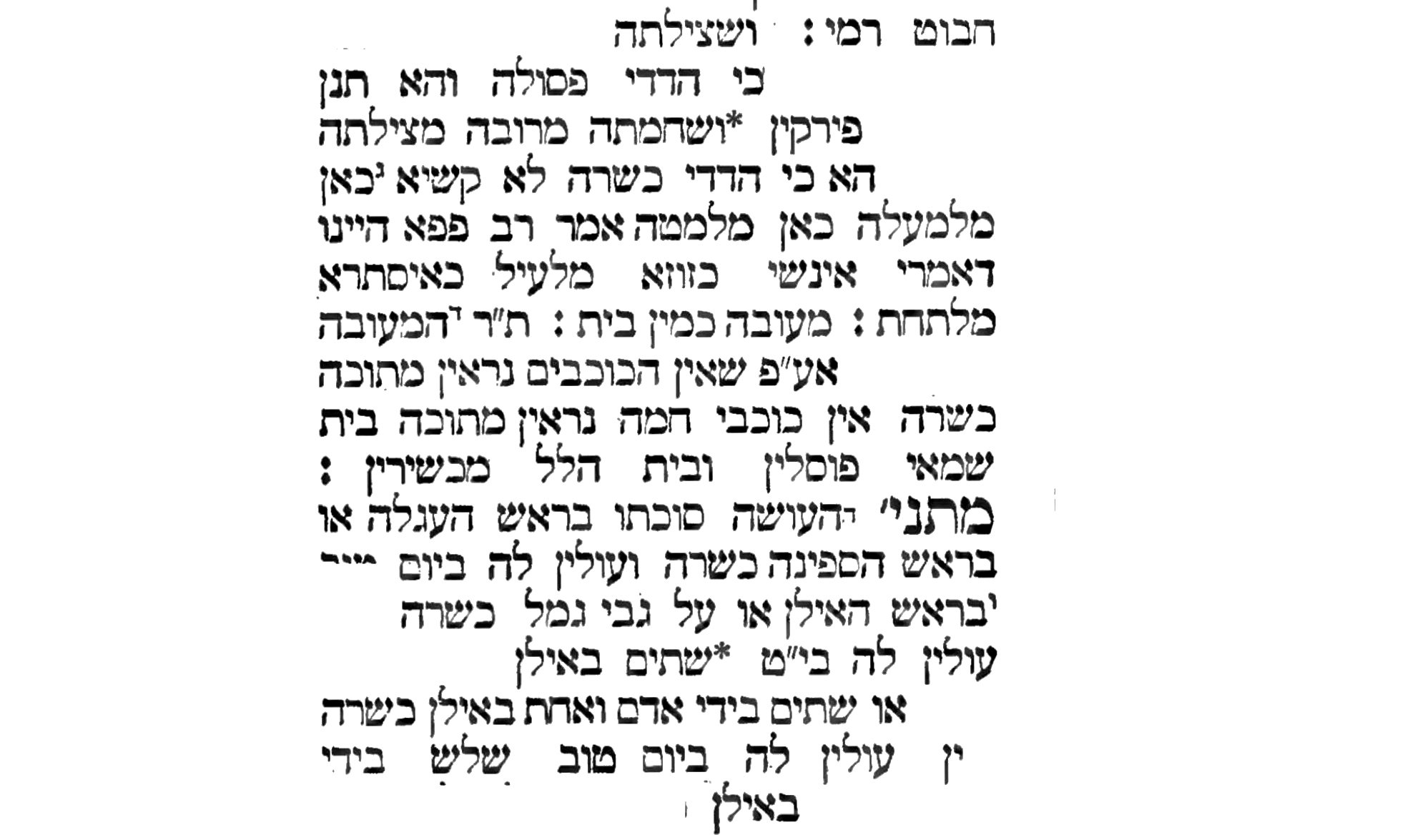
The shiur finishes the Mishnah's last two cases: tzilasa merubah mechamasa and me'ubah kemin bayis. After reviewing the end of the previous sugya on two boards, one above the other, the Gemara asks how the Mishnah can be reconciled with the first Mishnah of the masechta about a 50-50 ratio. It answers kan milma'alah, kan milmatah, which the Rebbi explains with Rashi and Rav Papa's saying about light spreading as it passes through a gap. The shiur ends with the Braisa on packed schach and the machlokes Beis Shammai and Beis Hillel about a sukkah where the sun's rays cannot be seen.
Step by step (shakla v’tarya)
- The two cases of the Mishnah still left are tzilasa merubah mechamasa and hame'ubah kemin bayis.
- RashiRashi points out that the tzilasa merubah part of the Mishnah holds according to both Rav and Shmuel; Shmuel just has an extra case.
- ChazarahReview from line 10, on two boards one above the other: the teirutz reads the condition as the top board within 20 with the bottom one within less than 3 of it, or the bottom board not below 10 with the top one within less than 3 of it.
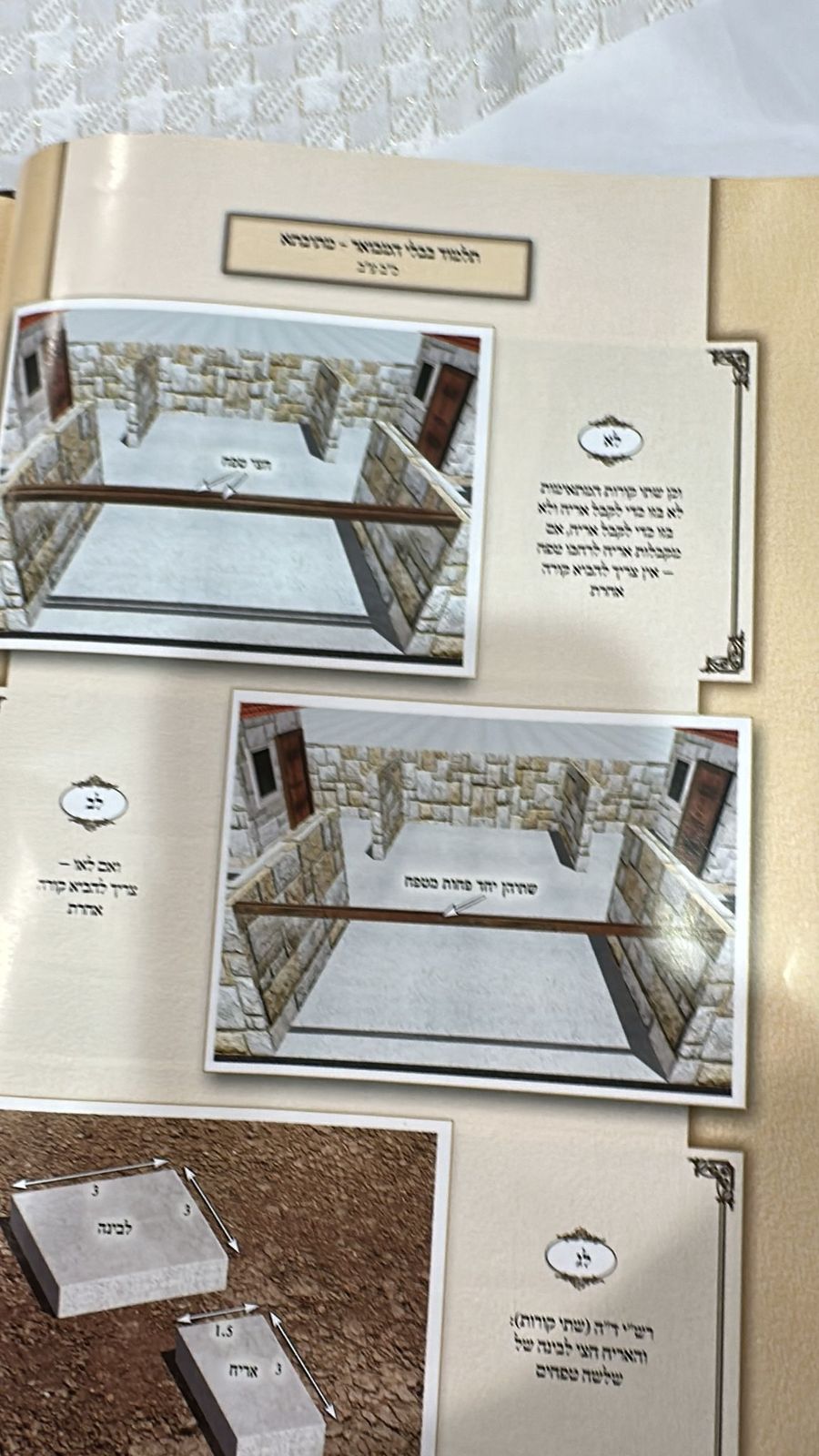
- ChazarahIf the boards are 3 or more apart, since there is no tefach in them (just two little sticks), we do not say chavut rami.
- MishnahThe Mishnah says that if the shade is more than the sun, the sukkah is kosher.
- GemaraThe Gemara makes a diyuk: ha ki hadadi pesulah. If shade and sun are exactly equal (50-50), the sukkah is pasul.
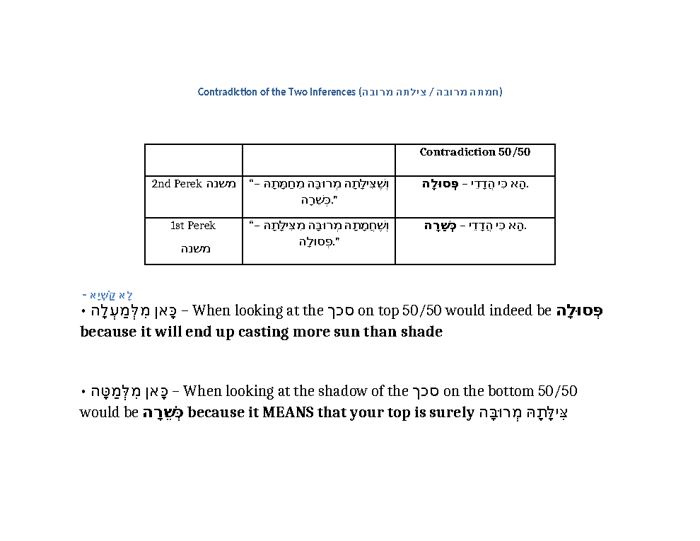
- KashaV'ha tenan b'idach pirkin: the very beginning of the first Mishnah of the masechta says chamasa merubah mitzilasa pesulah. The diyuk from there is that 50-50 is kosher, so the two Mishnayos contradict each other at exactly 50%.
- TeirutzLa kashya. Kan milma'alah, kan milmatah. The Rebbi goes completely with Rashi.
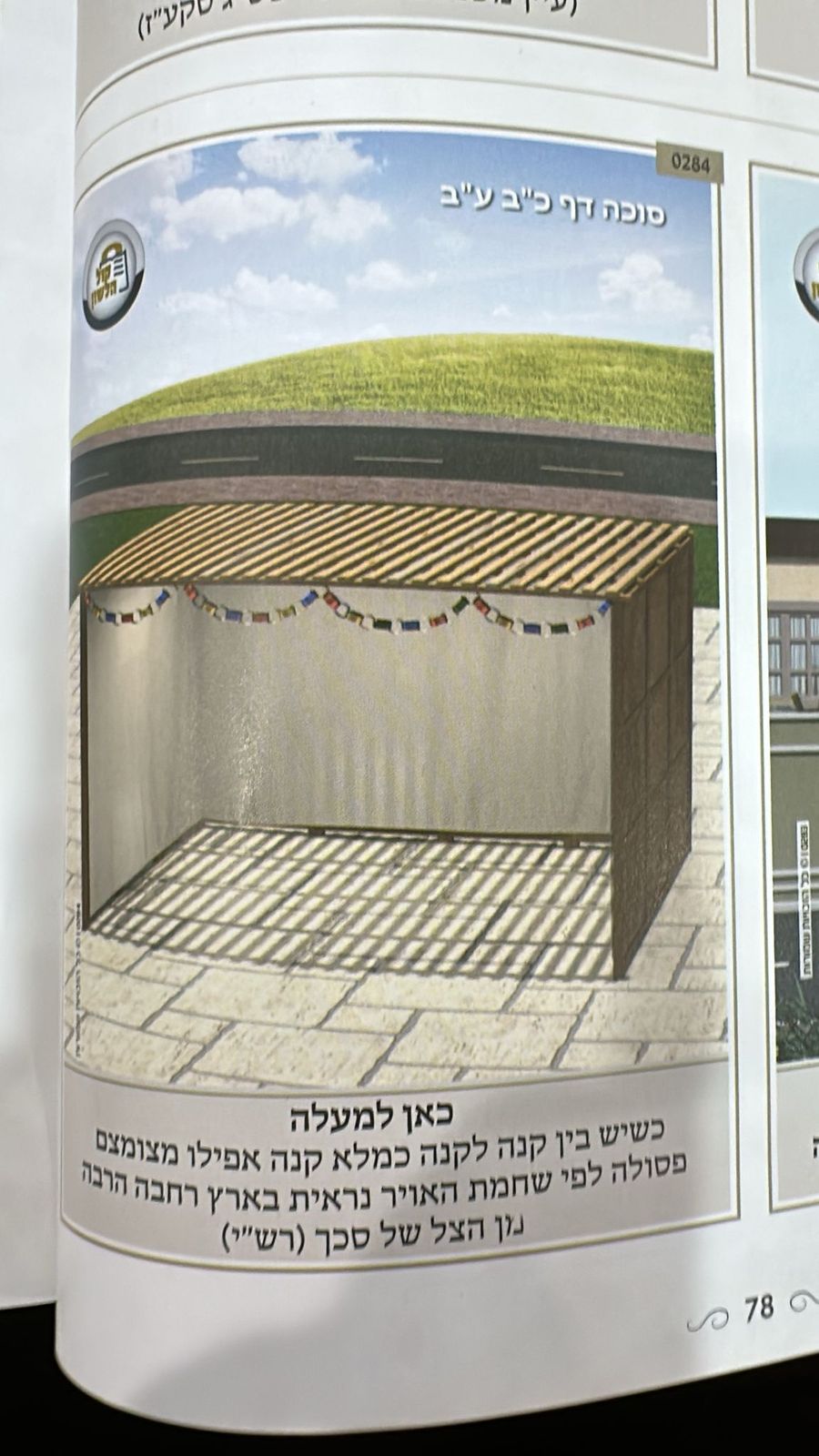
- RashiThe first Mishnah, which is pasul at 50-50, is milma'alah: the 50% ratio is measured at the schach level.
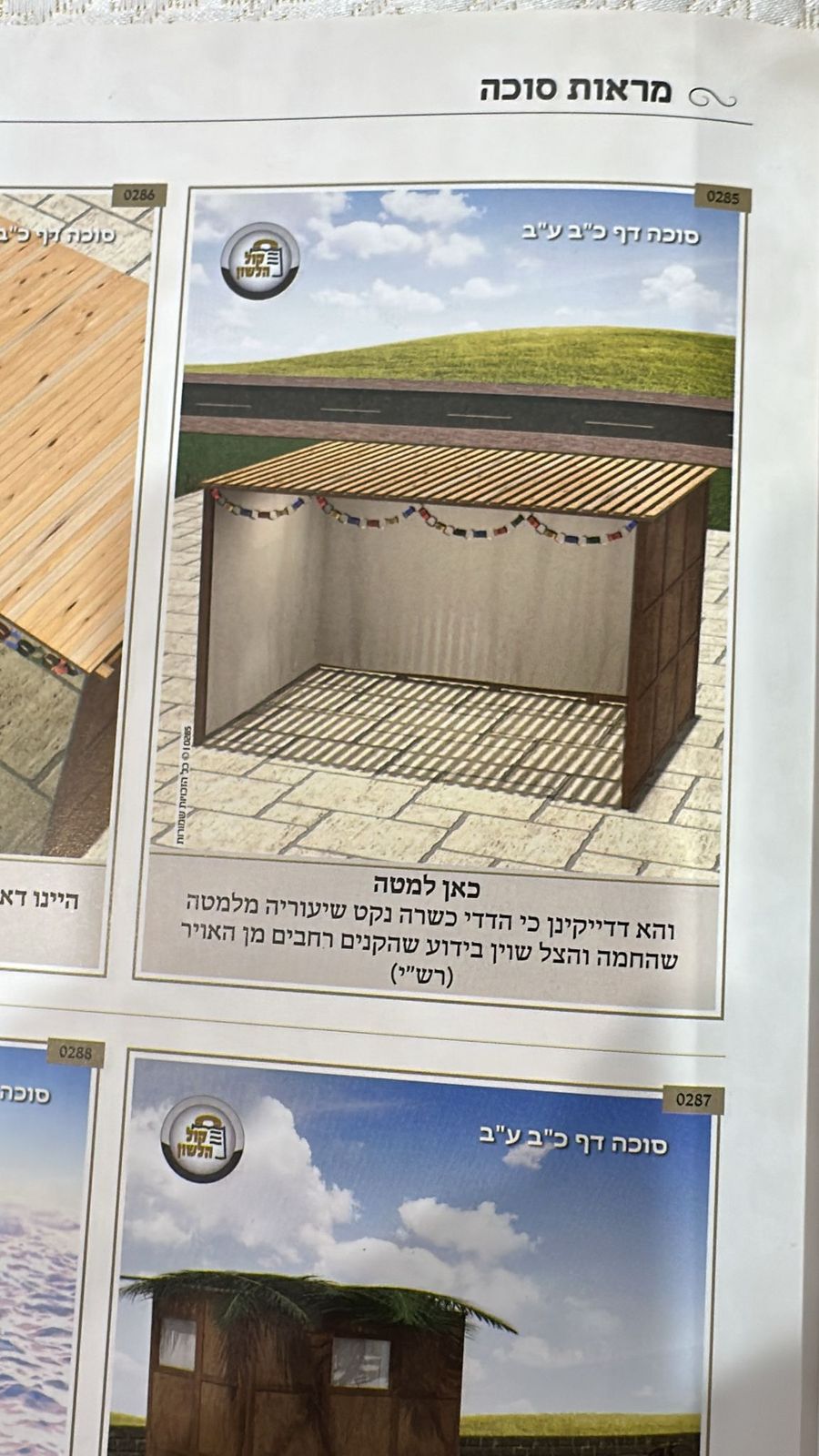
- RashiOur Mishnah, which is kosher at 50-50, is milmatah: the 50% ratio is measured on the floor.
- The RebbiIllustration: a sukkah with exactly 25 slats and 25 open spaces is exactly 50% at the top.
- The RebbiSunlight spreads once it passes through a gap, like a roll-up shade missing a slat, or a crack that wakes the baby in the morning. So 50% at the schach level means more sun than shade down on the floor.
- The RebbiIf it is 50-50 down on the floor, the schach above must be covering more, at least 51%.
- The RebbiPractically: if you sit near the floor and feel it is exactly half shade and half sun, the sukkah is kosher, because the top is well covered. If you look up before Sukkos and see 50% at the top, it is no good, because the sun will come onto your head.
- The RebbiFor this we assume the measurement is taken when the sun is directly over your head.
- Ra'ayahRav Papa: hainu d'amri inshi, k'zuza milei'l k'istera miltata. An opening the size of a small coin above shines like a larger coin below.
- The RebbiIt is like a projector in a dark room: a small hole in the schach spreads into a larger patch of light below.
- A talmid asked whether merubah means 50.1%. The Rebbi said Rav and Shmuel both learn tzilasa merubah the same way. The rest of the exchange is unclear in recording.
- The RebbiIn practice it always depends on the angle of the sun and the height of the walls. If 50% on the floor is kosher, the schach above has to be more than 50%, in some ratio depending on how tall the sukkah is.
- The RebbiA short sukkah and a tall sukkah make a difference: the taller the sukkah, the more the light spreads.
- MishnahLast case of the Mishnah, line 29: me'ubah kemin bayis. This is schach packed thick, for example bamboo mixed with evergreen.
- GemaraThe Braisa (Tanu Rabbanan) first repeats the Mishnah: even if it is packed like a house and the stars cannot be seen through it at night, it is kosher.
- GemaraThe Braisa then adds: if kochvei chamah cannot be seen from within it, meaning no sunlight at all comes through even by day, there is a machlokes.
- MachlokesBeis Shammai posel. Beis Hillel machshir: even schach packed so tightly that no light gets in is kosher.
- MaskanaThis finishes the Mishnah.
Kashas
- Our Mishnah implies 50-50 is pasul. The first Mishnah of the masechta (chamasa merubah mitzilasa pesulah) implies 50-50 is kosher. They contradict each other at exactly 50%.
- A talmid asked whether 'merubah' means 50.1%. The rest of the discussion is partly unclear.
Teirutzim
- Review of the previous sugya: the top board within 20 and the bottom within less than 3 of it, or the bottom not below 10 and the top within less than 3 of it. At 3 or more apart there is no chavut rami, since there is no tefach.
- Kan milma'alah, kan milmatah. 50% measured at the schach level is pasul; 50% measured on the floor is kosher.
Rashi & Tosafos
- Rashi: The tzilasa merubah part of the Mishnah holds according to both Rav and Shmuel; Shmuel just adds an extra case.
- Rashi: The Rebbi follows Rashi's explanation of kan milma'alah, kan milmatah: whether the 50% is measured at the schach or on the floor.
- Rashi: Rashi explains kochvei chamah as zaharurei chamah, the rays of the sun.
Mareh mekomos
- The first Mishnah of Maseches Sukkah (b'idach pirkin), chamasa merubah mitzilasa pesulah, cited as the contradiction to our Mishnah.
- Rav Papa's saying, k'zuza milei'l k'istera miltata, as support for the teirutz.
The Rebbi’s chiddushim
- The contradiction is resolved by simple science: light spreads after passing through a gap, like a missing slat in a roll-up shade.
- Practical framing: judge by how it feels sitting on the floor (half sun, half shade means kosher), not by looking up at the schach and seeing 50%.
- Zuz compared to a dime above and the larger coin to a quarter below; the Rebbi said he does not know the exact ratio between the coins.
- The required coverage at the top depends on the angle of the sun and the height of the walls; a taller sukkah needs more.
- Kochvei chamah is a figurative expression: it means not even a speck of sunlight is seen by day.
Unclear in recording
- A term in the remark about Shmuel's extra case is garbled.
- A remark about the chiddush of tzilasa merubah needing both Mishnayos is partly garbled.
- The talmid's question about merubah meaning 50.1%, and the Rebbi's reply about Shmuel, are mostly unclear.
- The Rebbi mentions a source he did not have time to look at that has a whole different pshat. The name of the source is unclear.
- The back-and-forth with talmidim about percentages and heights (about 18:41 to 21:49) is largely unclear.
Drafted from the recording of the shiur, for chazarah. Torah terms follow the Rebbi’s own words; anything that could not be made out is marked “unclear in recording”. Tap a time to hear that point. Corrections welcome.