Rebbi Meir and Rebbi Yehuda: worry about mishaps, bereira
The sugya
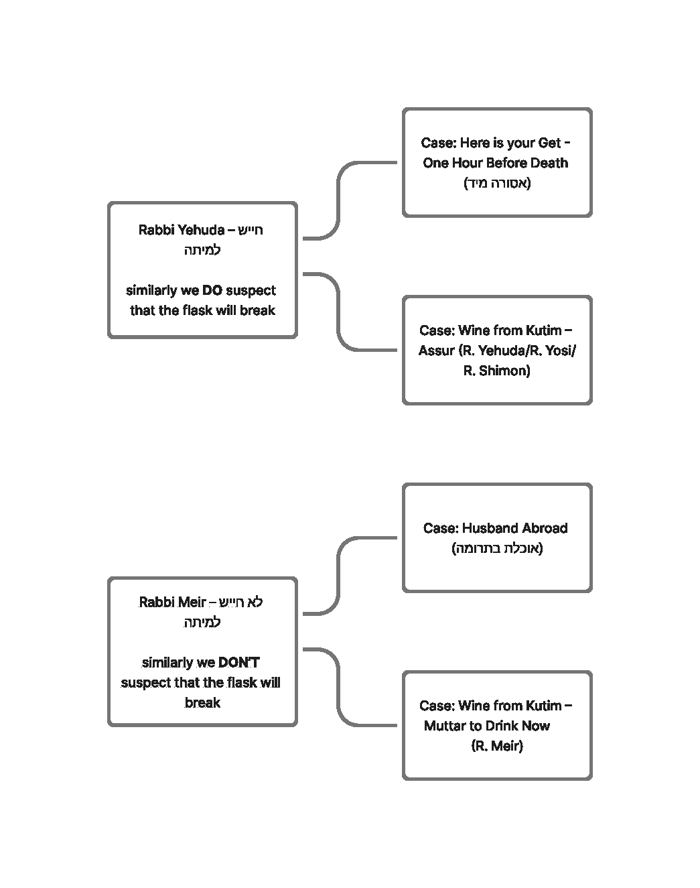
After a review of Abaye's two opposite positions and the ipuch, the Gemara tries to keep Rebbi Meir and Rebbi Yehuda each consistent, given the braisa of wine bought from Kusim. Rebbi Meir worries about death but not about the flask bursting, because he can give it to a shomer. Rebbi Yehuda forbids the wine not because he worries it will burst but because he does not hold of bereira. The Rebbi explained bereira with examples and previewed the next question, whether Rebbi Yehuda really does not worry about the flask bursting. The rest of the recording could not be made out.
Step by step (shakla v’tarya)
- ChazarahReview: did Abaye really say Rebbi Meir is chayish l'misa and Rebbi Yehuda is not? That would explain why Rebbi Meir does not allow a behemah as a wall and Rebbi Yehuda does.
- KashaVatanan: a bas Yisrael married to a kohen whose husband went overseas eats terumah b'chezkas shehu kayam, so we do not worry that he died.
- KashaRaminan: 'harei zeh gitech sha'ah achas kodem misasi'. There she is forbidden to eat terumah immediately. So do we worry he will die or not?
- TeirutzAbaye: lo kashya. The first Mishnah is Rebbi Meir, who does not worry about death. The second is Rebbi Yehuda, who does.
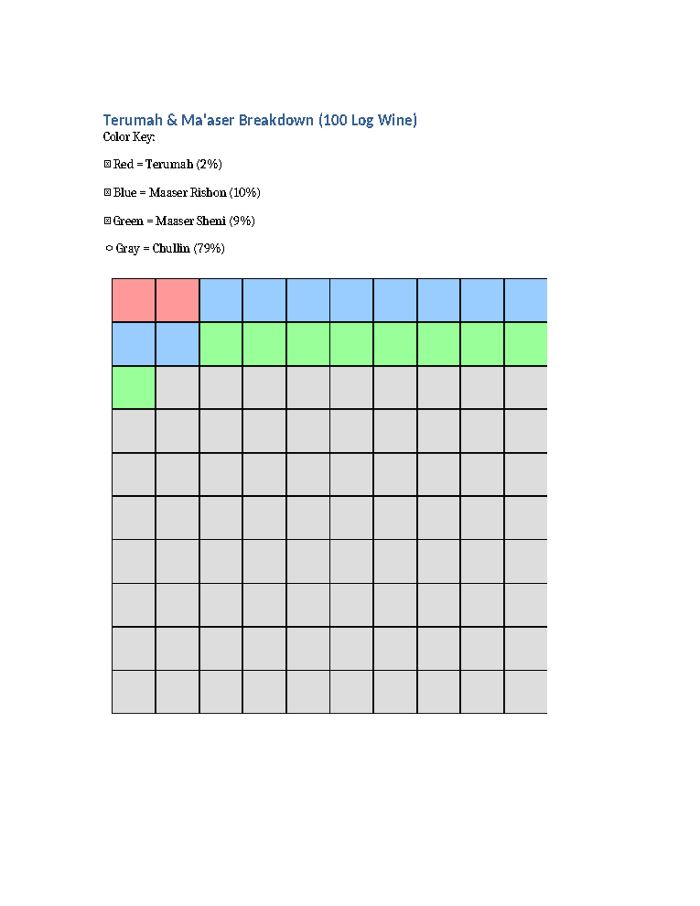
- Ra'ayahProof from a braisa. A person who buys wine from Kusim and cannot separate now declares that two lugin he will separate in the future are terumah, ten are maaser rishon and nine are maaser sheni. He is mechallel the maaser sheni on a coin and may drink immediately (Rebbi Meir). Rebbi Yehuda, Rebbi Yosi and Rebbi Shimon forbid it, because they worry something will happen to the wine.
- Ipuch: reverse it. Rebbi Meir is chayish l'misa and Rebbi Yehuda is not. This is shown from the braisa where one makes a behemah into a wall of a sukkah: Rebbi Meir is posel and Rebbi Yehuda is machshir.
- New problem: the wine braisa states the names explicitly, so it cannot simply be switched. Each Tanna must be dealt with separately.
- KashaLine 4: kashya d'Rebbi Meir a'Rebbi Meir. By sukkah he is chayish l'misa, but by the wine he does not worry that the flask will break.
- TeirutzAmar lach Rebbi Meir: misa shechicha, but bekias hanod lo shechicha, because efshar d'masar lei l'shomer (he can hand it over to a guard).
- A talmid asked whether the shomer would have to pay if it broke. The answer: payment does not help. You need that specific wine; otherwise you retroactively ate tevel.
- MaskanaRebbi Meir is the nervous one. He has a reason not to worry about the wine, since he hands it to a shomer.
- ChazarahThe ipuch already settles the Mishnayos about the get and terumah. All that remains is to reconcile the wine braisa with Rebbi Yehuda.
- KashaLine 7: kashya d'Rebbi Yehuda a'Rebbi Yehuda. He is not nervous: he allows a behemah as a wall and lets the woman eat terumah. Why then does he forbid drinking the wine and dealing with the maasros later?
- TeirutzTaama d'Rebbi Yehuda lav mishum d'chayish l'bekias hanod, ela mishum d'leis lei bereira.
- The RebbiBereira means clarification. After drinking, can he say the remaining portions were terumah and maaser all along? Who says you may clarify retroactively?
- Another famous bereira sugya: eruv techumin. Someone unsure in which of two places his Rebbe will be makes two eruvin and later determines which one was his techum.
- The RebbiRebbi Yehuda's answer pins the dispute on a famous machlokes found all over Shas: can one clarify later what the designation was originally?
- ChazarahA talmid asked whether both stay within character regarding nervousness. Rebbi Meir is the nervous one but holds the wine breaking is uncommon because of the shomer. Rebbi Yehuda is not nervous at all. His issue is bereira.
- The RebbiExample: someone buys apples and wants to be mechallel maaser sheni on one of the coins in his pocket, deciding later which coin. That is also bereira.
- Preview of the next step, 'doubling down': are we sure Rebbi Yehuda does not worry about the flask breaking?
Kashas
- Bas Yisrael married to a kohen eats terumah b'chezkas shehu kayam, yet with a get 'sha'ah achas kodem misasi' she may not eat terumah immediately. Do we worry about death or not?
- Kashya d'Rebbi Meir a'Rebbi Meir: chayish l'misa by sukkah, yet not worried that the wine flask will break.
- Kashya d'Rebbi Yehuda a'Rebbi Yehuda: not worried about death, yet forbids drinking the wine.
- Does Rebbi Yehuda really not worry about the flask breaking? (previewed only)
Teirutzim
- Abaye: the first Mishnah is Rebbi Meir (not chayish l'misa), the second is Rebbi Yehuda (chayish l'misa). Later reversed (ipuch).
- Misa shechicha; bekias hanod lo shechicha, since he can give it to a shomer.
- Rebbi Yehuda's reason is not worry about the flask bursting but that he does not hold of bereira.
Mareh mekomos
- Mishnah: bas Yisrael married to a kohen whose husband went overseas eats terumah b'chezkas shehu kayam. Cited as a contradiction on worrying about death.
- Mishnah: 'harei zeh gitech sha'ah achas kodem misasi', she is forbidden to eat terumah immediately.
- Braisa: buying wine from Kusim. Rebbi Meir permits drinking immediately; Rebbi Yehuda, Rebbi Yosi and Rebbi Shimon forbid.
- Braisa: one who makes a behemah into a wall of a sukkah. Rebbi Meir is posel, Rebbi Yehuda is machshir. Basis of the ipuch.
- Bari v'shema, cited to illustrate the root meaning of 'bari' (clear) in bereira.
- Eruv techumin, as another sugya of bereira.
The Rebbi’s chiddushim
- In the wine case he cannot separate now because it is too close to Shabbos and he lacks the keilim. The nine for maaser sheni are 10% of the remaining 90.
- 'Shechicha' is relative: death is more common than the flask bursting.
- The shomer is a safeguard. Monetary compensation would not help, because the specific wine is needed to avoid retroactively eating tevel.
- Bereira as retroactive clarification: declaring after drinking that the remaining portions were terumah and maaser all along.
- The Gemara rests Rebbi Yehuda's position on the general machlokes of bereira that runs through Shas.
- Apples and coins: deciding later which coin is maaser sheni is also bereira.
Unclear in recording
- Opening reference ('Chavgilmo v'beiz') unclear in recording.
- Detail of who 'the lady' receiving maaser rishon refers to, unclear in recording.
- Description of Rebbi Meir's concern in the behemah-wall case ('the wall is going to shrink') unclear in recording.
- Reference to 'the Gaitan and the Getz' unclear in recording.
- Who 'Rebbe says you could do that' refers to in the eruv example, unclear in recording.
- From about 16:05 to the end, the recording could not be made out.
Drafted from the recording of the shiur, for chazarah. Torah terms follow the Rebbi’s own words; anything that could not be made out is marked “unclear in recording”. Tap a time to hear that point. Corrections welcome.