Writing a get on an animal: R' Yosi HaGlili vs Rabbanan
The sugya
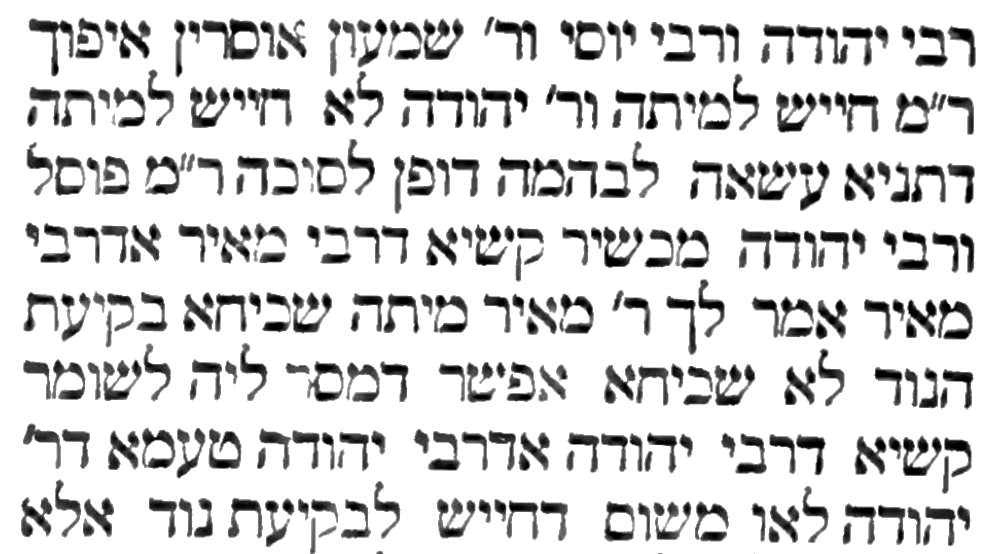
The shiur learns the statement in the name of R' Yosi HaGlili that a get may not be written on an animal, and his drasha from 'sefer' and 'v'kasav lah' that a get may be written on anything except something with ruach chaim or food. The Rabbanan answer that 'sefer' means only a telling-over of words (sippur devarim), so it can be written on anything, and they use 'v'kasav' to teach that she is divorced only through writing and not through money, despite the hekesh of yetziah to havayah. The Rebbi stopped before the Gemara asks where R' Yosi HaGlili learns that sevara, and then reviewed from line 1.
Step by step (shakla v’tarya)
- GemaraLine one: 'amar mar' refers to the one who quoted R' Yosi HaGlili. The Rebbi links it to the earlier statement in his name about an animal as a wall of a sukkah.
- GemaraR' Yosi HaGlili says one also may not write gittei nashim on an animal.
- Side discussion on why it specifies gittei nashim when there are other gittin, such as a get for an eved. Conclusion: the word get just means a document, not specifically a divorce document.
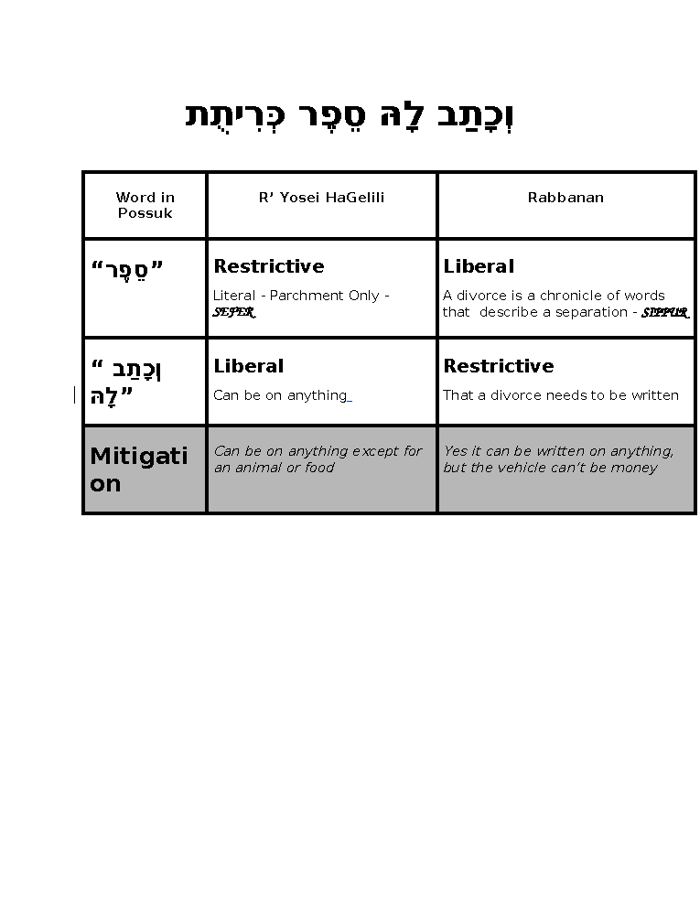
- GemaraThe reason of R' Yosi HaGlili is that the pasuk about a get uses the word sefer. If that were all, a get could be written only on a sefer, meaning parchment.
- GemaraHow do we include anything else, even a tissue box? Because the pasuk says 'v'kasav lah', which means on anything ('mikol makom').
- GemaraIf so, why does it say sefer? The two words limit each other: just as a sefer has no ruach chaim and is not food, so too a get may be written on anything that has no ruach chaim and is not food.
- Question: parchment is skin. Answer: it is not something readily eaten; it is worked until it is no longer food.
- Ra'ayahThe Rebbi reads the pasuk of get. 'V'kasav lah' sounds like it could be on anything, since the pasuk could have just said 'v'nasan b'yadah' a sefer. If you have a sefer, someone obviously wrote on it.
- ShitahHe sets out how the Gemara will go back and forth between R' Yosi HaGlili and the Rabbanan, asking what each one does with the other's limud.
- ShitahRabbanan: had the pasuk said 'b'sefer', we would agree with you.
- ShitahRabbanan, continued: now that it says only 'sefer', it comes for 'sefiras devarim b'alma', a mere telling-over of words. The get must contain a certain nusach, and it can be written on anything.
- ChazarahHe reviews from line 8. According to the Rabbanan the text can be written on anything, even a fruit roll-up. According to R' Yosi HaGlili it must be on something that is not food and not a baal chai, such as wood. Nobody holds it must be on parchment.
- KashaAccording to the Rabbanan, what do they learn from the extra 'v'kasav'?
- TeirutzThey need it for 'bikseivah misgareshes v'einah misgareshes b'kesef': she is divorced only through writing, not through money.
- Gemara'Salka daitach amina' (he explains the abbreviation ס״ד): since yetziah is connected through a hekesh to havayah, just as entering kiddushin is with money, so too exiting would be with money. Kamashma lan that it must be through writing.
- He stops before the next step, where the Gemara asks what the other side does with each limud and how R' Yosi HaGlili knows it cannot be with money. He then reviews from line 1.
- ChazarahHe reviews the whole sugya again from the beginning through the kamashma lan.
- The RebbiFor R' Yosi HaGlili the limitation comes from the word sefer. For the Rabbanan the limitation comes from 'v'kasav'. Either way the two words limit each other.
Kashas
- If the pasuk says sefer, how do we include writing a get on anything else?
- If 'v'kasav lah' includes everything, why does the pasuk say sefer?
- According to the Rabbanan, what is the extra 'v'kasav' for?
Teirutzim
- 'V'kasav lah' teaches that it may be written on anything.
- Sefer limits it to something like a sefer: no ruach chaim and not food.
- For the Rabbanan, sefer means a telling-over of words (a nusach), not the material it is written on.
- 'V'kasav' teaches that she is divorced through writing and not through money.
Mareh mekomos
- Pasuk of get (Ki yikach ish ishah... v'kasav lah sefer kerisus v'nasan b'yadah): the source of both sefer and v'kasav lah.
- Pasuk 'v'yatzah v'haysah l'ish acher': the source of the connection (hekesh) between leaving a marriage and entering one.
The Rebbi’s chiddushim
- Chazal sometimes choose particular limitations, here two (no ruach chaim, not food), even though many other limitations could have been found.
- The word get means a document in general, which is why the Gemara specifies gittei nashim.
- Parchment, although it is skin, is not considered food, because it is processed until it is no longer food and is not readily eaten.
- 'V'kasav lah' is extra: if he gives her a sefer, it is obvious someone wrote on it. So it must come to include writing on anything.
- Sefer is related to sippur, a story: the get is a script, a nusach or template of words such as 'harei at muteres'.
- The hava amina of divorce through money is not a logical comparison. It comes from the Torah connecting entering and exiting marriage in the pesukim.
- R' Yosi HaGlili limits through sefer while the Rabbanan limit through v'kasav. In both shitos the two words limit each other.
Unclear in recording
- The daf he named at the opening ('Dafna Thalit in the days').
- A comment about moldy bread or raw meat as examples related to food.
- A back-and-forth about how R' Yosi HaGlili knows what must be written in the get.
- A comment that the kesubah is only the conditions of kiddushin while the mechanism of marriage is money.
- A closing exchange about whether, for the Rabbanan, v'kasav is limiting because it is extra.
Drafted from the recording of the shiur, for chazarah. Torah terms follow the Rebbi’s own words; anything that could not be made out is marked “unclear in recording”. Tap a time to hear that point. Corrections welcome.