Shiur summary (draft from the recording)
Rava's dira arai and why each Amora disagrees
כולהו כרבה לא אמרי
Sukkah 2a · Monday, March 23, 2026
The sugya
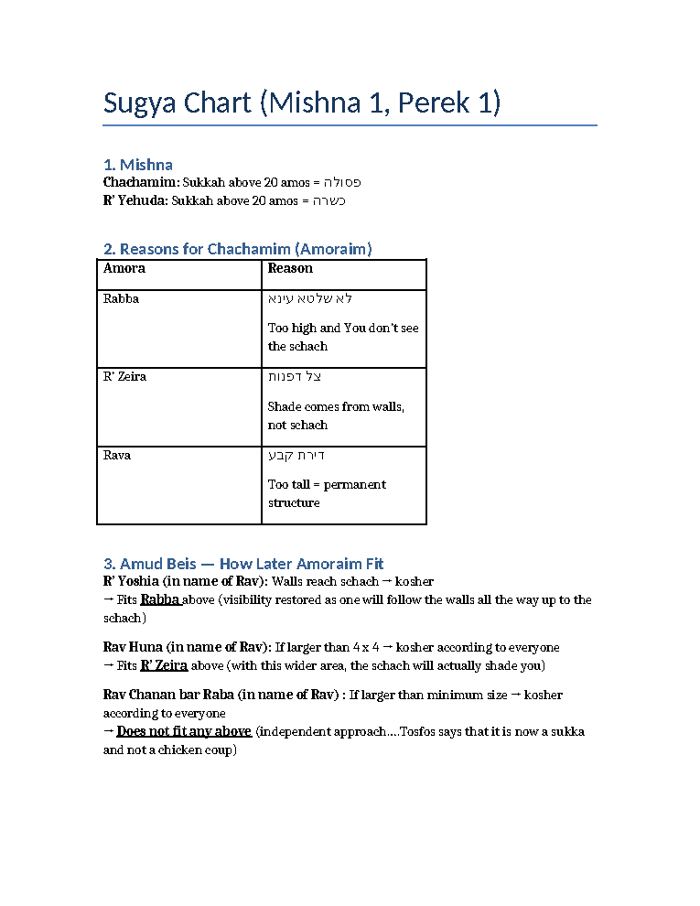
The shiur finished Rava's source for the Mishnah's 20-amah limit: a sukkah must be a temporary dwelling. It covered Abaye's kasha from iron walls and Rava's answer. The Rebbi then reviewed the three opinions of Rabbah, R' Zeira and Rava, and began the Gemara's analysis of why each Amora does not learn like the other two. This included R' Zeira's counter-argument (chupah vs. sukkah, shma minah tarti) and why Abaye's kasha keeps the others from learning like Rava.
Step by step (shakla v’tarya)
- ChazarahThree Amoraim give reasons for the Chachamim's 20-amah limit; today is the third, Rava, followed by a comparison of the three.
- ShitahRava learns it from 'b'sukkos teishvu shivas yamim': for all seven days leave your permanent dwelling and live in a temporary dwelling (dira arai). Up to 20 amos a person makes his dwelling temporary; above 20 amos he makes it permanent (keva).
- The RebbiPlaceholder removed
- Placeholder removed
Drafted from the recording of the shiur, for chazarah. Torah terms follow the Rebbi’s own words; anything that could not be made out is marked “unclear in recording”. Tap a time to hear that point. Corrections welcome.