Chatzitzin d'oraisa: hair, rubo umakpid
The sugya
Continuing Rav's statement that shiurin, chatzitzin and mechitzin are halacha l'Moshe miSinai, the Gemara asks that chatzitzin are d'oraisa. It answers that the halacha is needed for hair, like Rabbah bar bar Chana. When it shows that hair is also d'oraisa, it answers that the halacha teaches R' Yitzchak's rule: d'var Torah only rubo umakpid is a chatzitza. The Rebbi explained hakpada with practical examples, then the Rabbanan's gezeiros on rubo she'eino makpid and miuto hamakpid. He ended with a four-level summary and stopped before the next Mishnah.
Step by step (shakla v’tarya)
- ChazarahRav says shiurin, chatzitzin and mechitzin are halacha l'Moshe miSinai. The Gemara objects that they are directly d'oraisa.
- ChazarahShiurin were already dealt with: they are not really d'oraisa, and the pasuk is only an asmachta b'alma.
- KashaChatzitzin are d'oraisa, from v'rachatz es besaro bamayim: no davar chotzeitz may be between him and the water. So why call them halacha l'Moshe miSinai?
- TeirutzThe halacha comes for his hair, like Rabbah bar bar Chana: one hair tied in a knot is chotzeitz, three are not chotzeitz, and two he does not know.
- The RebbiThe Rebbi called Rabbah bar bar Chana 'hair physics'. Water does not get into the knot of a single hair, but three hairs do not knot tightly, so water gets in.
- KashaHair is also d'oraisa: es besaro, the word 'es' includes what is tafel to his flesh, namely his hair.
- TeirutzThe halacha comes for R' Yitzchak's rule about hair as a chatzitza.
- RashiRashi on 'd'var Torah': it means halacha, i.e. this halacha l'Moshe miSinai.
- The RebbiHalacha l'Moshe miSinai is d'oraisa. It is just not written in the Torah and not a drasha; it is passed down, like the halachos of tefillin, the bayis and so on.
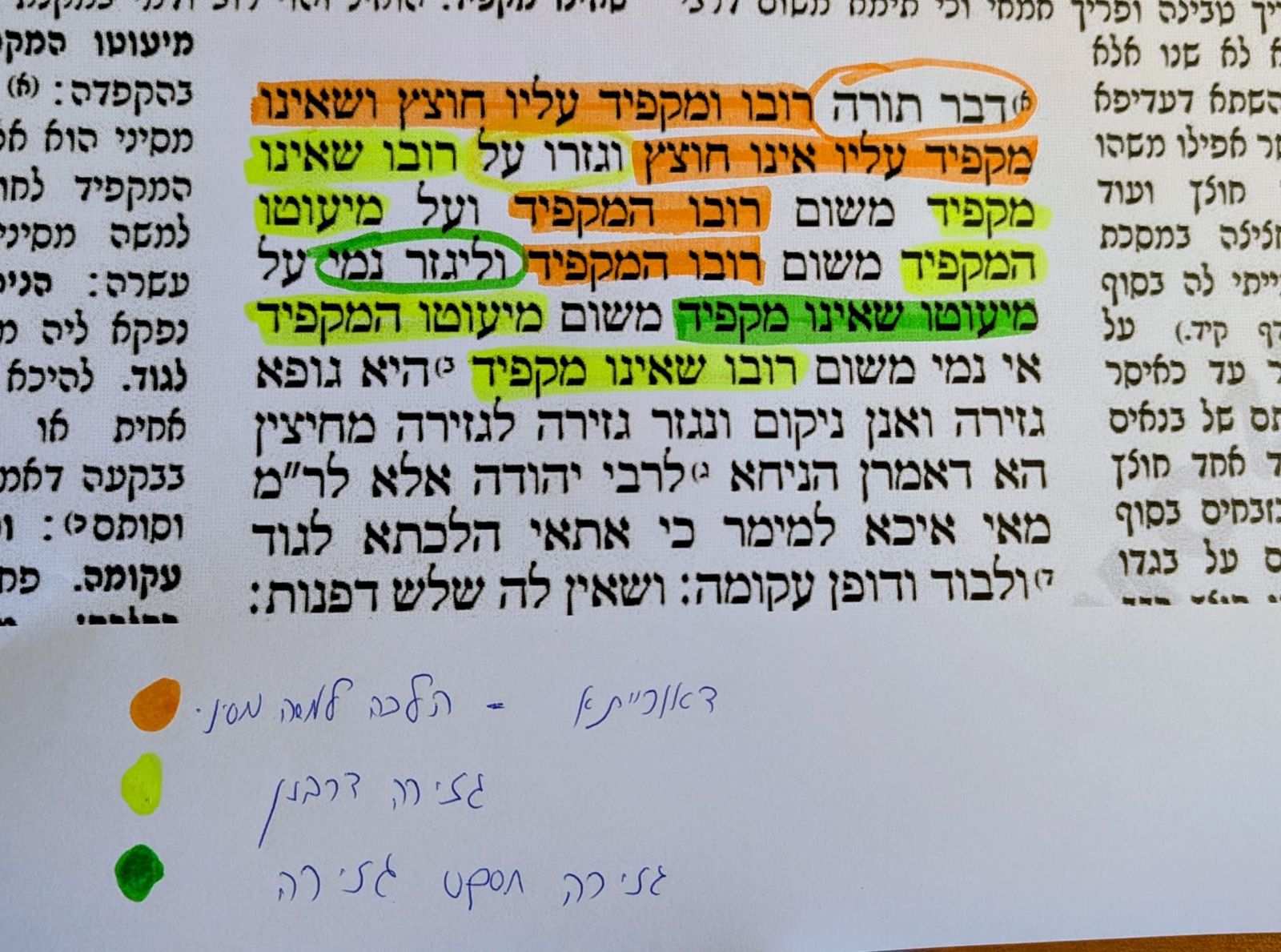
- GemaraD'var Torah: rubo umakpid alav chotzeitz, v'she'eino makpid alav eino chotzeitz.
- The RebbiChatzitza depends on a person's hakpada and also on how much is covered.
- The RebbiExample: of 2,000 hairs, 1,001 are knotted. He is makpid and goes home to fix it, so it is a chatzitza. That is a high bar.
- The RebbiWithout the halacha, es besaro would make even one knotted hair a chatzitza. The halacha l'Moshe miSinai waters down the d'oraisa and requires rubo and makpid.
- RashiRashi also gives the example of hair that is metunaf (dirty) with tit, like plaster.
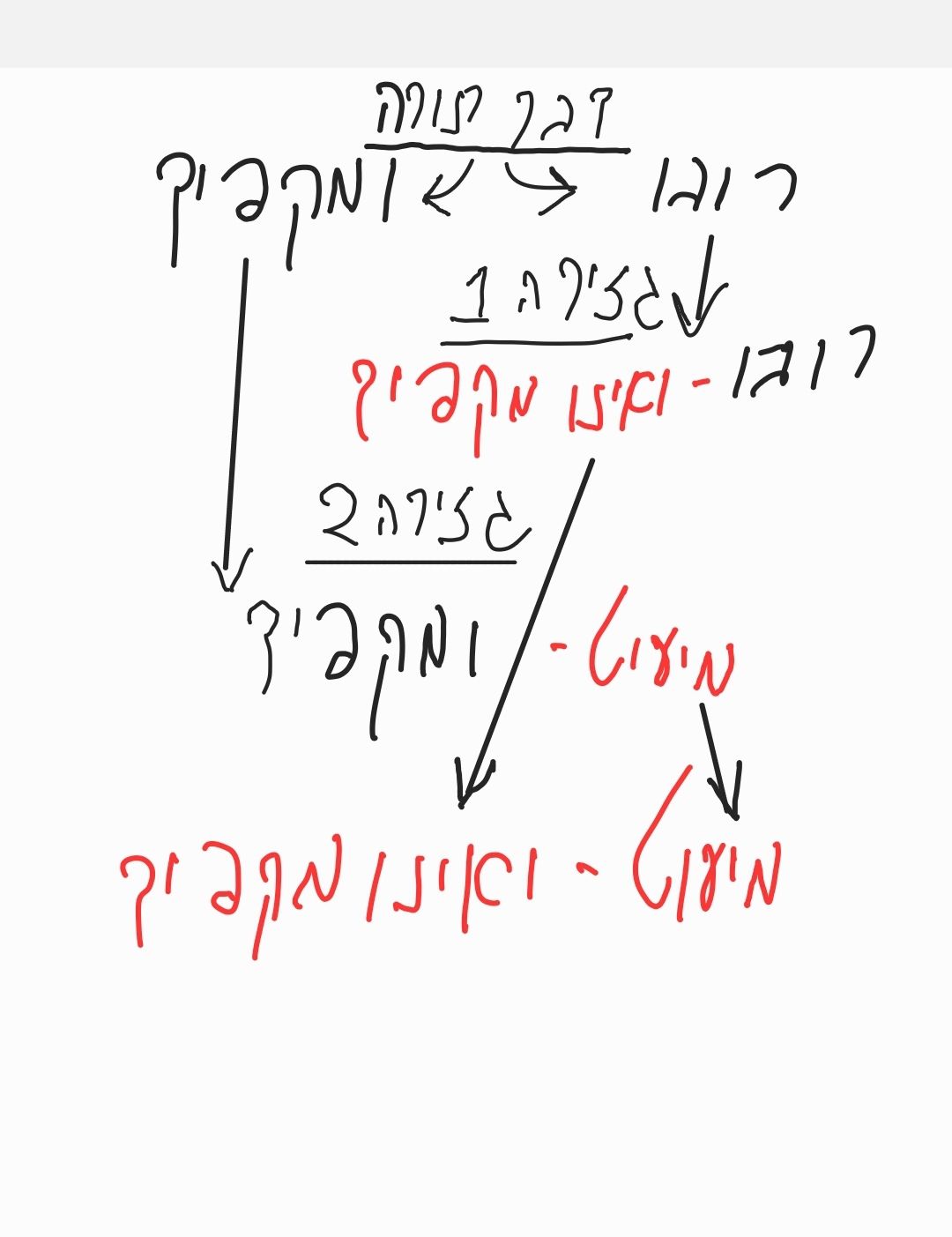
- GemaraGezeiros d'Rabbanan, part one: the Rabbanan decreed on rubo she'eino makpid because of rubo hamakpid.
- The RebbiThe Rabbanan take one step back to stay far from the d'oraisa. Rubo is already significant, so even if he is not makpid it is a chatzitza miderabbanan.
- GemaraGezeiros d'Rabbanan, part two: they also decreed on miuto hamakpid because of rubo hamakpid. It is always because of rubo hamakpid, only one step away.
- ChazarahFour levels: (1) without the halacha, one hair not touching water is a chatzitza (from es besaro); (2) the halacha l'Moshe miSinai says only most hair and makpid; (3) the Rabbanan add most hair even not makpid; (4) the Rabbanan add makpid even not most.
Kashas
- Chatzitzin are d'oraisa (v'rachatz es besaro bamayim), so how can they be halacha l'Moshe miSinai?
- Hair is also d'oraisa, from the 'es' of es besaro.
Teirutzim
- The halacha is for hair, like Rabbah bar bar Chana: one knotted hair is chotzeitz, three are not, two is unknown.
- The halacha is for R' Yitzchak: d'var Torah, rubo umakpid is chotzeitz and she'eino makpid is not.
Rashi & Tosafos
- Rashi: D'var Torah means halacha, i.e. the halacha l'Moshe miSinai (first Rashi, three words).
- Rashi: Gives the example of hair metunaf b'tit, dirty with plaster or mud.
Mareh mekomos
- Pasuk v'rachatz es besaro bamayim: the source that chatzitza is d'oraisa, and through 'es', that hair is included.
- Tefillin: an example of halachos that are halacha l'Moshe miSinai.
The Rebbi’s chiddushim
- Painter example: paint in his hair is all in a day's work, so he is not makpid.
- Mikvah example: after tevila she finds paint on her hand and scratches it off, which shows hakpada. A little dough from everyday kitchen work shows none.
- Further examples of hair that is covered: hair caked with dirt and sweat in summer, or with sheetrock dust from construction work.
- Purim example of miut hamakpid: glue from a costume beard stuck on a few hairs, which he works for days to remove. Mid'oraisa it is not a chatzitza because it is only miut, but the Rabbanan decreed.
- The halacha l'Moshe miSinai already waters down the d'oraisa of es besaro, and the Rabbanan move back one step from it.
Unclear in recording
- The opening reference 'Tzadzigimar' is unclear in recording.
- The Rebbi's discussion of which parsha the pasuk comes from (mentions of Nazir and Metzora) is unclear in recording.
- A remark that Rashi learns this 'by hair, the whole body', as opposed to the Rebbi's simpler reading, is unclear in recording.
- A question-and-answer exchange with a talmid about three hairs and Rabbah bar bar Chana is partly unclear in recording.
Drafted from the recording of the shiur, for chazarah. Torah terms follow the Rebbi’s own words; anything that could not be made out is marked “unclear in recording”. Tap a time to hear that point. Corrections welcome.