Chatzitzin Gezeiros and Mechitzin: Gud, Lavud, Dofen Akumah
The sugya
The shiur continues the three things the Gemara calls halacha l'Moshe miSinai: shiurin, chatzitzin and mechitzin. It reviews Rabbi Yitzchak's rule that a chatzitzah in hair needs both rubo and makpid, and the Rabbanan's gezeiros one step down. The Gemara asks why they did not go a further step, and answers that we do not make a gezeirah l'gezeirah. It then turns to mechitzin: the halacha is needed for ten tefachim according to Rabbi Yehuda, and according to Rabbi Meir for gud, lavud and dofen akumah. The shiur ends with a review and a preparation for tomorrow on how many times 'sukkos' is written in the pesukim.
Step by step (shakla v’tarya)
- ChazarahReview: three things are halacha l'Moshe miSinai: shiurin, chatzitzin and mechitzin. Shiurin were already gone through from the pasuk of the seven minim.
- ChazarahReview of chatzitzin. Hair itself is learned from the pasuk as 'tafel'. On Friday we saw where the halacha l'Moshe miSinai comes in: 'ki asa hilchesa', like Rabbi Yitzchak.
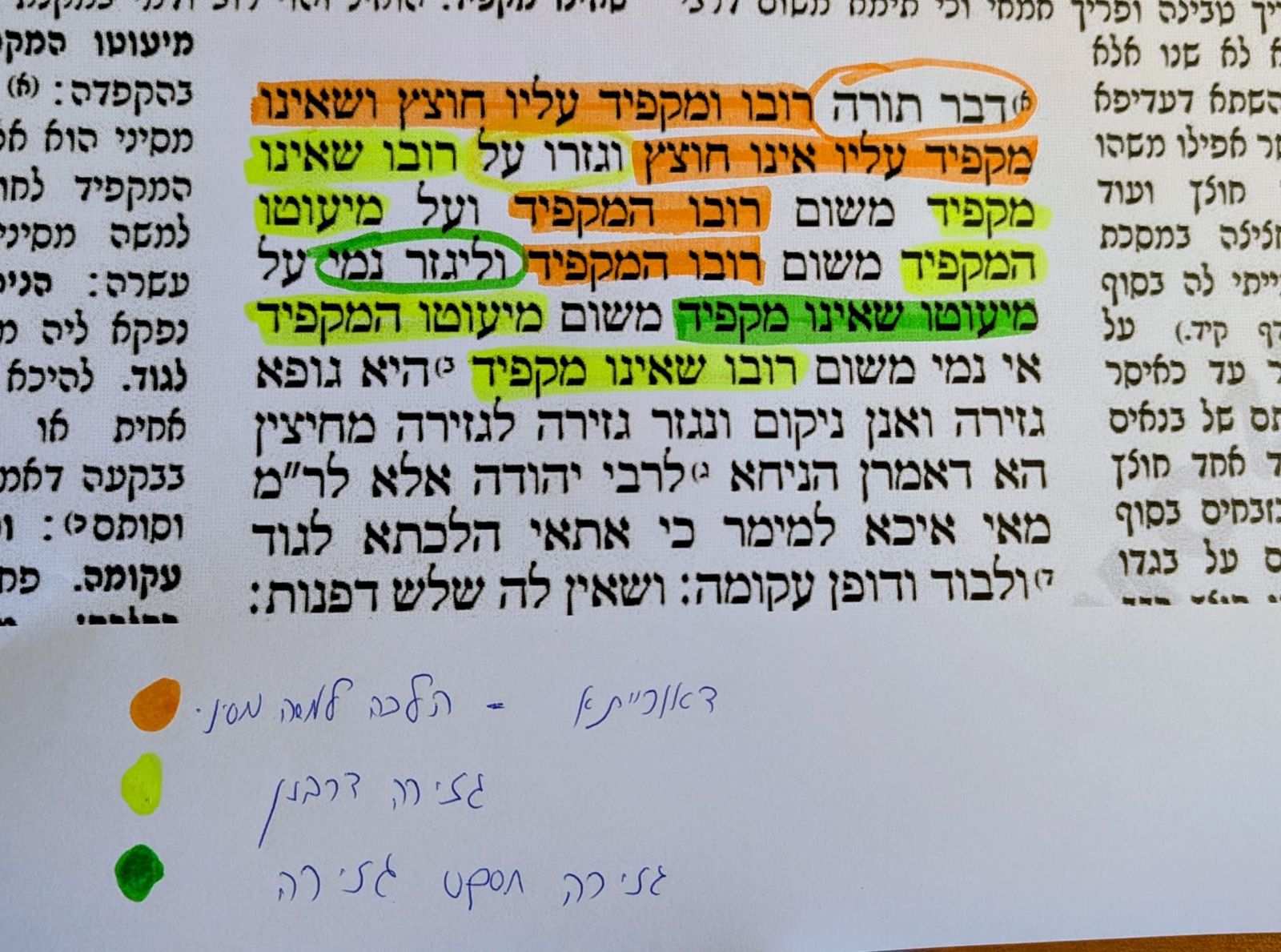
- ShitahRabbi Yitzchak: d'var Torah, rubo u'makpid alav chotzetz, and she'eino makpid alav eino chotzetz. For a d'oraisa chatzitzah you need both: most of the hair, and that he is makpid on it.
- Example: bird droppings covering most of the hair, which anyone would be makpid on. That is a d'oraisa chatzitzah. Something small, even though one is makpid, is not d'oraisa because it is not rubo.
- GemaraV'gazru: the Rabbanan decreed on rubo she'eino makpid because of rubo hamakpid. Example: salty mist in the hair after the beach, which covers the whole head but one is not makpid.
- GemaraThey also decreed on miyuto hamakpid (a little bird stuff on a few hairs) because of rubo hamakpid. Each gezeirah is one step down from the d'oraisa.
- KashaLine 4: let us also decree on miyuto she'eino makpid, because of miyuto hamakpid, or alternatively because of rubo she'eino makpid. In other words, why only one step down and not two?
- TeirutzHi gufa gezeirah: each one-step case is itself only a gezeirah. Shall we get up and make a gezeirah l'gezeirah?
- The RebbiEvery d'rabbanan is a fence to keep you away from the d'oraisa, but we do not go on to make gezeiros on the gezeiros.
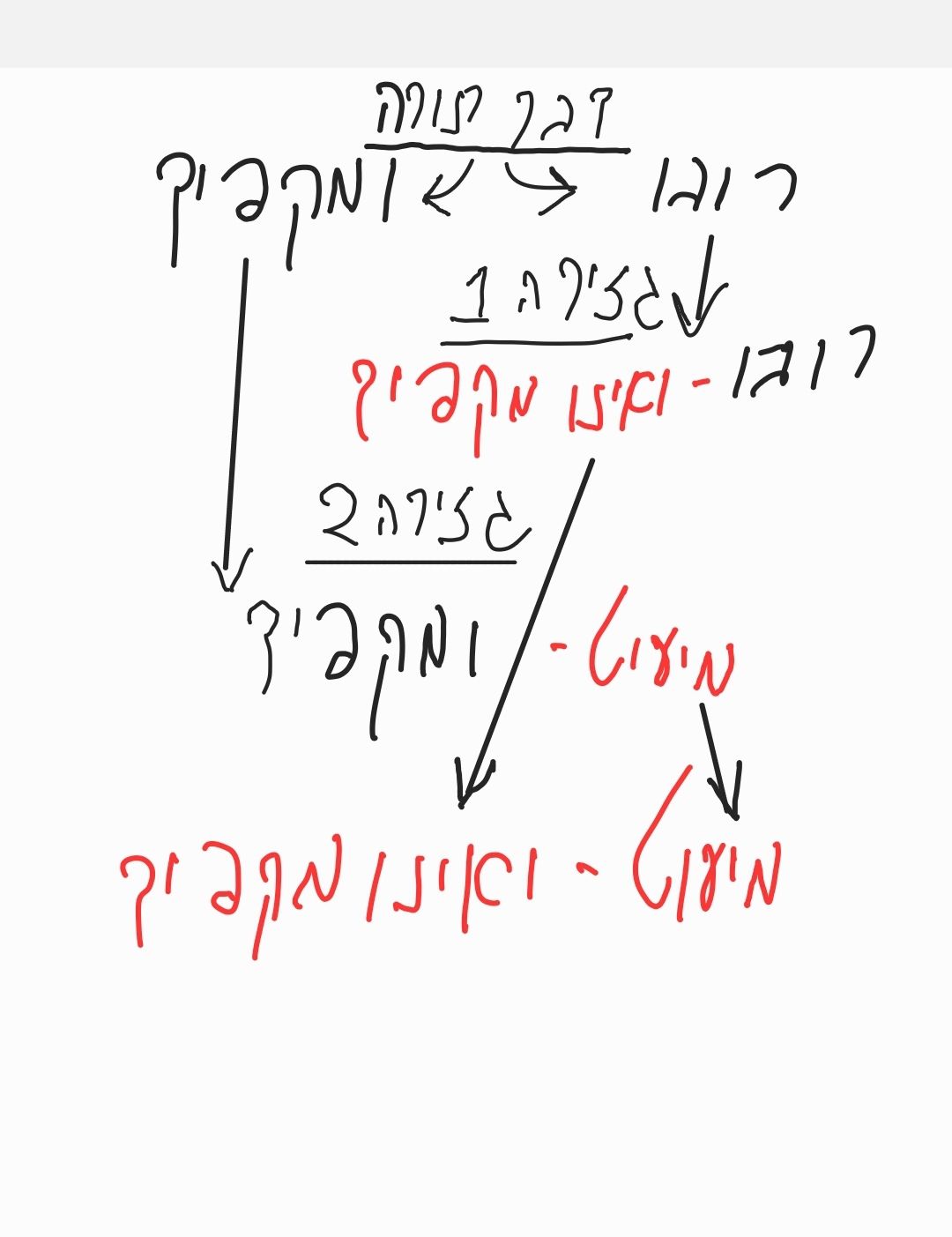
- The RebbiThe Rebbi suggested this belongs on a chart. Two things make it d'oraisa: rubo and makpid. The rejected gezeirah l'gezeirah would be the case of neither: not rubo and not makpid.
- The RebbiWe have seen in many places that the Rabbanan take one step, not two. The second step would be even when he is not makpid, because he is so close to being makpid.
- GemaraLine 7: mechitzin, hada d'amran. This is the ten tefachim for a sukkah wall.
- ChazarahHow we got here: Rabbi Meir learns ten tefachim from the aron, kapores and keruvim calculations. Rabbi Yehuda holds amos of keilim are five tefachim and of binyan six, so the calculation is lost. He therefore needs the halacha l'Moshe miSinai (previous amud, line 39).
- KashaHanicha l'Rabbi Yehuda. But according to Rabbi Meir, who has the calculation from the kapores and keruvim, what is the halacha needed for?
- TeirutzKi asa hilchesa: the halacha comes for gud, lavud and dofen akumah.
- The RebbiGud means stretching a wall: stretch and pull down, maybe even sideways or up. Lavud is the three tefachim. Dofen akumah is a bent or slanted wall. All of these are ways of making a mechitzah.
- ChazarahReview of the whole passage, from v'gazru through gud, lavud and dofen akumah.
- Preparation for tomorrow: the two pesukim of sukkah, 'basukkos teishvu shivas yamim...' and 'lema'an yeidu doroseichem ki basukkos hoshavti...'. The word sukkos appears three times.
- Two of the three are written one way and one is written with an extra letter. Tomorrow we will learn the walls of the sukkah from the number of times sukkos is written, and the machlokes about it.
Kashas
- Why not also decree on miyuto she'eino makpid, because of miyuto hamakpid or because of rubo she'eino makpid?
- Mechitzin as halacha l'Moshe miSinai works for Rabbi Yehuda, but what does Rabbi Meir need it for, since he has the ten tefachim from the calculation?
Teirutzim
- Hi gufa gezeirah: we do not make a gezeirah l'gezeirah.
- According to Rabbi Meir, the halacha comes for gud, lavud and dofen akumah.
Mareh mekomos
- The pasuk 'v'rachatz es besaro', where hair is included as 'tafel'. Cited in review.
- Previous amud, line 39, 'ela l'Rabbi Yehuda': the source of the question of where Rabbi Yehuda learns ten tefachim.
- The pesukim 'basukkos teishvu...' and 'lema'an yeidu doroseichem...': how many times sukkos is written, in preparation for tomorrow's sugya on the walls of the sukkah.
The Rebbi’s chiddushim
- A d'rabbanan is a fence around the d'oraisa, but we do not build fences around fences.
- There are two components of a d'oraisa chatzitzah, rubo and makpid. Each gezeirah removes one of them. The gezeirah l'gezeirah would remove both (not rubo and not makpid).
- This is a recurring pattern: the Rabbanan go one step down, not two.
Unclear in recording
- Part of the discussion with the chabura about which words to underline on lines 5-6, and exactly how to describe the gezeirah l'gezeirah, is unclear in recording.
- Remarks about whether gud also works upward or sideways are unclear in recording.
- Remarks after dofen akumah, apparently comparing to Rabbi Yehuda, are unclear in recording.
- Which letter is the extra one in the spelling of sukkos is unclear in recording.
Drafted from the recording of the shiur, for chazarah. Torah terms follow the Rebbi’s own words; anything that could not be made out is marked “unclear in recording”. Tap a time to hear that point. Corrections welcome.