Chatzitza gezeiros, mechitzin, and walls of sukkah
The sugya
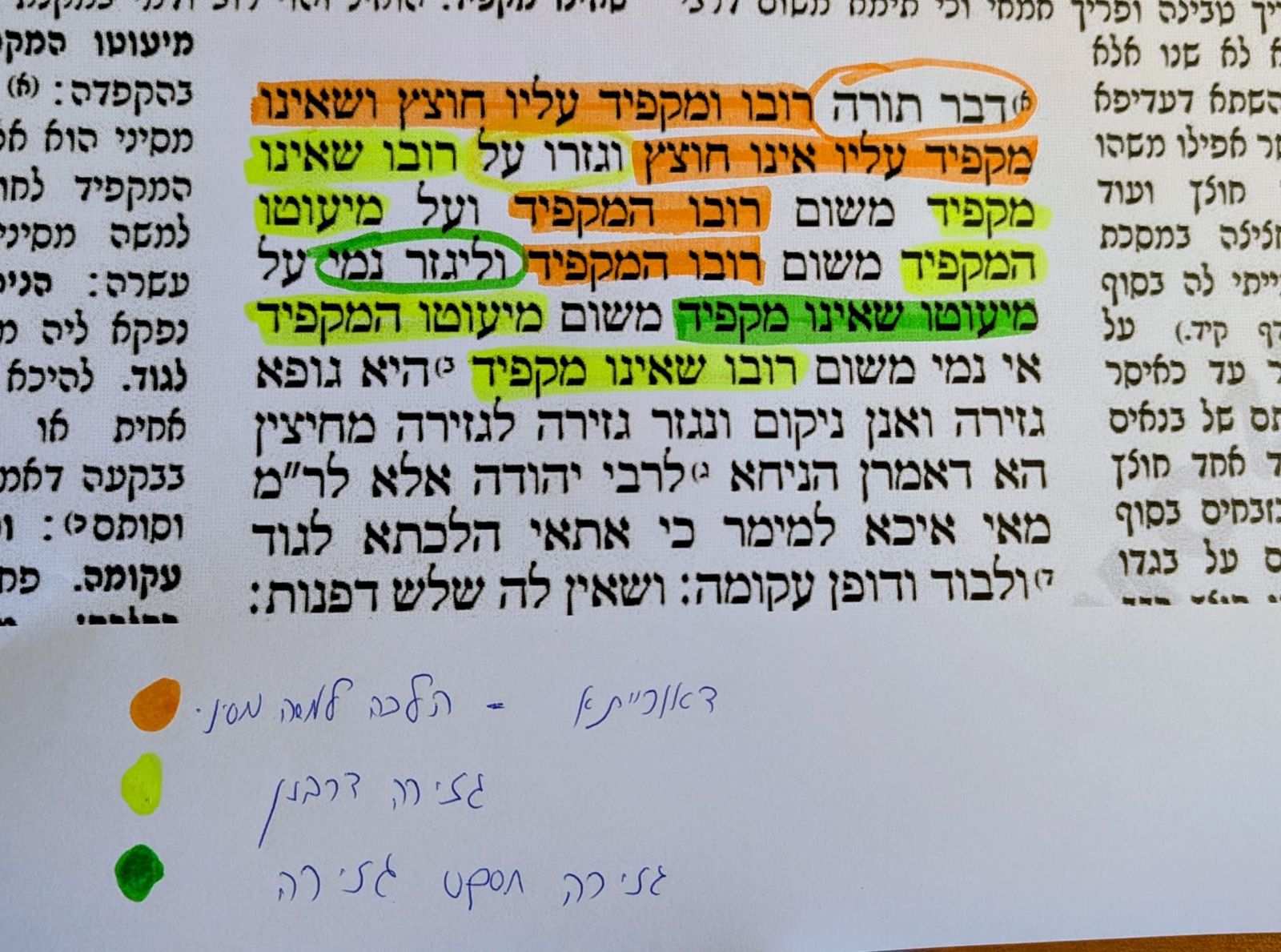
The shiur opened with a review of the gezeiros of chatzitza, using a color chart: d'oraisa, d'rabbanan, and mutar. It explained why Chazal did not make a gezeira l'gezeira. It then finished the sugya of mechitzin, where for R' Meir the halacha teaches gud, lavud and dofen akuma. The Rebbi then began the Braisa about the walls of the sukkah, the machlokes Rabbanan and R' Shimon (shtayim k'hilchasan vs. shalosh k'hilchasan), and the Gemara's explanation that they argue whether yesh em l'mesores or yesh em l'mikra. The recording becomes unintelligible after about 10 minutes.
Step by step (shakla v’tarya)
- ChazarahReview with a color chart. Orange is d'oraisa, yellow is d'rabbanan, green is totally mutar.
- ChazarahD'oraisa (halacha l'Moshe miSinai): rubo u'makpid chotzetz, she'eino makpid eino chotzetz. For a chatzitza you need the majority of the hair and to be particular about it.
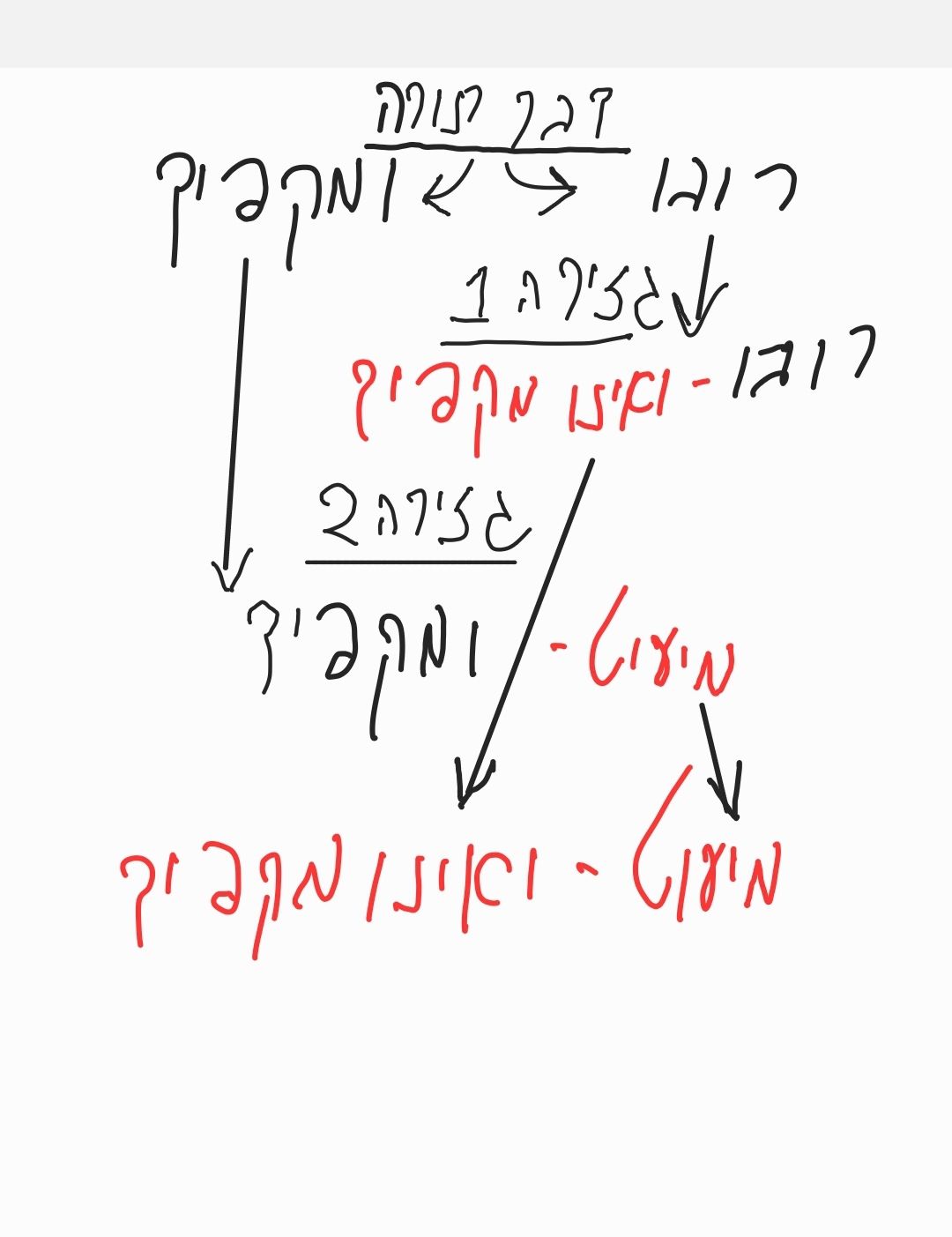
- GemaraChazal decreed on rubo she'eino makpid because of rubo hamakpid. They also decreed on miuto hamakpid because of rubo hamakpid. Each case is missing only one element of the d'oraisa, so it is one step away.
- KashaThe Gemara asks: let us also decree on miuto she'eino makpid, because of miuto hamakpid or because of rubo she'eino makpid. That is two steps away, since it rests on the yellows, which themselves came only from the orange.
- TeirutzHi gufa gezeira, v'anan nekum v'nigzar gezeira l'gezeira? We do not make a gezeira l'gezeira.
- GemaraLine seven: Mechitzin ha d'amran. Mechitzin is a halacha according to R' Yehuda.
- KashaHanicha l'R' Yehuda, but R' Meir learns the shiur from the kapores (discussed earlier). So what is there to say, according to him, about the halacha of mechitzin?
- TeirutzKi asa halacha for gud, lavud and dofen akuma.
- Gud means the wall is considered stretched. Lavud means a gap of less than three tefachim is considered glued together. Dofen akuma means a wall removed from the schach may be brought in, up to four amos.
- MishnahNew topic, the walls of the sukkah. Going back to the first Mishnah, its second-to-last case is a sukkah that does not have three walls.
- GemaraTanu Rabbanan, a very famous Braisa: shtayim k'hilchasan. Two walls must be halachically proper and connected one to the next like an L, as in the picture in Rashi.
- GemaraU'shlishis afilu tefach: the third wall can be even a small tefach. For now, assume the tefach is also connected to the walls. Where it is placed will be seen later.
- ShitahR' Shimon says shalosh k'hilchasan, v'revi'is afilu tefach. Three full walls, and the fourth even a tefach. That is how he reads the Mishnah.
- MachlokesSummary of the machlokes. Rabbanan: shtayim k'hilchasan, shlishis afilu tefach. R' Shimon: shalosh k'hilchasan, revi'is afilu tefach.
- KashaB'mai kamifligi? In what are they arguing?
- TeirutzRabbanan savri yesh em l'mesores; R' Shimon savar yesh em l'mikra.
- The RebbiA word in the Torah may be read one way and spelled another (kri u'ksiv). Yesh em l'mesores gives primacy to the written form, the letters as handed down. Yesh em l'mikra gives primacy to the way the word is read and sounds.
Kashas
- Why not also decree on miuto she'eino makpid, because of miuto hamakpid or rubo she'eino makpid?
- Mechitzin as a halacha works for R' Yehuda. But R' Meir learns from the kapores, so what does the halacha come to teach according to him?
- B'mai kamifligi Rabbanan and R' Shimon regarding the number of walls?
Teirutzim
- The decree itself is a gezeira; we do not make a gezeira l'gezeira.
- For R' Meir, the halacha comes for gud, lavud and dofen akuma.
- Rabbanan hold yesh em l'mesores; R' Shimon holds yesh em l'mikra.
Rashi & Tosafos
- Rashi: Rashi has a picture of shtayim k'hilchasan: two walls connected one to the next, like an L.
Mareh mekomos
- R' Meir learns the shiur from the kapores, discussed in the earlier sugya.
- Yesh em l'mesores appears a few times in Shas. The Rebbi mentions they had it before in 'Makkah', presumably Makkos.
The Rebbi’s chiddushim
- Color-chart framing of chatzitza: d'oraisa (orange), d'rabbanan (yellow), mutar (green).
- The two gezeiros are each one step from the d'oraisa. The proposed gezeira on miuto she'eino makpid would be two steps away, resting only on a d'rabbanan, and that is a gezeira l'gezeira.
- The numbers and steps in this Gemara are crucial. It is understood conceptually, but this is how it reads in the Gemara.
- Dofen akuma is a four-amos rule; lavud is a three-tefachim rule.
- Illustration of a tefach: a 2x4 board, where four is a tefach, and certainly a 2x6.
Unclear in recording
- The details of the halachically proper walls (seven tefachim, and words heard as 'Kutman Kadeshamay' and 'Rubei B'Shulchanay', possibly referring to Rashi) are unclear in recording.
- A garbled phrase at the start of the explanation of yesh em l'mesores is unclear in recording.
- From about 10:05 to the end, the recording is unintelligible, apart from a mention of a baal kriah. The rest of the shiur could not be made out.
Drafted from the recording of the shiur, for chazarah. Torah terms follow the Rebbi’s own words; anything that could not be made out is marked “unclear in recording”. Tap a time to hear that point. Corrections welcome.