Shiur summary (draft from the recording)
Mishnah in Parah: Children on Oxen and Doors
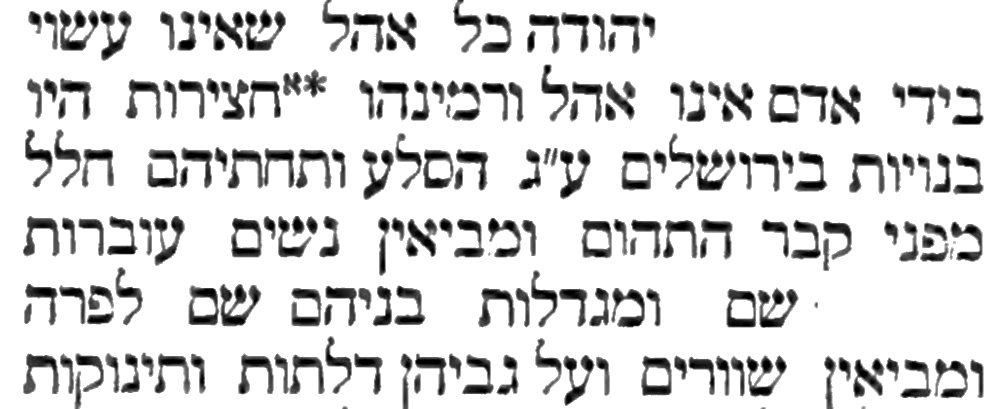
חצירות היו בנויות
Sukkah 21a · lines 5–10 · Monday, October 27, 2025
The sugya
Continuing the question of what Rebbi Yehuda considers an ohel, the Gemara asks: does Rebbi Yehuda hold that an ohel not made by a person is not an ohel? It then brings a contradiction from a Mishnah in Parah about how children were raised and transported in tahara to draw water for the Parah Adumah. The shiur read the Mishnah word by word, including Rebbi Yosi's opinion, and began the Braisa where Rebbi Yehuda says no doors, only oxen. The kasha itself will be taken up tomorrow, followed by a phrase-by-phrase review.
Step by step (shakla v’tarya)
- ChazarahReview of Friday: the Gemara asks whether Rebbi Yehuda holds that any ohel not made by a person is not an ohel, and brings a contradiction from a Mishnah in Parah.
- MishnahCourtyards were built in Yerushalayim on bedrock, with a hollow space underneath because of kever hatehom, the possibility of a grave deep down somewhere.
- MishnahPregnant women were brought there, gave birth there and raised their children there for the Parah, to prepare the water that would be mixed with the ashes.
- The Rebbi notes that this happened in history 7 or 8 times, when they had to replenish the ashes.
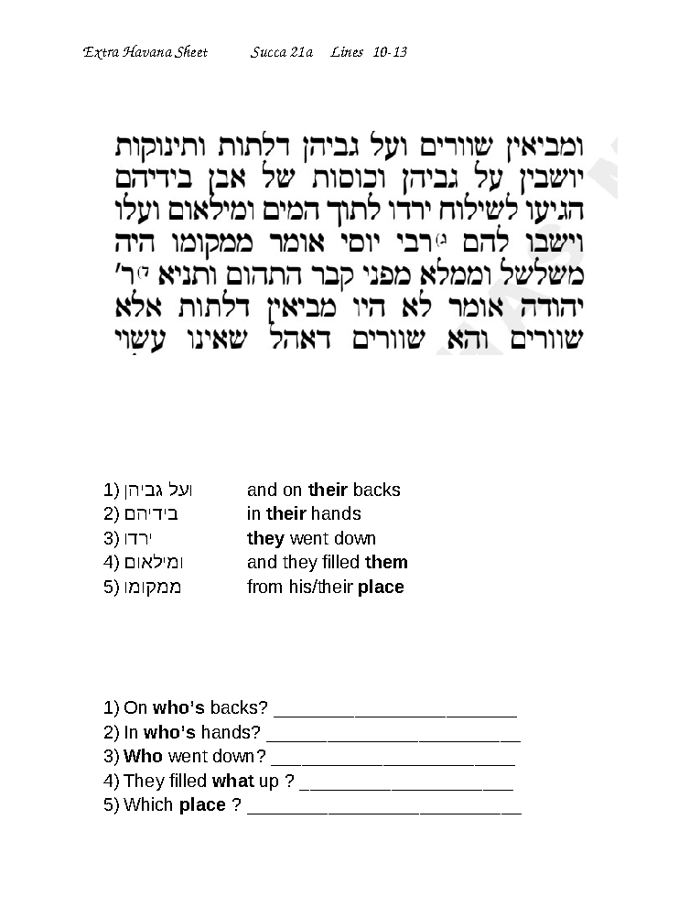
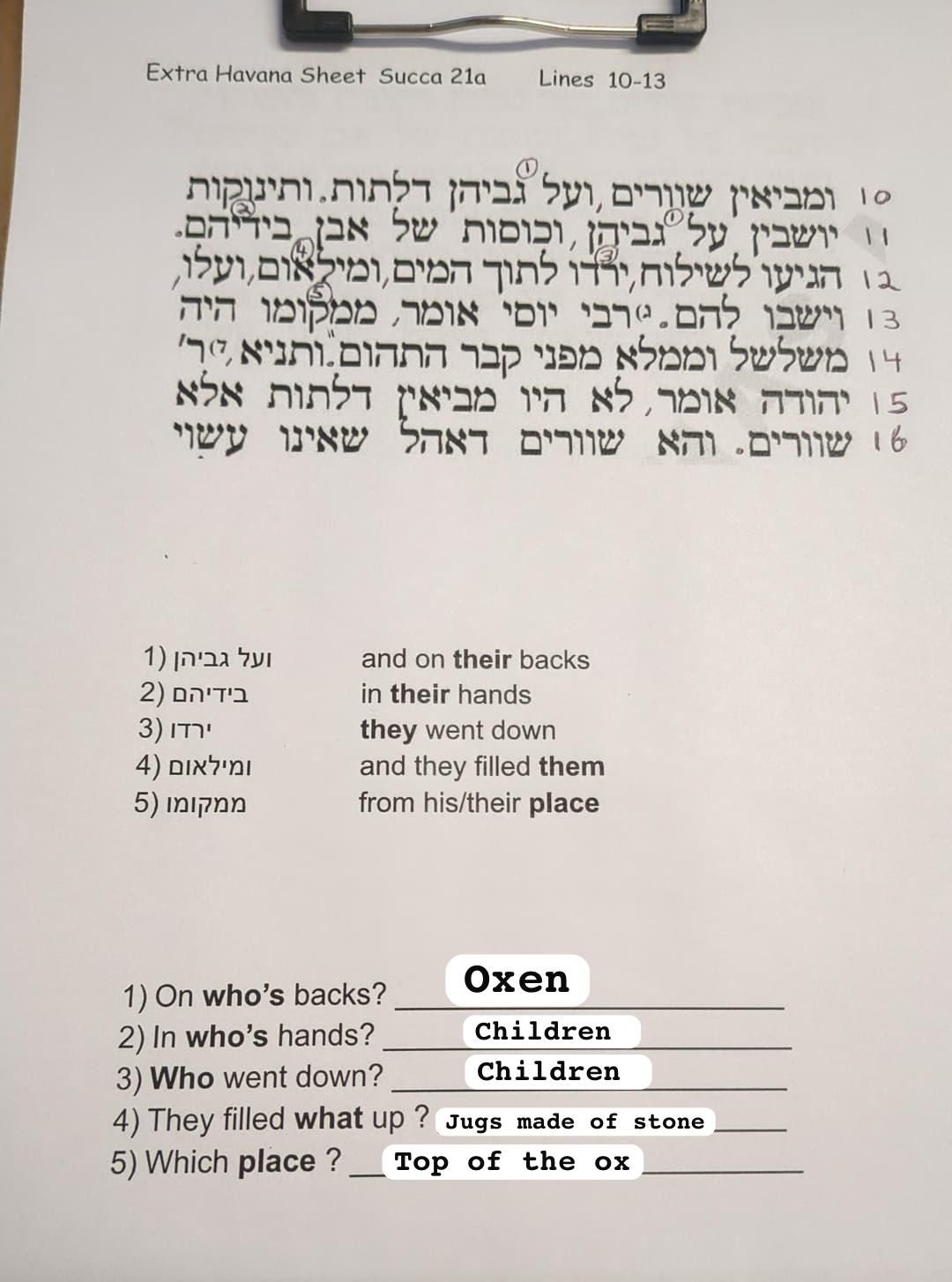
- MishnahLine 10: they would bring oxen (shvarim), and on their backs doors.
- MishnahThe children would sit on top of the doors, which were on top of the oxen, holding cups of stone.
- The RebbiWhy stone: stone keilim can never become tamei. This was another extreme measure taken to stay tahor.
- The RebbiThey held the cups during the trip because they were about to use them at the water.
- MishnahLine 12: they reached the Shiloach, the spring they drew water from. They went down off the doors into the water, filled the cups, went up, and returned to sit on top of the doors (line 13).
- ShitahRebbi Yosi: from their place on top of the ox they would not get off. They would lower the cup on a chain (shalshelles) and fill it, because of kever hatehom.
- The RebbiPossible reason for Rebbi Yosi's concern even at the water: perhaps it is the beginning of the water, it is unclear where the spring actually is, and it is unknown how far the children would go in. So they are kept on top.
- MachlokesThe Rebbi suggests a further side to the dispute: whether the water must be drawn by hand. Staying on the ox is more machmir for tumah, but lowering by rope means the water is not drawn by hand.
- TosafosThe large Tosafos, a few lines down, raises a concern of tumah coming from the children's own bodies (keri). The Rebbi notes there was an age limit, which may be why they are called tinokos: until 7 or 8.
- The RebbiThe children prepared the water and brought it across bridges toward the Makom HaMikdash, to be mixed with the Parah ashes. This shows how careful they were until that point.
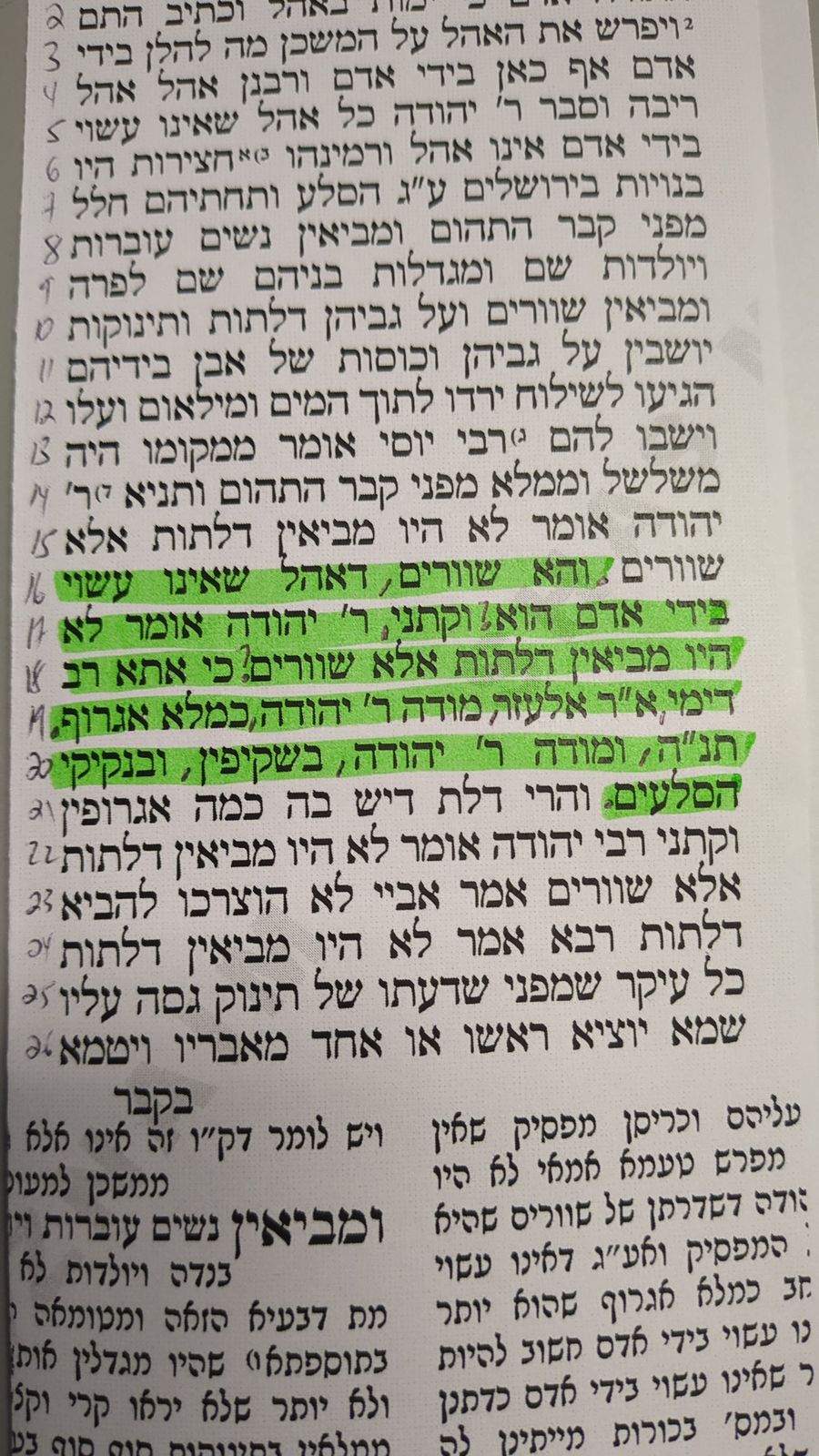
- GemaraAfter the Mishnah comes a Braisa related to it. Tanya: Rebbi Yehuda says they would not bring doors, only oxen. The kasha will be done tomorrow.
- ChazarahPhrase-by-phrase review from line 10 through the start of the Braisa.
- The RebbiIn the review, the Rebbi offers another possibility for Rebbi Yosi. Perhaps in the water there is no concern of kever. The worry is only the couple of steps it takes to get off the oxen into the water, even though they are on bedrock.
Kashas
- Does Rebbi Yehuda hold that an ohel not made by a person is not an ohel? A contradiction is brought from the Mishnah in Parah (oxen and doors), with the Braisa where Rebbi Yehuda says only oxen. The full kasha will be explained tomorrow.
- Why did the children hold cups of stone?
- Why did the children need the cups in their hands while traveling?
Teirutzim
- Stone keilim can never become tamei.
- They were going to the water and were about to use the cups to draw it.
Rashi & Tosafos
- Tosafos: The large Tosafos, a few lines down in the middle, discusses tumah that could come from the children's own bodies (keri). This relates to their age: young children until about 7 or 8.
Mareh mekomos
- Mishnah in Parah: courtyards built on bedrock for raising children in tahara for the Parah Adumah. Brought as a contradiction to Rebbi Yehuda.
- Braisa (Tanya): Rebbi Yehuda says they would not bring doors, only oxen. A Braisa is also from a Tanna and has the same power as a Mishnah; it contains material not included in the Mishnah.
The Rebbi’s chiddushim
- Archaeological finds near the Makom HaMikdash are full of stone keilim, because stone keilim are not mekabel tumah. By contrast, metal or wood keilim can become tamei, and a pottery keili cannot become tahor and must be broken.
- The word 'vayeshvu': there is a connection between returning and sitting, like a teacher who says 'return to your seat'.
- Reasons for Rebbi Yosi's caution at the water: uncertainty about where the spring begins and how far the children would go in. Alternatively, the concern is only the few steps from the oxen into the water.
- The machlokes of Tanna Kamma and Rebbi Yosi can be seen both ways. Staying on the ox is a chumra for tumah, but lowering by rope means the water is not drawn directly by hand.
- The Braisa, compared with the Mishnah, sets up tomorrow's kasha on Rebbi Yehuda.
Unclear in recording
- Whom the Rebbi was discussing the 7 or 8 replenishments of ashes with is unclear in recording.
- The point at the end of the Tosafos discussion, about still being 'mithame' after all the precautions, is unclear in recording.
- The Rebbi's reading of the Braisa's words is not audible.
Drafted from the recording of the shiur, for chazarah. Torah terms follow the Rebbi’s own words; anything that could not be made out is marked “unclear in recording”. Tap a time to hear that point. Corrections welcome.