Rebbi Yehuda: why oxen and not doors
The sugya
The shiur reviewed the kasha on Rebbi Yehuda, who holds that an ohel not made bidei adam is not an ohel, yet says they brought only oxen and not doors. It also reviewed the teirutz of Rav Dimi that Rebbi Yehuda concedes for a k'melo egrof. The Gemara then asks why doors, which have many egrofin, would not be brought. Abaye answers that they were not needed; Rava answers that doors were not brought at all, because a child sitting on a door would be overconfident and might stick out a limb and become tamei. A Braisa supports Rava, and the shiur closed with a chazarah.
Step by step (shakla v’tarya)
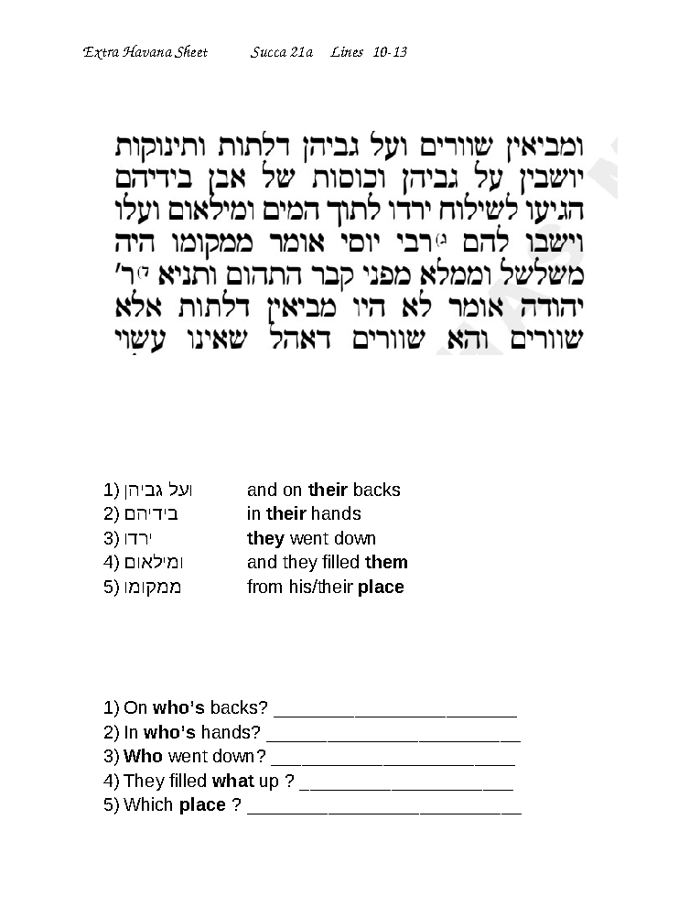
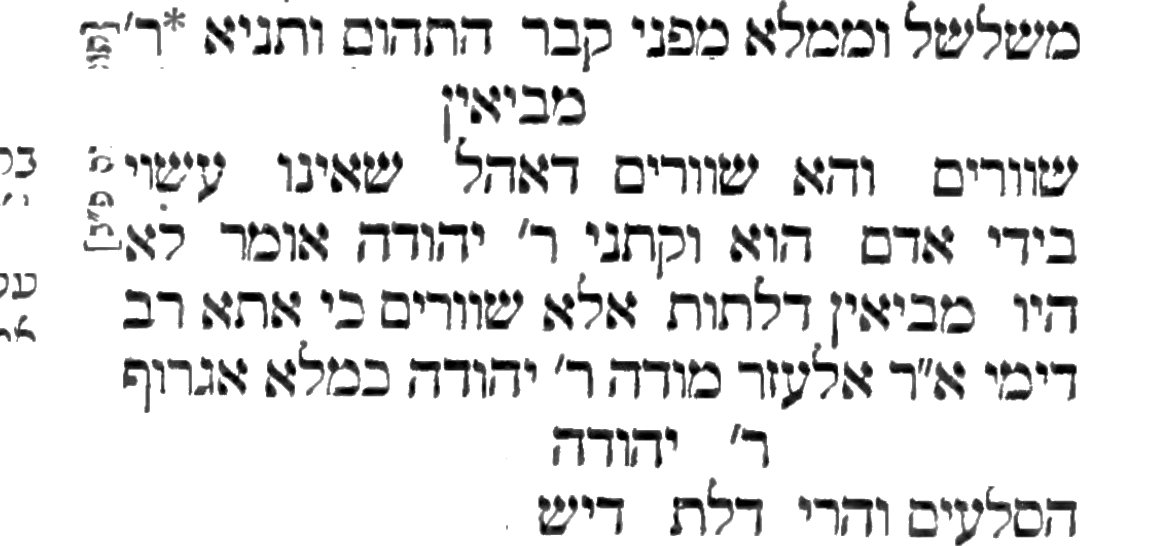
- ChazarahBack to line 14: the Braisa where Rebbi Yehuda says lo hayu mevi'in delasos ela shvarim. They did not put doors on top of the oxen.
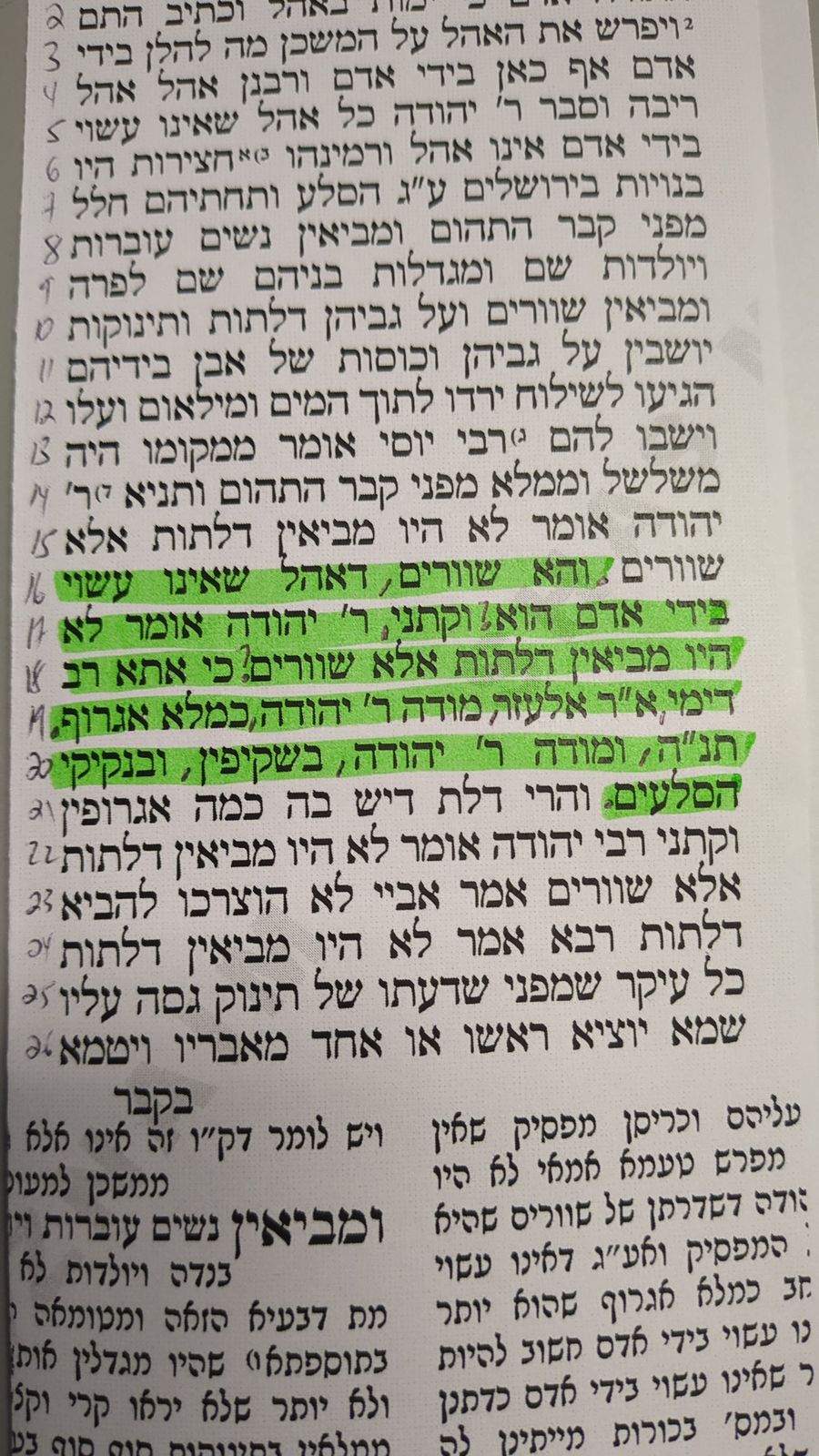
- KashaKasha from yesterday (line 16): shvarim are an ohel she'eino asui bidei adam. Rebbi Yehuda should require doors, which are bidei adam, yet he says only oxen.
- TeirutzWhen Rav Dimi came, he said in the name of Rebbi Elazar: modeh Rebbi Yehuda k'melo egrof. Anything the size of a fist is an ohel whether or not it is man-made.
- Ra'ayahTanya nami hachi: Rebbi Yehuda agrees regarding shkifin (big uprooted boulders forming larger openings) and crevices of rock.
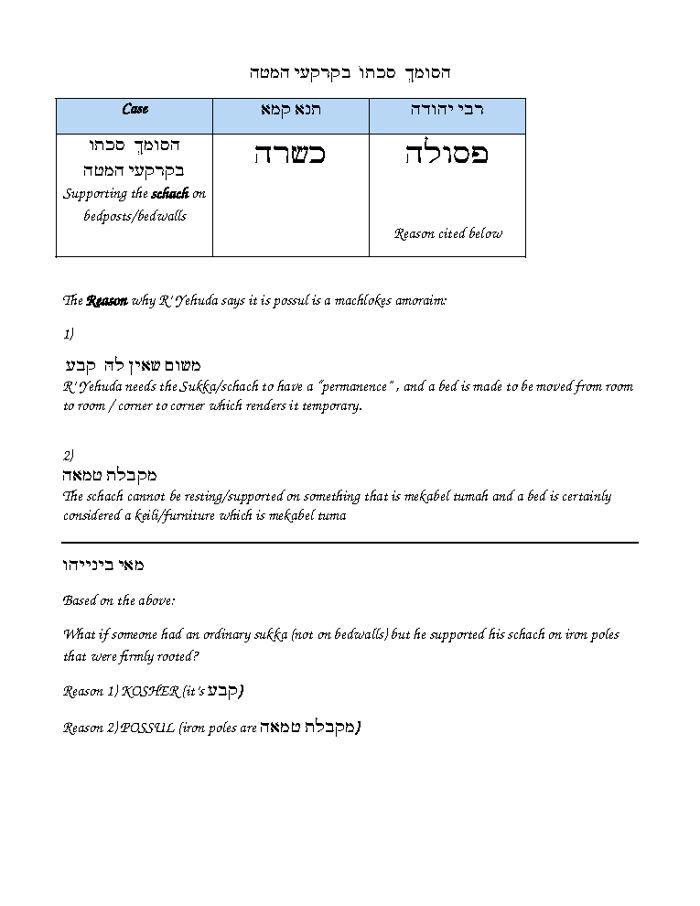
- The RebbiThis already narrows the machlokes between Rebbi Yehuda and the Chachamim to a small ohel. The only question there is whether it must be man-made or can even be made by nature.
- Preview: the big question of what is wrong with the bed is still to come, maybe Friday. Eventually the Gemara will bring the kasha back to the Mishnah. For now these are smaller questions on Rebbi Yehuda.
- A talmid asked why tumah must be identical to sukkah. The Rebbi answered that an ohel is a domain, a mafsik. Once something counts as an ohel mafsik there should be no difference, though other differences will come up.
- KashaLine 21: v'harei deles d'yesh bah kamah egrofin. Rashi: from the ground to the door. Yet Rebbi Yehuda says they did not bring doors, only oxen. What is wrong with doors?
- TeirutzAbaye: lo hutzrechu l'havi delasos. Doors were not needed; the oxen, with enough room underneath, were good enough according to Rebbi Yehuda.
- TeirutzRava: lo hayu mevi'in delasos kol ikar. Doors could not be used at all, for a reason that has nothing to do with what makes a good ohel. As an ohel a door would be very good, being many egrofin and man-made.
- TeirutzRava's reason: she'da'ato shel tinok gasa alav. On a door the child feels overconfident and does not realize he is riding on something. He may extend his head or a limb and become tamei b'kever hatehom, which defeats the whole purpose.
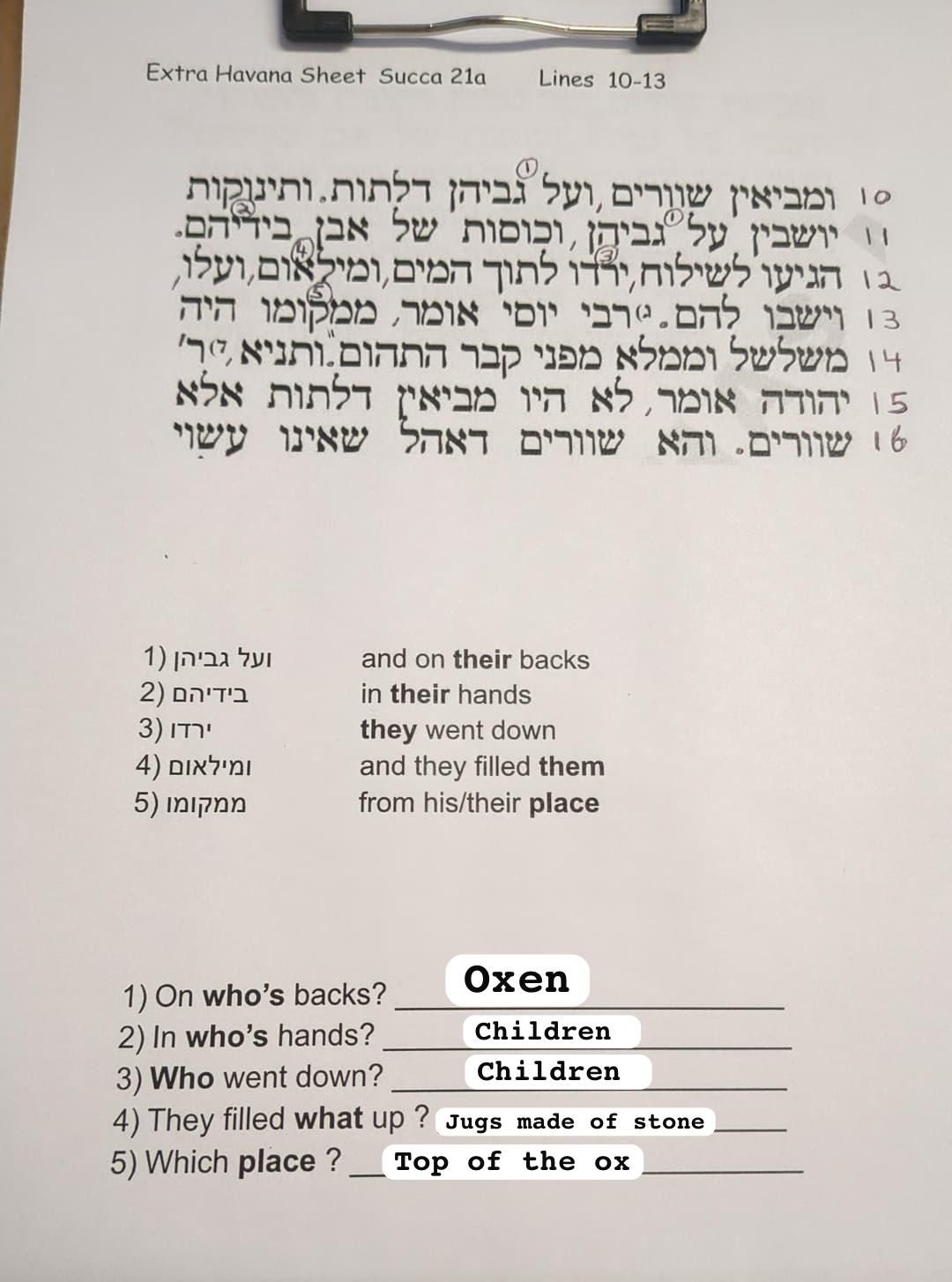
- Ra'ayahTanya k'vasei d'Rava: a Braisa in which Rebbi Yehuda says lo hayu mevi'in delasos kol ikar, for the same reason. It adds that they would bring Egyptian oxen with wide bellies. The children sat on them holding stone cups, reached the Shiloach, went down, filled, went up, and sat back on their backs.
- ChazarahChazarah of the whole Gemara from line 21 through the Braisa.
Kashas
- Oxen are an ohel not made bidei adam, yet Rebbi Yehuda says to bring only oxen and not doors.
- Even granting k'melo egrof, a door has many egrofin from the ground up. Why does Rebbi Yehuda say they did not bring doors?
- A talmid asked why tumah and sukkah must have the same parameters of ohel.
Teirutzim
- Rav Dimi in the name of Rebbi Elazar: Rebbi Yehuda concedes that anything k'melo egrof is an ohel, even if not man-made.
- Abaye: doors were not needed, since the oxen sufficed.
- Rava: doors were not brought at all, because the child would be overconfident and might extend his head or a limb and become tamei b'kever hatehom.
- To the talmid: an ohel is a mafsik/domain, and once something is an ohel mafsik there should be no difference.
Rashi & Tosafos
- Rashi: Kamah egrofin is measured in height, from the ground to the door.
Mareh mekomos
- Braisa (tanya nami hachi): Rebbi Yehuda agrees regarding shkifin and nekikei hasla'im, supporting Rav Dimi's k'melo egrof.
- Braisa (tanya k'vasei d'Rava) spelling out Rava's reason and describing the Egyptian oxen with wide bellies.
The Rebbi’s chiddushim
- After Rav Dimi and the Braisa, the machlokes of Rebbi Yehuda and the Chachamim is very limited: only a small ohel, and whether it must be man-made.
- Abaye's answer is a simple textual one, the way we would naturally think: doors were simply unnecessary.
- With oxen the children stay a little afraid of falling and hold on. A door is like a big piece of plywood, presumably strapped on securely, so the child forgets what he is on and starts leaning over the sides.
- When Abaye and Rava both answer, both answers are good. A Braisa matching Rava gives his reason more support, but that does not mean Abaye's cannot be the reason.
- The Braisa does not mention Rava because it long predates him. Whether Rava knew the Braisa, the Rebbi said he does not know.
Unclear in recording
- Discussion with talmidim about why the Chachamim, who are more lenient about ohalim, would need doors. The Rebbi noted there will be other things we see later; the exchange is unclear in recording.
- Exchange about whether a child could also lean over from an ox. The Rebbi's answer (something about the child needing a hand on the ox) is unclear in recording.
- The daf number stated at the start of the chazarah.
Drafted from the recording of the shiur, for chazarah. Torah terms follow the Rebbi’s own words; anything that could not be made out is marked “unclear in recording”. Tap a time to hear that point. Corrections welcome.