Shiur summary (draft from the recording)
Shvarim vs. Mita; Ohel Arai and Ohel Keva
Sukkah 21b · lines 8–27 · Friday, October 31, 2025
The sugya
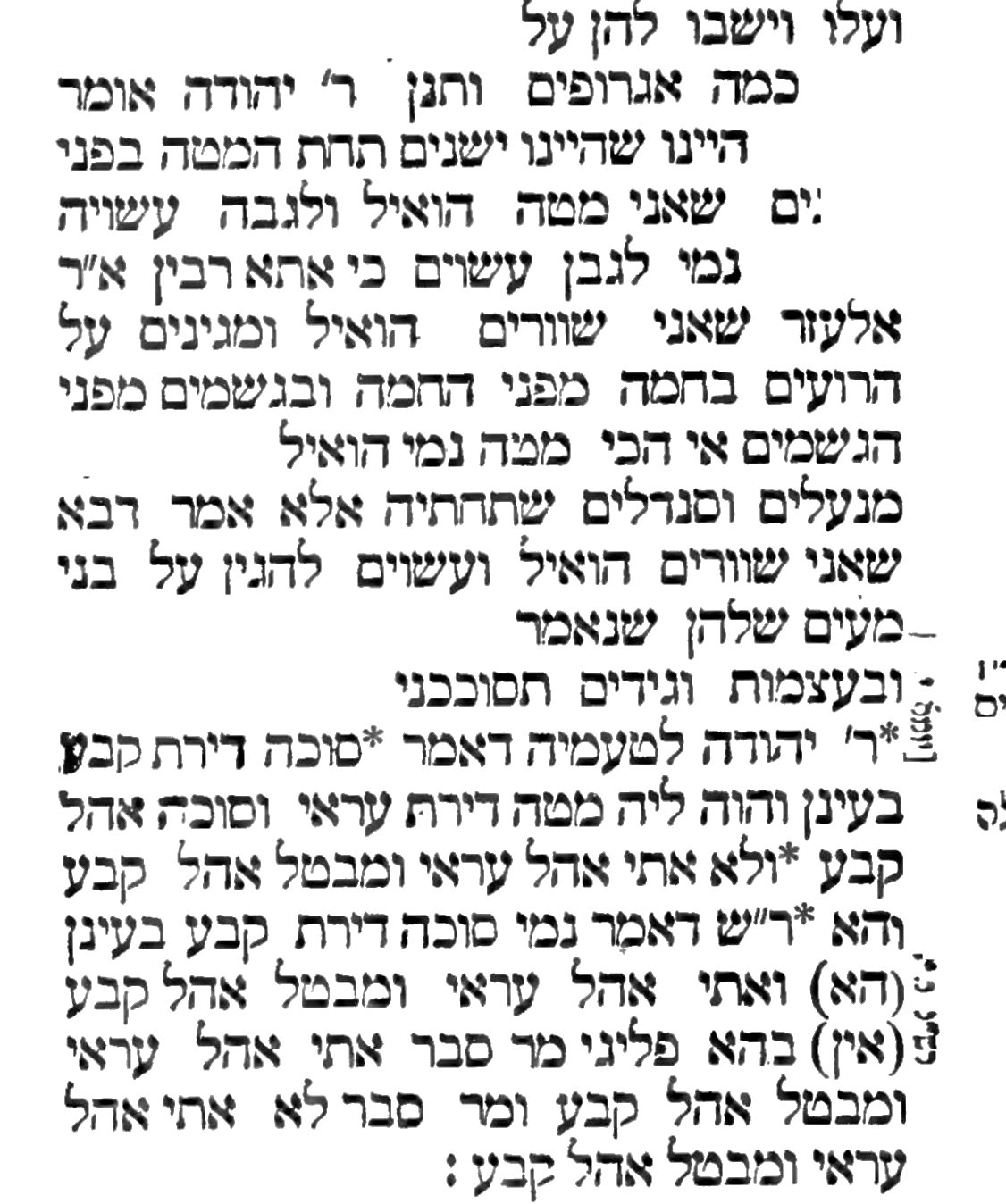
Review of yesterday's shakla v'tarya on why oxen count as an ohel but a bed does not, according to R' Yehuda, ending with Rava's teirutz from the pasuk in Iyov. The Rebbi then learned the ibai eima: R' Yehuda follows his shita that a sukkah must be a dirat keva, and an ohel arai (a bed) cannot nullify an ohel keva (the sukkah). The Gemara asks that R' Shimon also holds dirat keva, and answers that they argue over whether an ohel arai is mevatel an ohel keva.
Step by step (shakla v’tarya)
- ChazarahEach time the Gemara says 'shani' it offers a difference, and then it turns out the other case is really the same. Bed made for its top, so are oxen. Oxen protect what is underneath, so does a bed. The distinctions cancelled each other out until Rava brought a pasuk.
- RashiRava's reason: the ox itself, as a living being, is an ohel. Rashi describes it as having a skeleton with a roof, which is its spine.
- KashaLine 8: 'v'harei mita' has many agrofim, and our Mishnah has R' Yehuda saying they used to sleep under the bed before the elders.
- TeirutzLine 11: a bed is different, since it is made for its top.
- DechiyahLine 12: oxen are also made for their tops (their backs).
- TeirutzRavin in the name of R' Elazar: oxen are different, since they protect the shepherds from the sun in the heat and from the rain in the rainy season.
- DechiyahLine 15: if so, a bed also protects the shoes and sandals under it.
- TeirutzRava gives a reason the bed will not have: oxen are made to protect their own insides, as the pasuk in Iyov says 'or uvasar talbisheini, uva'atzamos v'gidim tesochecheini'. The proof is from the end of the pasuk.
- MaskanaTherefore an ox can be an ohel according to R' Yehuda, since it has the other criteria an ohel needs.
- A talmid asked: the proof is from a human, not from an ox. Rebbi: the ox has the same aspect we are looking for to be called an ohel.
- The RebbiR' Yehuda is more picky, while the Chachamim seem more freewheeling.
- TeirutzLine 19: 'v'i ba'is eima' introduces a whole different answer to the original question on line 8, why R' Yehuda allowed a bed. We can set aside everything learned yesterday.
- ShitahR' Yehuda l'taamei: he holds 'sukkah diras keva ba'inan'. In the first perek a group of Tannaim hold that a sukkah needs a permanent dwelling.
- Gemara'V'havei lei mita diras arai': a bed is a temporary dwelling. Nobody establishes his residence underneath a bed.
- GemaraThe sukkah is an ohel keva (line 22), 'v'lo asi ohel arai u'mevatel ohel keva': a temporary tent cannot come and nullify a permanent one.
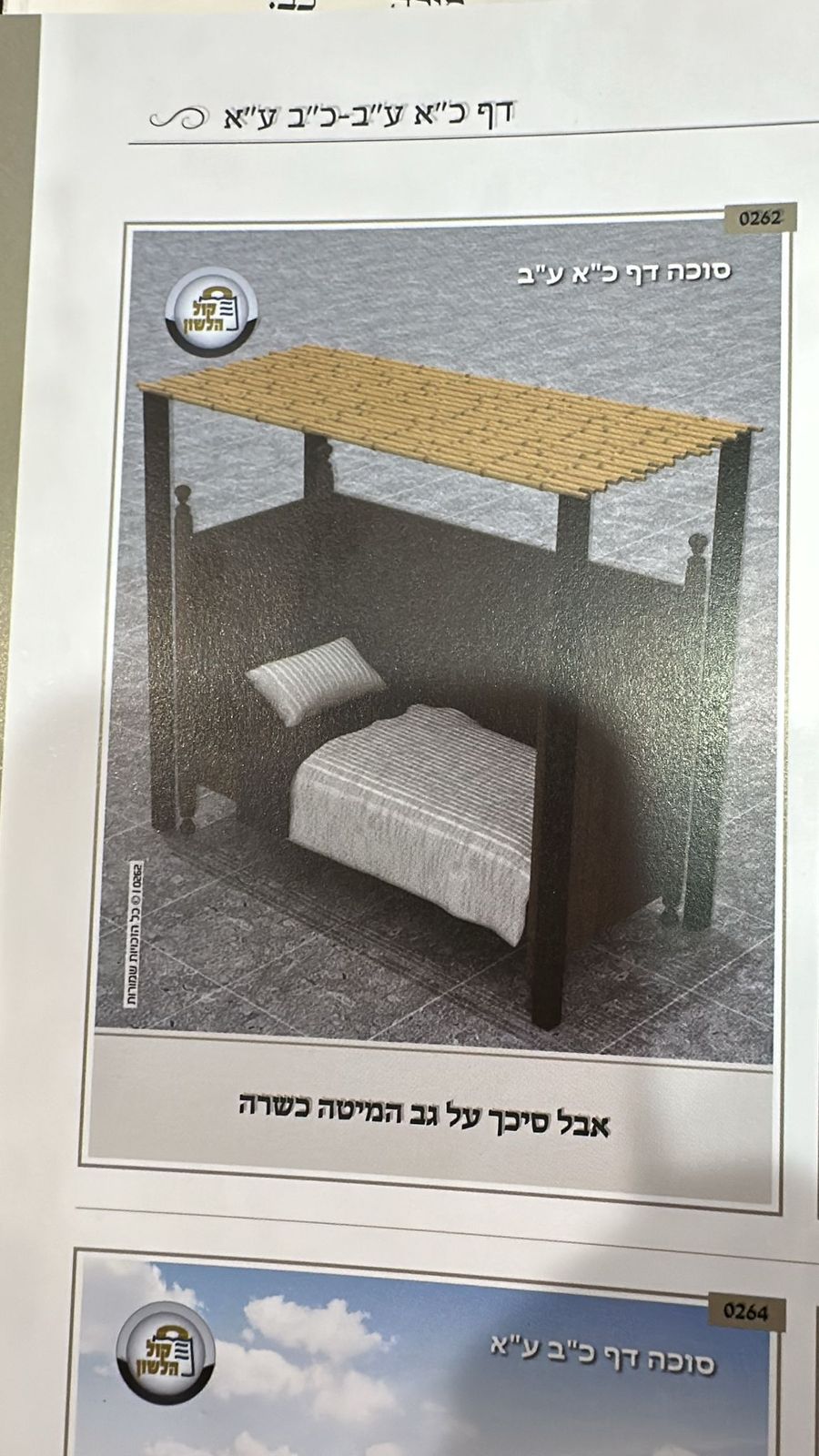
- The RebbiExplanation: a person sleeping in a canopy bed in his sukkah is still in his sukkah, not in his bed, because the ohel of the bed is temporary. It is like someone sitting in the sukkah with something over his head.
- KashaLine 23: but R' Shimon also says 'sukkah diras keva ba'inan', yet he argues on R' Yehuda in our Mishnah. According to him an ohel arai does come and nullify an ohel keva.
- Different Tannaim give different reasons why a sukkah must be keva. Some require four walls. Some require a minimum size (seven by seven and four amos were mentioned; unclear in recording). Either way, they all hold the sukkah must be keva.
- Teirutz'B'ha pligi': in this they argue. R' Shimon holds a temporary tent (the bed) comes and nullifies the permanent tent. R' Yehuda holds it does not, so sleeping under a bed does not take you out of the sukkah.
- The RebbiEverything is relative: a bed is temporary compared to a sukkah, and a sukkah is temporary compared to a house.
- The RebbiR' Yehuda looks at someone under a bed in the sukkah like a person sitting in the sukkah with a hat on.
- ChazarahThis is the ibai eima, an alternative answer. The next piece in the Gemara is a story. Lines 19-26 were reviewed, reading 'b'ha pligi' without the parentheses.
Kashas
- V'harei mita: a bed has many agrofim, and R' Yehuda in the Mishnah said they used to sleep under the bed before the elders.
- Oxen are also made for their tops, just like a bed.
- A bed also protects the shoes and sandals underneath it.
- R' Shimon also holds sukkah dirat keva ba'inan, yet he argues on R' Yehuda and holds an ohel arai does nullify an ohel keva.
Teirutzim
- A bed is made for its top.
- Ravin / R' Elazar: oxen protect the shepherds from sun and rain.
- Rava: oxen are made to protect their own insides, based on the pasuk in Iyov.
- Ibai eima: R' Yehuda follows his shita of dirat keva. A bed is dirat arai and cannot nullify the sukkah, which is an ohel keva.
- R' Yehuda and R' Shimon argue over whether an ohel arai is mevatel an ohel keva.
Rashi & Tosafos
- Rashi: Describes the ox as a living organism with a skeleton and a roof, which is its spine.
Mareh mekomos
- Pasuk in Iyov, 'or uvasar talbisheini, uva'atzamos v'gidim tesochecheini': Rava's proof that a living body is made to protect its insides.
- Our Mishnah, R' Yehuda: they used to sleep under the bed before the elders. Cited as the basis of the kasha on line 8.
- First perek: a list of Tannaim who hold sukkah dirat keva ba'inan, including R' Yehuda and R' Shimon.
- First perek: the sugya of a canopy bed, used to illustrate that a person under a temporary covering is still in his sukkah.
The Rebbi’s chiddushim
- Framing: each 'shani' offered a distinction that turned out to be the same for both cases, so they cancelled out until Rava's pasuk.
- Perhaps a bed was meant to protect things underneath it because of leaky roofs; it was the safe place to keep things.
- The 'atzamos' in the pasuk likely refers to the backbone.
- R' Yehuda is more picky, the Chachamim more freewheeling.
- A person in a canopy bed in the sukkah is considered in the sukkah, not in his bed, since the bed's ohel is temporary.
- The Rebbi recalls seeing that a bed is called arai because it is movable; it goes here and there.
- Keva and arai are relative: a bed compared to a sukkah, and a sukkah compared to a house.
- In R' Yehuda's view, sleeping under a bed in the sukkah is like sitting in the sukkah wearing a hat.
- 'Mar' is a respectful way of referring to Tannaim and Amoraim; you have to know who is being referred to.
Unclear in recording
- A remark about the Mishnah being the real proof, and why it was not said.
- An exchange about who says something, possibly referring to a source the Rebbi saw ('top choices').
- Yesterday's question whether an ox is an ohel because it walks on all fours or because of the space under its stomach. The Rebbi said he was not sure.
- A talmid's question on why R' Shimon holds as he does, and the discussion that followed.
- A comment that we do not know the reason for the machlokes in the Mishnah.
Drafted from the recording of the shiur, for chazarah. Torah terms follow the Rebbi’s own words; anything that could not be made out is marked “unclear in recording”. Tap a time to hear that point. Corrections welcome.