Shiur summary (draft from the recording)
Shade vs. sun; sukkah on ship or tree
Sukkah 22b · from line 23 · Tuesday, November 18, 2025
The sugya
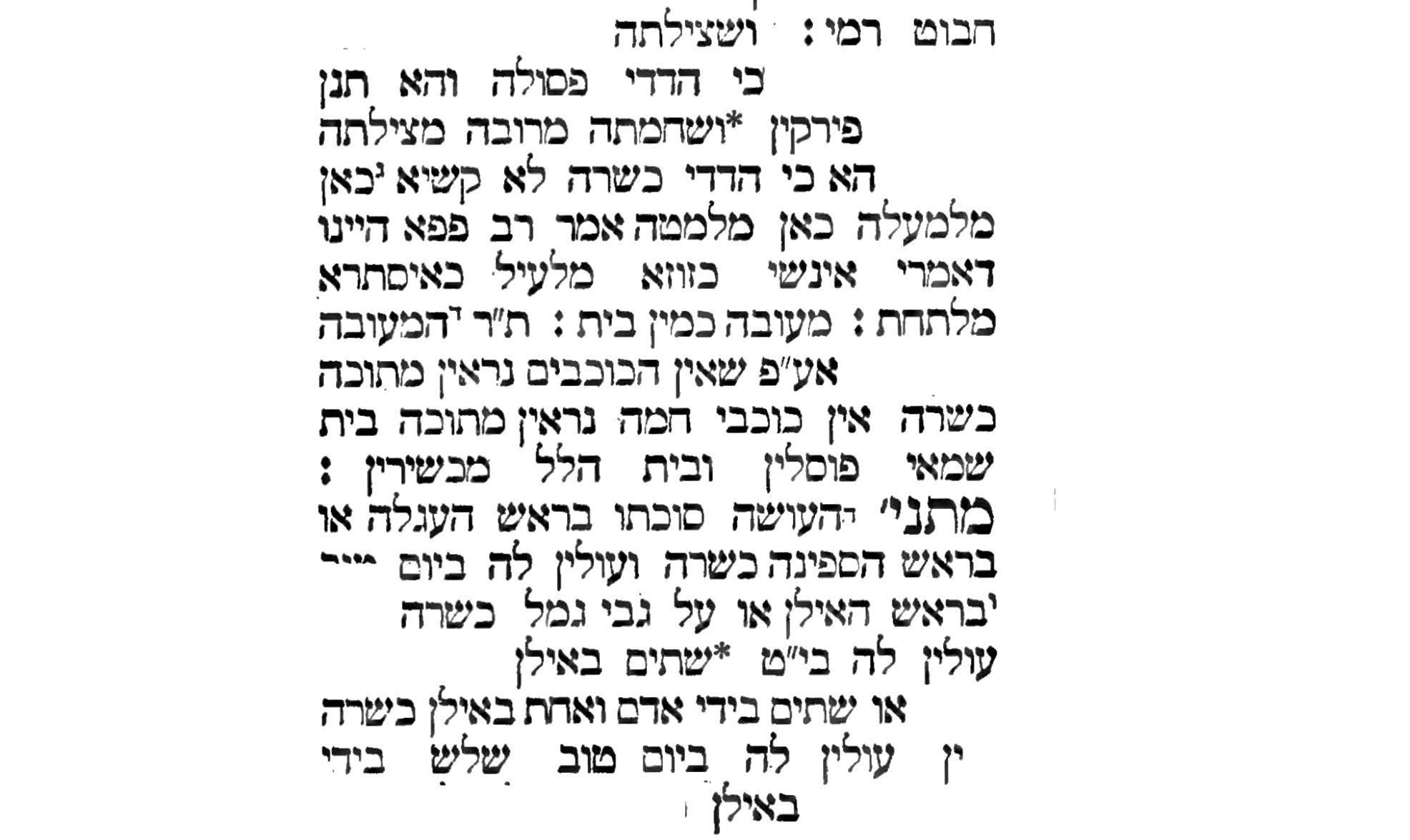
The shiur finished the end of the Mishnah of shade more than sun: the contradiction with the Mishnah in the first perek, answered by top versus bottom, and Rav Papa's saying. It then covered the Baraisa of a thickly-covered sukkah (me'ubah kemin bayis). Next came the new Mishnah of a sukkah on a wagon, ship, tree or camel, including the cases of walls supported by a tree, learned like Rashi. It ended with the start of the Gemara: our Mishnah is R' Akiva, the machlokes with Rabban Gamliel, and the maaseh on the ship.
Step by step (shakla v’tarya)
- MishnahOur Mishnah: if the shade is more than the sun the sukkah is kosher. The diyuk is that half and half is pasul.
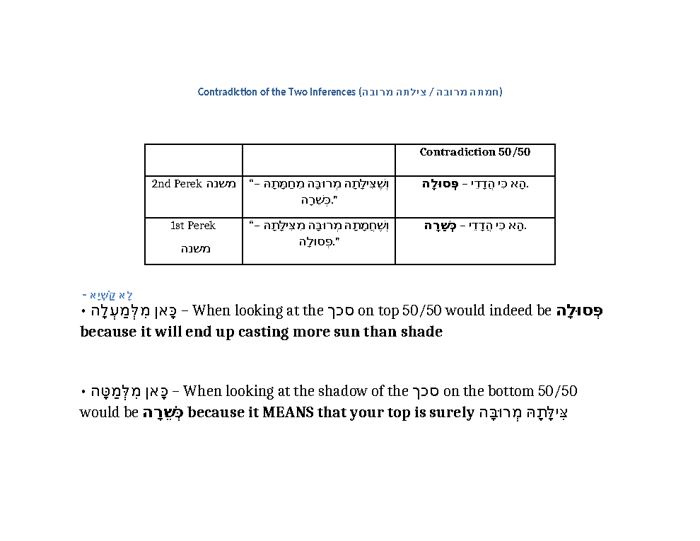
- KashaThe Mishnah in the first perek says that if the sun is more than the shade it is pasul. The diyuk there is that half and half is kosher. The two diyukim contradict each other.
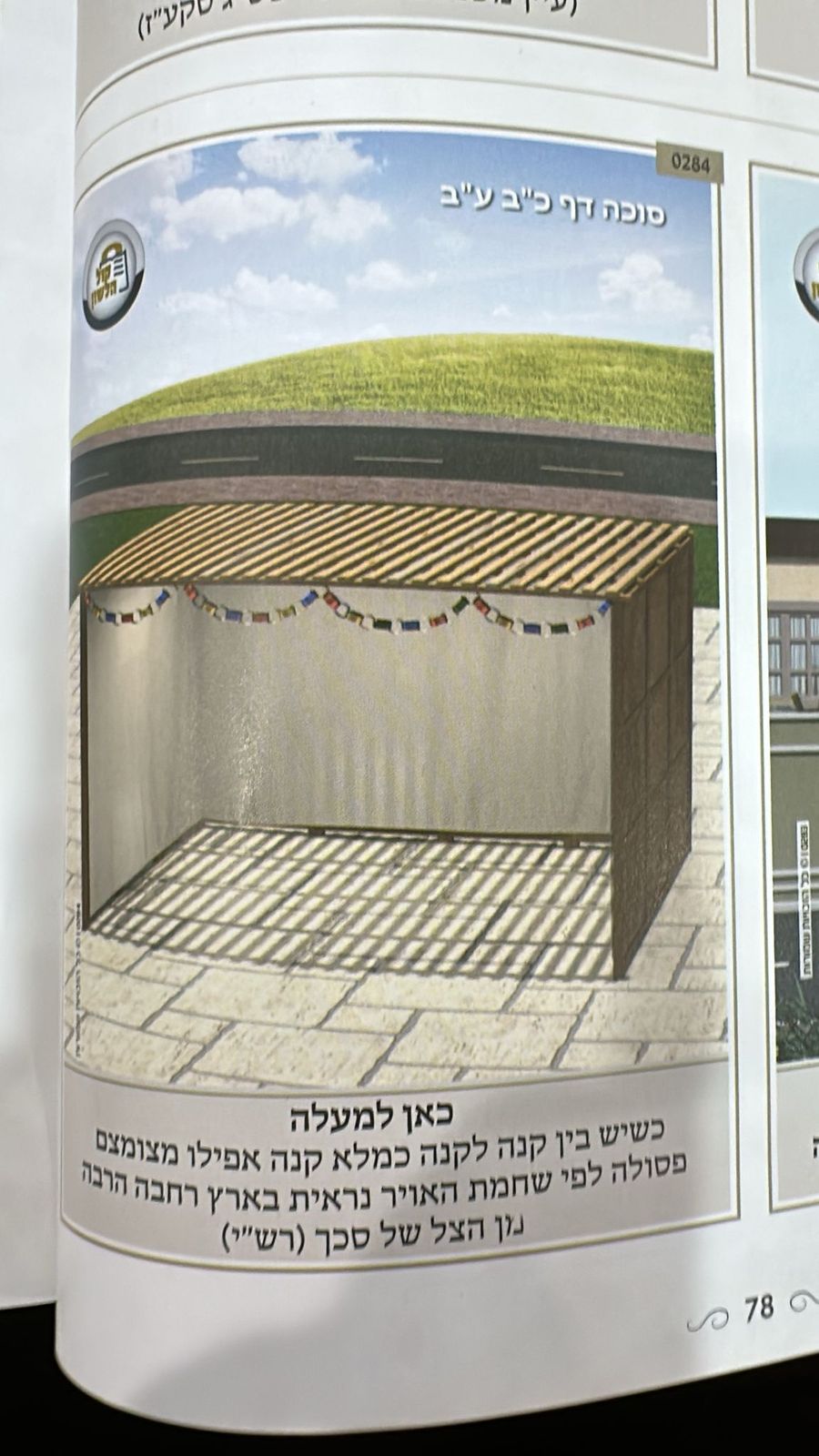
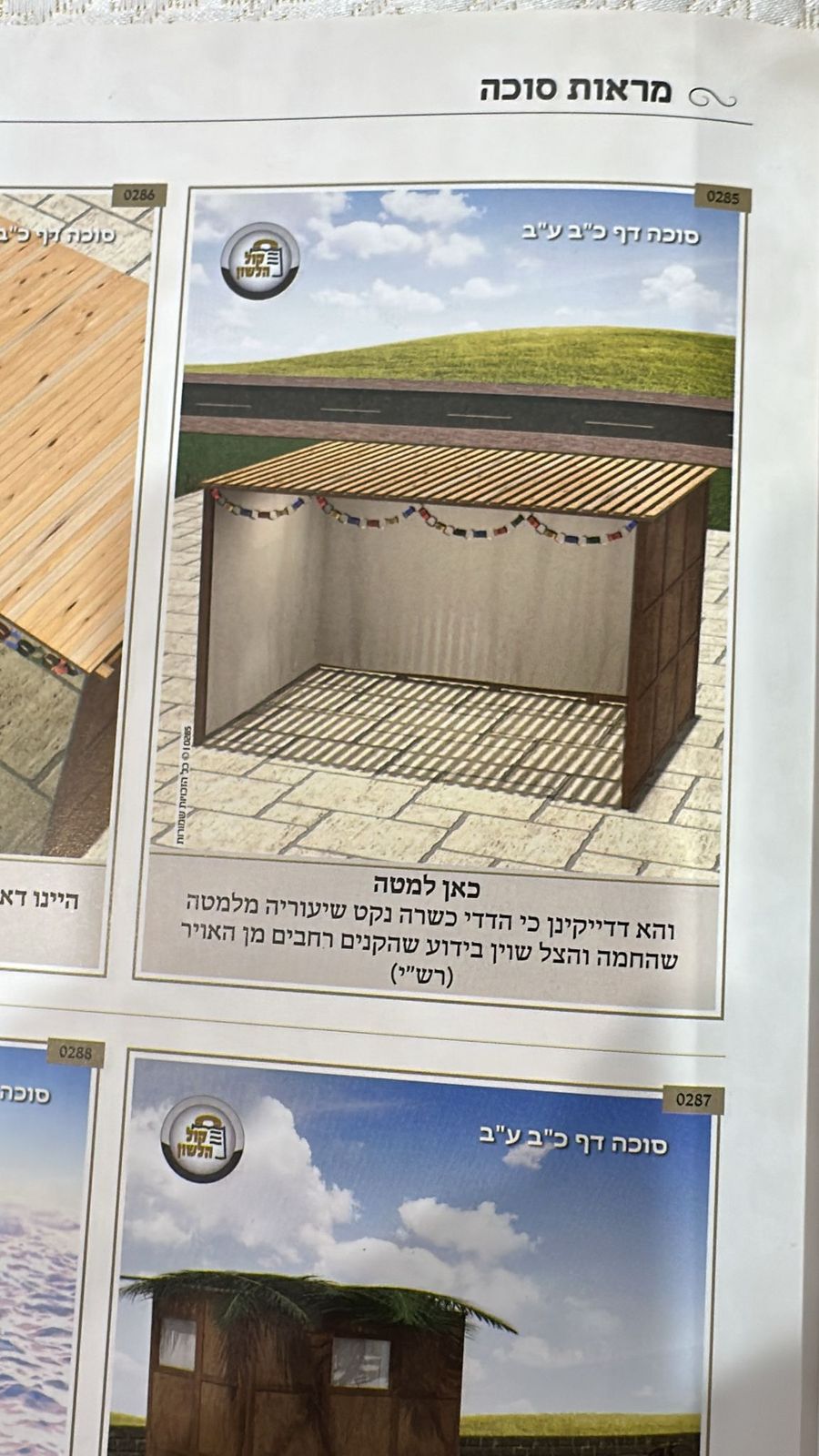
- TeirutzThe Gemara answers that one Mishnah is speaking about measuring on top and the other about measuring below.
- ChazarahWhere the diyuk shows pasul, the half-and-half is measured on top. Where the diyuk shows kosher, it is measured on the bottom.
- The RebbiIf it is half and half on top, it is pasul. If it is half and half at ground level, then on top it is obviously kosher. The way to work it out is to figure out which Mishnah you are in.
- Ra'ayahRav Papa brings the folk saying that a small coin's worth on top is like a big coin below. An opening projects larger as it goes down; that is the way the sun works.
- GemaraBaraisa: a sukkah thickly covered like a house is kosher, even though the stars cannot be seen through it. If even the rays of the sun cannot be seen, there is a machlokes: Beis Shammai posel and the other side (Beis Hillel) is machshir.
- The RebbiAs long as it is not a real roof (not nailed down), and the schach still has all the halachos of schach (e.g. grows from the ground), it is kosher even if no sun gets in. The Rebbi was unsure whether merely blocking all the sun makes it like a house.
- Question whether a me'ubah sukkah is kosher l'chatchila or only b'dieved. A teacher said that the words af al pi imply b'dieved. The Rebbi said it is better to avoid it, as is written in halachah.
- MishnahNew Mishnah: a sukkah on top of a wagon or on top of a ship is kosher, and one may go up into it on Yom Tov.
- MishnahA sukkah on top of a tree or on top of a camel is kosher, but one may not go up into it on Yom Tov. A wagon means the sukkah is on the wagon itself, not on the horse.
- The Gemara will give the reasons. On Yom Tov one might rip off a branch, and one is not allowed to ride an animal.
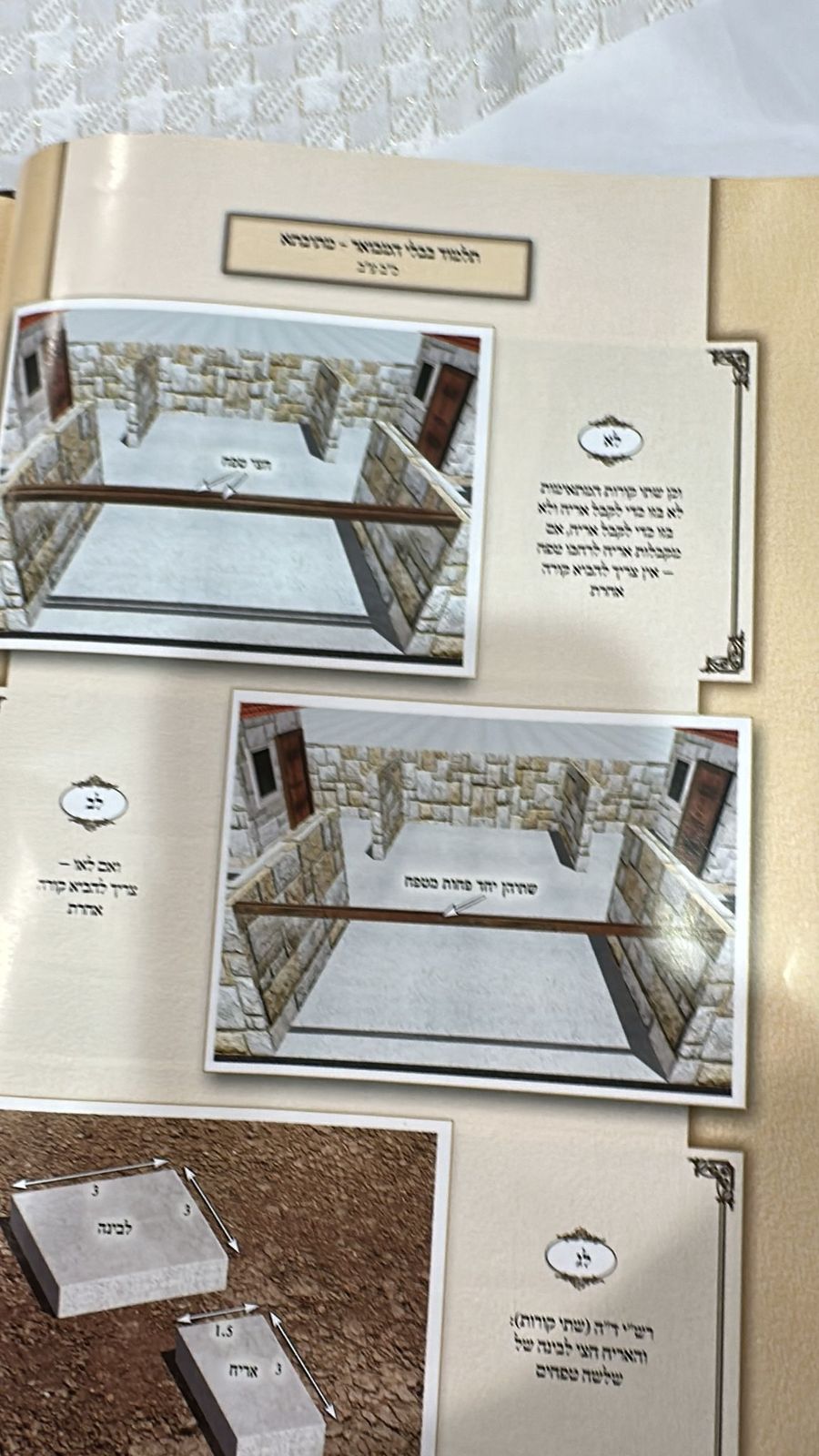
- MishnahLearned like Rashi: two walls supported by a tree and one man-made, or two man-made and one by the tree, is kosher but one may not go up on Yom Tov.
- MishnahThree walls man-made and one supported by the tree is kosher, and one may go up on Yom Tov.
- MaskanaZeh haklal: whenever the tree could be taken away and the sukkah could still stand by itself, it is kosher and one may go up into it on Yom Tov.
- RashiThe point is that the floor of the sukkah must be supported by man-made support. If it is supported by the tree, you have the same problem as making the whole sukkah in a tree on Yom Tov.
- ChazarahUsing pictures following Rashi: when three supports are on the ground, the fourth resting on the tree does not matter. If the tree were cut down you would still be sitting safely, so you are not really using the tree.
- The RebbiThe tree is not being used as a wall; it is being used to support the wall. Using an animal as a wall, e.g. a tied-down elephant, will come later in the Gemara.
- GemaraMani masnisin: who holds that a sukkah on a boat is kosher? Shouldn't it be a problem since it is wobbly and moves?
- TeirutzThe Gemara answers that it is R' Akiva.
- MachlokesBaraisa: one who makes his sukkah on top of a ship, Rabban Gamliel posel and R' Akiva machshir. Our Mishnah follows R' Akiva.
- GemaraMaaseh: Rabban Gamliel and R' Akiva were travelling on a ship, and R' Akiva made a sukkah on top of the ship. The next day a wind blew and uprooted it. Rabban Gamliel said: Akiva, where is your sukkah?
- The Rebbi noted that Rabban Gamliel's remark was said with sarcasm. The details will be discussed tomorrow.
Kashas
- Our Mishnah implies half and half is pasul, but the Mishnah in the first perek implies half and half is kosher.
- Who is our Mishnah that permits a sukkah on a ship, which moves and is wobbly?
Teirutzim
- One Mishnah is measuring on top and the other below. Half and half on top is pasul; half and half below is kosher, since on top there is more shade.
- Our Mishnah is R' Akiva, who argues with Rabban Gamliel in a Baraisa.
Rashi & Tosafos
- Rashi: The case of the Mishnah is a sukkah up in a tree whose supports are partly the tree and partly man-made. The concern is the floor of the sukkah being supported by the tree.
Mareh mekomos
- Mishnah in the first perek: sun more than shade is pasul. Used for the contradiction.
- Rav Papa's folk saying of the small coin above and the big coin below, explaining top versus bottom.
- Baraisa: Rabban Gamliel and R' Akiva argue about a sukkah on a ship, with the maaseh on the ship.
- Later Gemara regarding using an animal (a tied elephant) as a wall.
The Rebbi’s chiddushim
- An opening in the schach projects larger as it goes down; that is the way the sun works.
- A me'ubah sukkah is kosher as long as it is not a real roof and keeps all the halachos of schach. If one can engineer that and still keep out all sun, good for him.
- The vort of the Mishnah: the floor of the sukkah must rest on man-made support. Otherwise you are effectively using the tree on Yom Tov.
- There is a distinction between using the tree as a wall and using the tree to support the wall.
Unclear in recording
- Whether simply blocking all sun would make the schach like a house or a keili. The Rebbi said he did not know, and mentioned the first perek's discussion of bundles and mats.
- Discussion of what kind of issur is involved on Yom Tov and what happens if one did go up anyway. It possibly involved mitzvah haba'ah ba'aveirah, compared to a stolen lulav.
- A reference to someone's pictures and the shitah on whether one is considered living on the floor or in the tree.
- A question about a tied-down case at the end; the Rebbi said it is probably different and we will see.
Drafted from the recording of the shiur, for chazarah. Torah terms follow the Rebbi’s own words; anything that could not be made out is marked “unclear in recording”. Tap a time to hear that point. Corrections welcome.