Mar Zutra: Mishnah implies small sukkah; bitarti pligi
The sugya
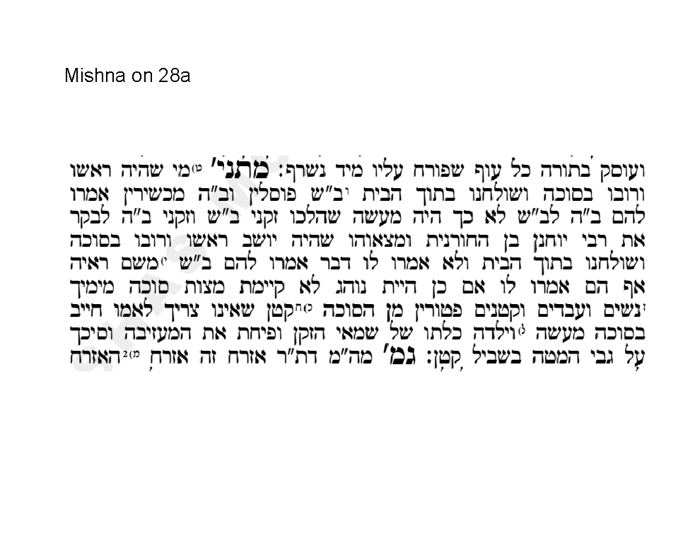
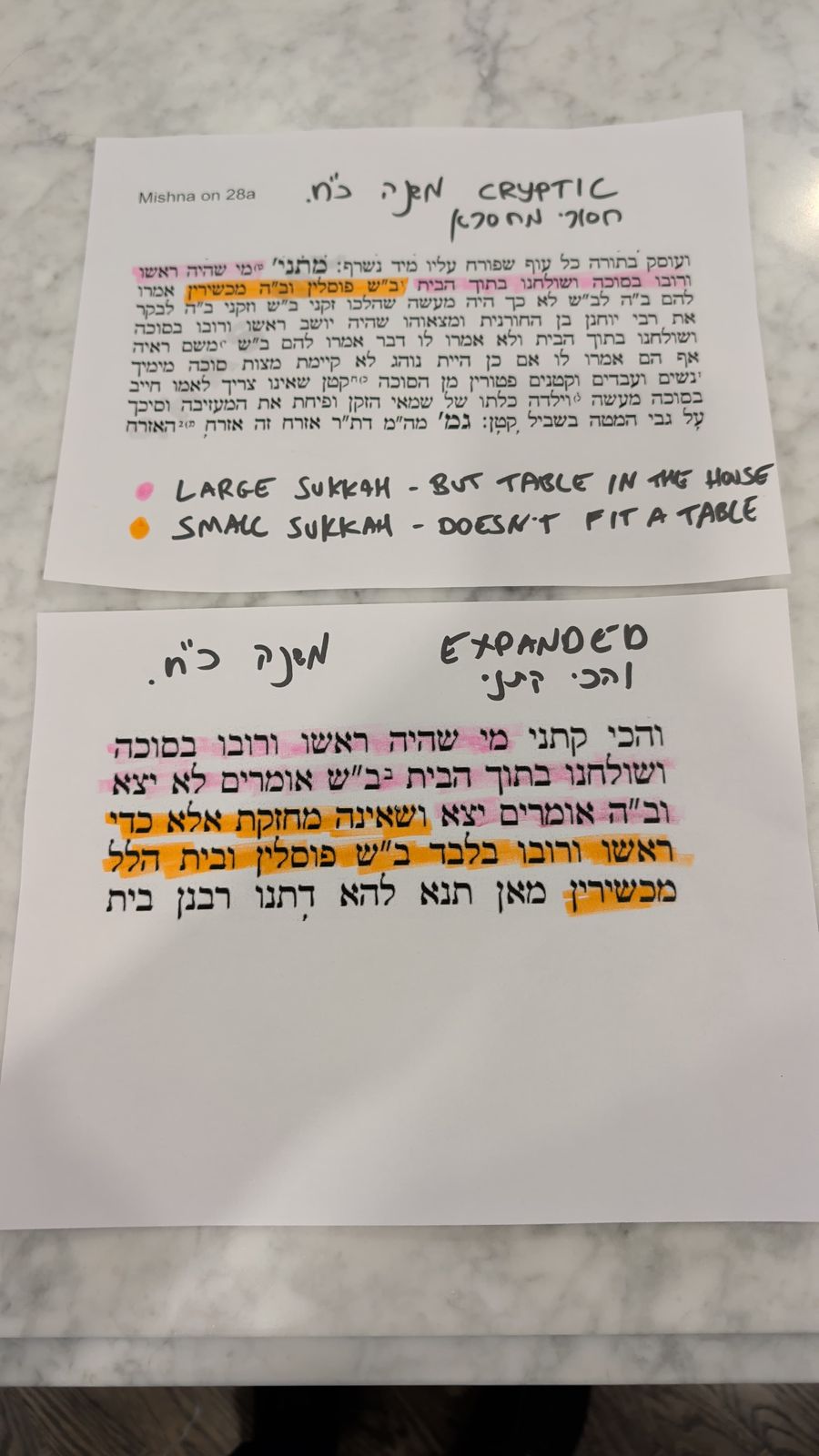
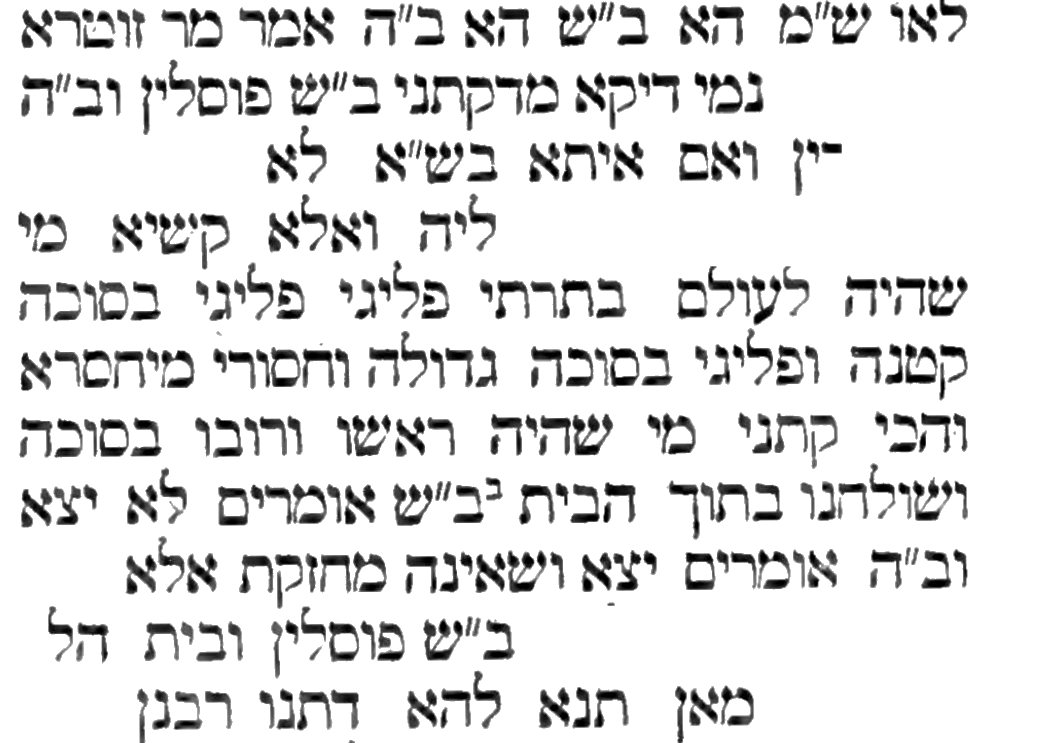
Mar Zutra brings a diyuk from the Mishnah of mi shehaya rosho v'rubo ba'sukkah v'shulchano b'soch habayis that Beis Shammai and Beis Hillel argue about a sukkah ketanah. The Mishnah says posslin and machshirin, which is language about the sukkah, not yatza and lo yatza, which would be language about the person. The Gemara asks that the reisha, mi shehaya, is language about a person. It answers l'olam bitarti pligi, both in a sukkah ketanah and in a sukkah gedolah, with chasurei mechsera. The Rebbi went through the sugya twice and ended with a chiddush about the second machlokes.
Step by step (shakla v’tarya)
- GemaraLine 32: Mar Zutra says our Mishnah also infers (diyuka) that they argue about a sukkah ketanah. The diyuk comes from the end of the Mishnah, not the beginning.
- Ra'ayahThe proof is that the Mishnah says Beis Shammai posslin and Beis Hillel machshirin, using the lingo of posul and kosher.
- Ra'ayahV'im isa: if they only argued about a particular case, like a man sitting that way in a sukkah gedolah, the Mishnah should say Beis Shammai lo yatza and Beis Hillel yatza. Mibaei lei, that is what it needed to say.
- The Rebbi recited the Mishnah: mi shehaya rosho v'rubo ba'sukkah v'shulchano b'soch habayis, Beis Shammai posslin and Beis Hillel machshirin.
- KashaElla kashya mi shehaya: the reisha, mi shehaya (someone was), is language about a person. So the reisha sounds like a sukkah gedolah, and the seifa (posul and kosher) sounds like a sukkah ketanah.
- TeirutzLine 36: L'olam bitarti pligi. They argue about a sukkah ketanah and they also argue about a sukkah gedolah.
- TeirutzChasurei mechsera v'hachi kitani, part is missing. The first case: mi shehaya rosho v'rubo ba'sukkah v'shulchano b'soch habayis, Beis Shammai say lo yatza and Beis Hillel say yatza.
- TeirutzThe second case: if the sukkah only holds rosho v'rubo bilvad, Beis Shammai posslin and Beis Hillel machshirin.
- Discussion with the chabura over whether the two cases are the same machlokes. The Rebbi first said no and then said it is really the same. Partly unclear in recording.
- The RebbiThe reason the table must fit in the sukkah: if the table is outside, you will end up inching your chair forward. The first case is the gezeirah of shema yimashech, even in a huge sukkah.
- ChazarahThe Rebbi went over the sugya a second time, from Mar Zutra on line 32 through the teirutz on line 36.
- The Rebbi shared a source that explains chasurei mechsera: the Mishnayos were learned to a chant (Gemara niggun), so parts were left out to fit, and one was expected to know them.
- The RebbiProbably the chiddush of the second case is that the sukkah itself is posul, even where there is no concern of shema yimashech. Even if the man is in a straitjacket, tied to his chair and unable to move forward, he is sitting in a posul sukkah.
Kashas
- Ella kashya mi shehaya: the seifa (posslin and machshirin) implies a sukkah ketanah, but the reisha (mi shehaya, someone was sitting) is language about a person, implying a sukkah gedolah.
Teirutzim
- L'olam bitarti pligi: they argue both in a sukkah gedolah (lo yatza and yatza) and in a sukkah ketanah that holds only rosho v'rubo bilvad (posslin and machshirin). Chasurei mechsera v'hachi kitani.
Mareh mekomos
- The Mishnah of mi shehaya rosho v'rubo ba'sukkah v'shulchano b'soch habayis (in the second perek). It is the basis of Mar Zutra's diyuk and of the kasha from its reisha.
- A source that chasurei mechsera arises because Mishnayos were learned to a chant. The name of the source is unclear in recording.
The Rebbi’s chiddushim
- Posul and kosher properly describe an object, the sukkah (cheftza). Yatza and lo yatza describe a person (gavra). Mi shehaya is gavra language, while posslin and machshirin is cheftza language.
- Illustration: if someone asks about a man who forgot to say a bracha, the answer is phrased as yatza or lo yatza, not posul or kosher. The word for the bracha is unclear in recording.
- To make the Mishnah match, it should say either mi shehaya with yatza and lo yatza at the end, or a sukkah that only holds rosho v'rubo is posul or kosher, without needing a person sitting in it.
- Picture of the reisha: a man sitting in a large place (like the lobby of the Waldorf Astoria) with only his head inside. That is a ruling on the person.
- The second case shows the sukkah is intrinsically posul for Beis Shammai, even with no shema yimashech, such as a man in a straitjacket tied to his chair.
Unclear in recording
- The example of a man who forgot to say a bracha; the bracha's name is garbled.
- The back-and-forth with the chabura on whether the two cases share the same reason, including a remark about four amos at 11:55.
- The name of the source cited for chasurei mechsera.
Drafted from the recording of the shiur, for chazarah. Torah terms follow the Rebbi’s own words; anything that could not be made out is marked “unclear in recording”. Tap a time to hear that point. Corrections welcome.