Mar Zutra's diyuk; house smaller than 4x4 amos
The sugya
The shiur reviewed Mar Zutra's diyuk that the Mishnah of Beis Shammai and Beis Hillel also deals with a small sukkah. It then covered the Gemara's teirutz that they argue in both cases, with words missing from the Mishnah. The Rebbi tied this to the 4x4 amos shitta from 2b and gave the halacha like Beis Shammai. He then began the new Gemara of Man tanna: a braisa listing dinim of a house that do not apply to a house smaller than four amos by four amos. He explained each item through eiruv and shituf, with background on chatzer, mavui and lechi.
Step by step (shakla v’tarya)
- ChazarahReview from yesterday: our Mishnah also shows that the machlokes can be about a small sukkah.
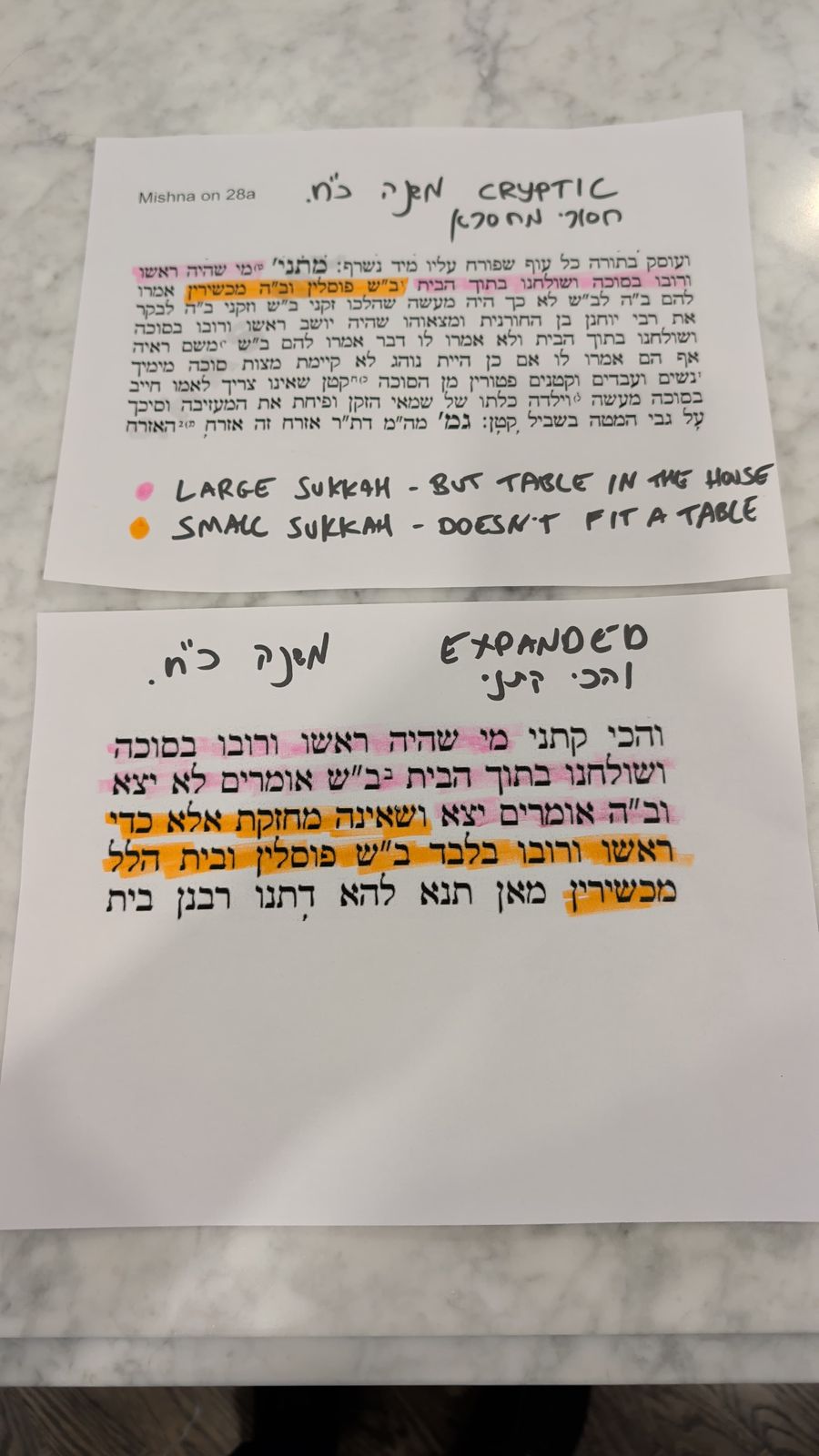
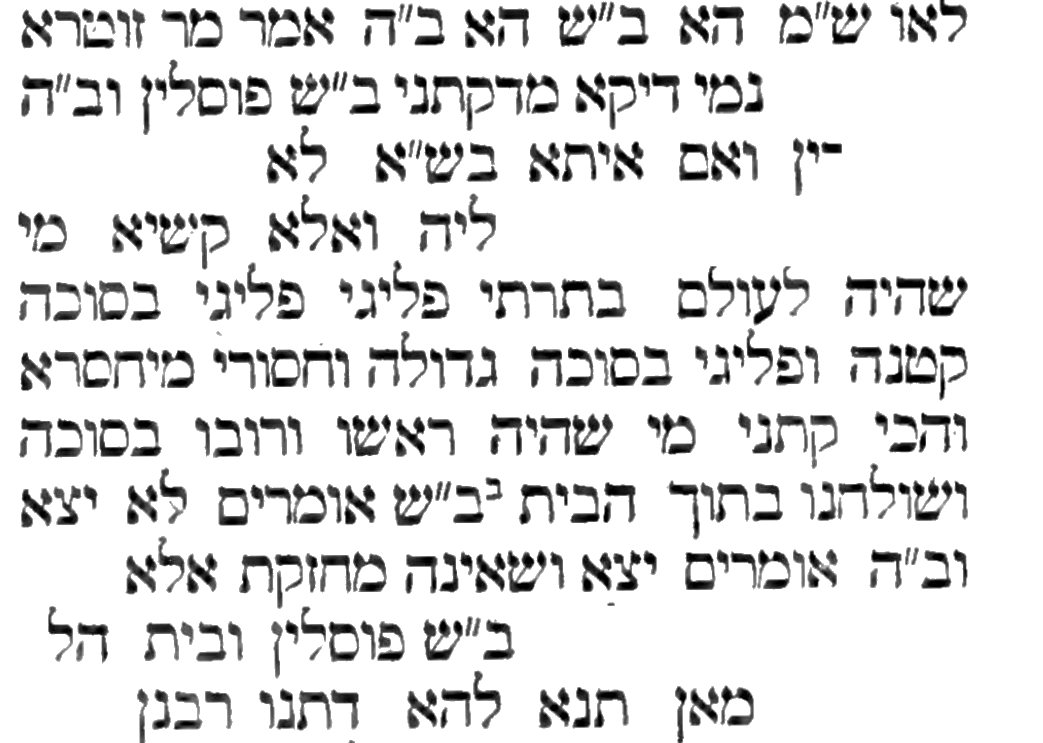
- KashaThe beginning and the end of the Mishnah do not match. Either it should speak of a sukkah that cannot hold his head, most of his body and his table, or it should follow the wording of the beginning (mi shehaya rosho v'rubo...).
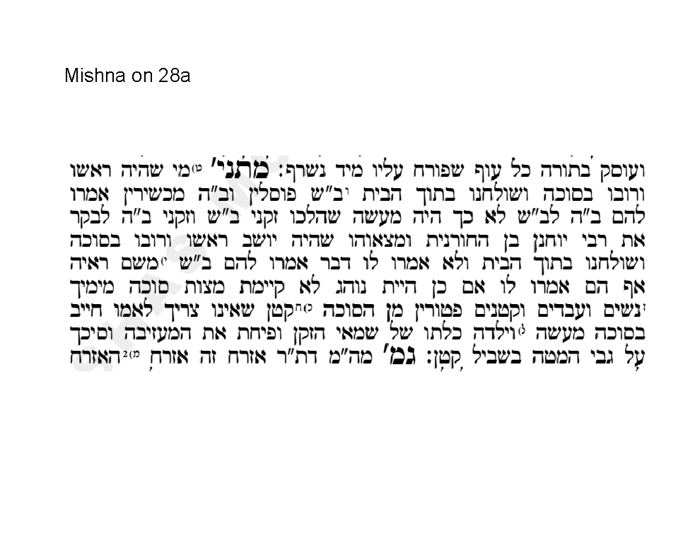
- Ra'ayahLine 32, Mar Zutra: the Mishnah ends 'Beis Shammai posle'in, Beis Hillel machshirin', which is about whether the sukkah is kosher.
- Ra'ayahIf it were about a large sukkah, it should have said 'lo yatza / yatza', about whether the person fulfilled his obligation, not whether the sukkah has the right shiur.
- KashaThe Gemara flips it back: then what about the beginning of the Mishnah?
- TeirutzL'olam b'tarti pligi: they argue in both a small sukkah and a large sukkah. Words are missing (chasurei mechasra).
- TeirutzThe first case is head and most of the body in the sukkah and the table in the house: Beis Shammai say lo yatza, Beis Hillel say yatza. The second case is a sukkah holding only his head and most of his body: Beis Shammai posle'in, Beis Hillel machshirin. Everything is included.
- ChazarahThe whole sugya puts the machlokes in place. It was set off by the shitta of 4x4 amos.
- ChazarahOn 2b Rav Huna said the machlokes is only about a sukkah smaller than 4x4 amos. If it is 4x4 it can be as high as you want, because there is shade. The Gemara then suggested they argue about the minimum size for a kosher sukkah, and there is a shitta that a sukkah is kosher only if it is 4x4 amos.
- MaskanaThis is one of the rare places where we pasken like Beis Shammai. L'maaseh, a sukkah must be at least 7 tefachim by 7 tefachim and 10 tefachim high. A refrigerator box can be used if it has the right shiur.
- GemaraNew Gemara: Man tanna l'ha d'tanu rabbanan. An anonymous braisa lists things that need four amos by four amos.
- GemaraThe heading is a bayis that does not have four amos by four amos. Many dinim in the Torah connected with a house are excluded.
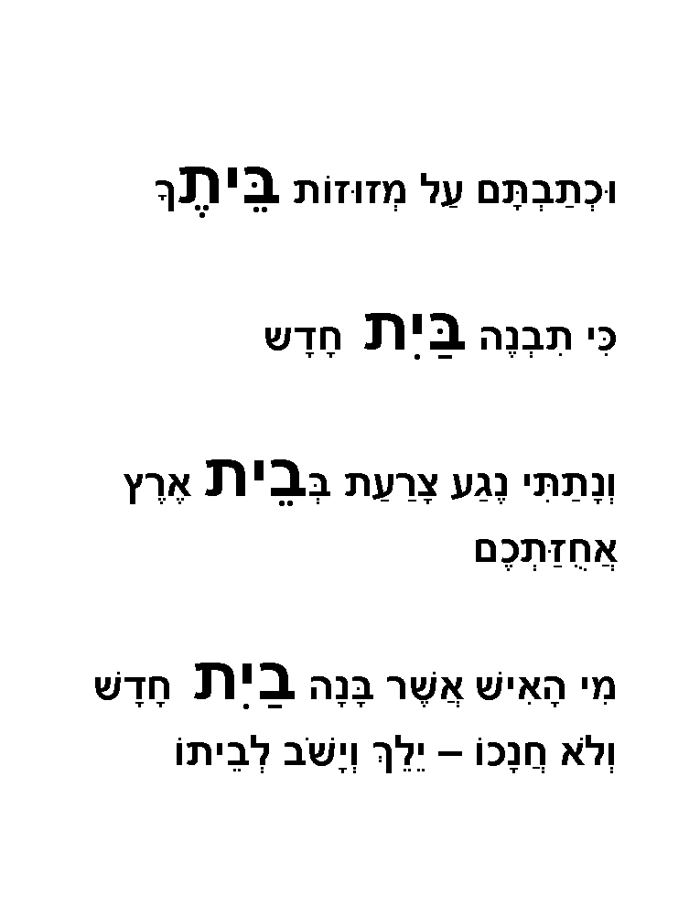
- GemaraPatur from mezuzah: a stand-alone shed in the backyard smaller than 4x4 amos needs no mezuzah. The mezuzah must be on a bayis.
- GemaraPatur from maakeh: people lived in courtyards, either on the main floor or in the aliyah (second floor), which needed a fence or rail. If the dwelling is smaller than 4x4 amos, no maakeh is needed.
- The Gemara will go through the reason for each item. All of them have the word bayis in the Torah. For maakeh the pasuk says 'b'veisecha'.
- GemaraNot metamei b'negaim: there is tzaraas on a house, but a house smaller than 4x4 amos cannot become tamei with tzaraas.
- GemaraNot nechlat in batei arei choma: a house in a walled city that is sold can be redeemed only within a year and then is sold forever. A house smaller than 4x4 amos follows the regular yovel rule and returns at yovel.
- GemaraEin chozrin alav me'orchei hamilchama: someone who just built a house returns home from war. A structure smaller than 4x4 amos is not a house; if you built a dog shed you still get conscripted.
- GemaraEin me'arvin bo: a very small house in a courtyard does not have to take part in the eiruv chatzeiros. Eiruv means a mixing, looking at everyone together instead of separately.
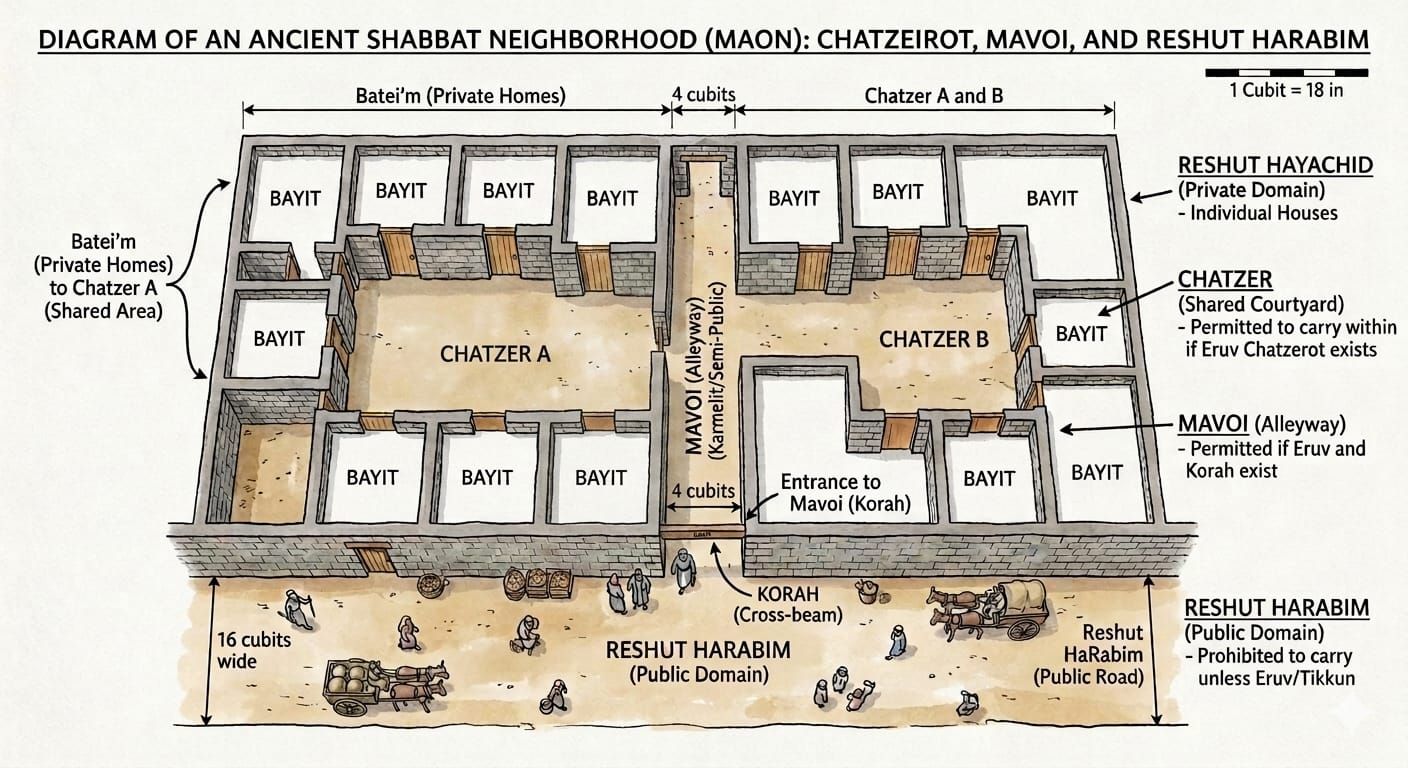
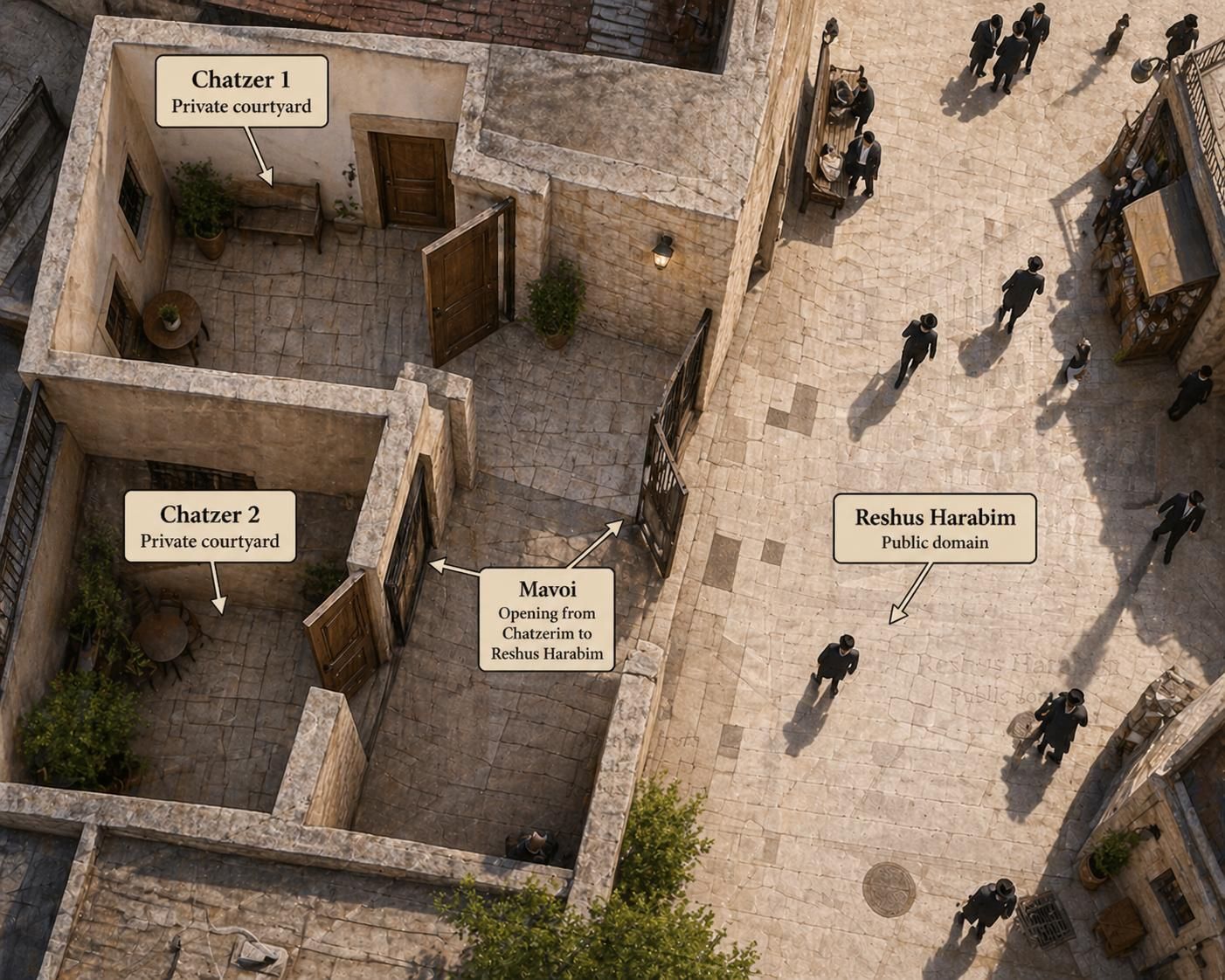
- Background: Jewish neighborhoods were built of chatzeiros, and several chatzeiros opened onto a mavui. An eiruv is needed within a chatzer, and a shituf mevuos (partnering of alleyways) lets the chatzeiros carry across the mavui. The lechi is for between the mavui and reshus harabim.
- ChazarahReview of the braisa (line 42) by number. A house under 4x4 amos needs no mezuzah or maakeh. It has no tzaraas issues. It is not part of the walled-city houses. It gives no exemption from conscription. It need not take part in the courtyard eiruv or the alley shituf.
- The lechi is a separate matter. The mavui is close to reshus harabim, so with a stroller you must not make the wrong turn into reshus harabim.
Kashas
- The beginning of the Mishnah (head and body in the sukkah, table in the house) does not match the end (posle'in / machshirin).
- If the Mishnah is about a small sukkah, what is meant by the beginning, mi shehaya rosho v'rubo ba'sukkah v'shulchano b'soch habayis?
Teirutzim
- Mar Zutra: posle'in / machshirin is about the sukkah's validity, so the Mishnah includes a small sukkah. For a large sukkah it would have said lo yatza / yatza.
- L'olam b'tarti pligi, with chasurei mechasra. In the large sukkah case (table in the house), Beis Shammai say lo yatza and Beis Hillel say yatza. For a sukkah holding only head and most of the body, Beis Shammai posle'in and Beis Hillel machshirin.
Mareh mekomos
- Rav Huna on 2b: the machlokes about a sukkah above 20 amos applies only to a sukkah smaller than 4x4 amos, since a larger one has shade.
- The pasuk of maakeh, which uses the word 'b'veisecha'. All items in the braisa have the word bayis in the Torah.
- The Torah's laws of selling property: return at yovel, and the one-year redemption for a house in a walled city.
The Rebbi’s chiddushim
- Lo yatza / yatza refers to the person's fulfilling his obligation. Posle'in / machshirin refers to whether the sukkah itself has the right shiur.
- The whole sugya serves to put the machlokes of Beis Shammai and Beis Hillel in place, and it was set off by the 4x4 amos shitta.
- This is a rare case of paskening like Beis Shammai: minimum 7x7 tefachim, 10 tefachim high. Even a refrigerator box works if it has the shiur.
- Eiruv means a mixing: instead of viewing each resident separately, everyone is viewed together.
- Example of tiny cabanas in a courtyard: such a resident need not contribute to the eiruv. The Rebbi said he thinks he can still carry, being included.
- Chatzer, mavui, reshus harabim: the eiruv is within the chatzer, the shituf joins chatzeiros across the mavui, and the lechi separates the mavui from reshus harabim.
Unclear in recording
- A side point about someone sleeping at the table, and people having separate sukkahs for sleeping; context unclear in recording.
- A phrase 'if you go on a trip' before the 7x7 tefachim halacha is unclear in recording.
- A side discussion about a brand-new house versus a renovation (whether 'one' is needed) is unclear in recording; what is needed was not specified.
Drafted from the recording of the shiur, for chazarah. Torah terms follow the Rebbi’s own words; anything that could not be made out is marked “unclear in recording”. Tap a time to hear that point. Corrections welcome.