Shiur summary (draft from the recording)
Lowering a Sukkah: Bitul of Straw and Dirt
תבן ובטלו הוי מיעוט
Sukkah 4a · Thursday, April 30, 2026
The sugya
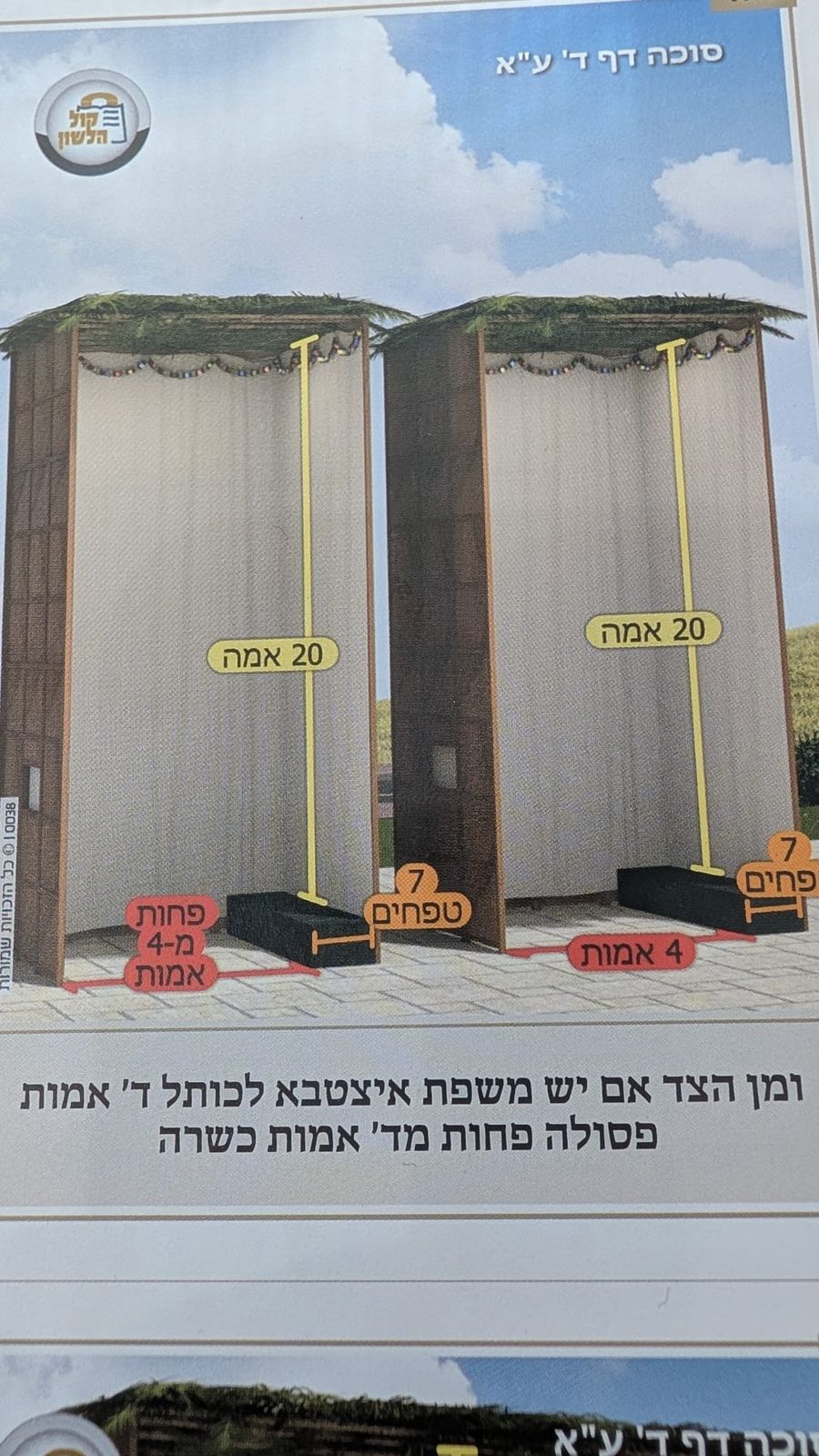
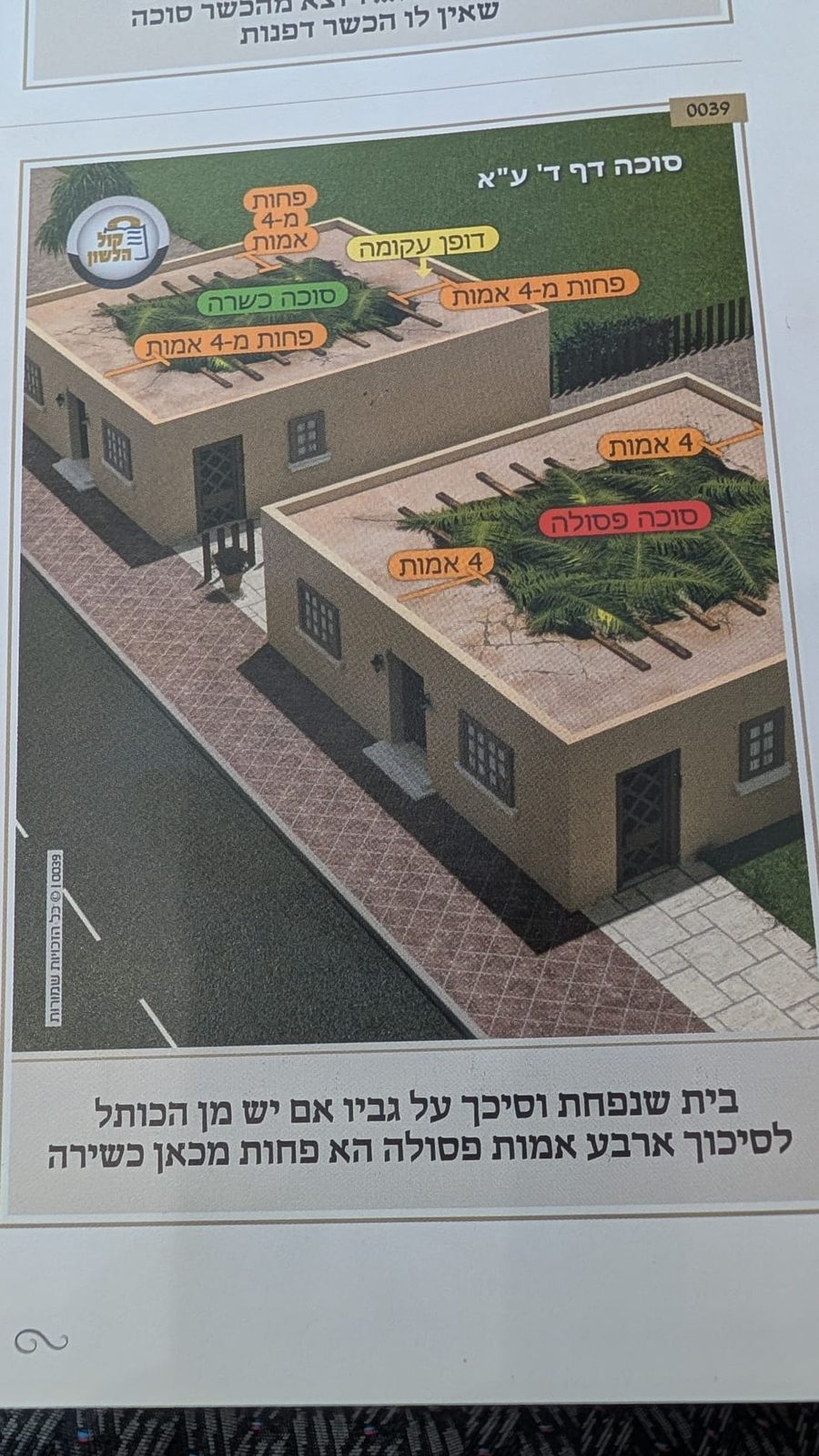
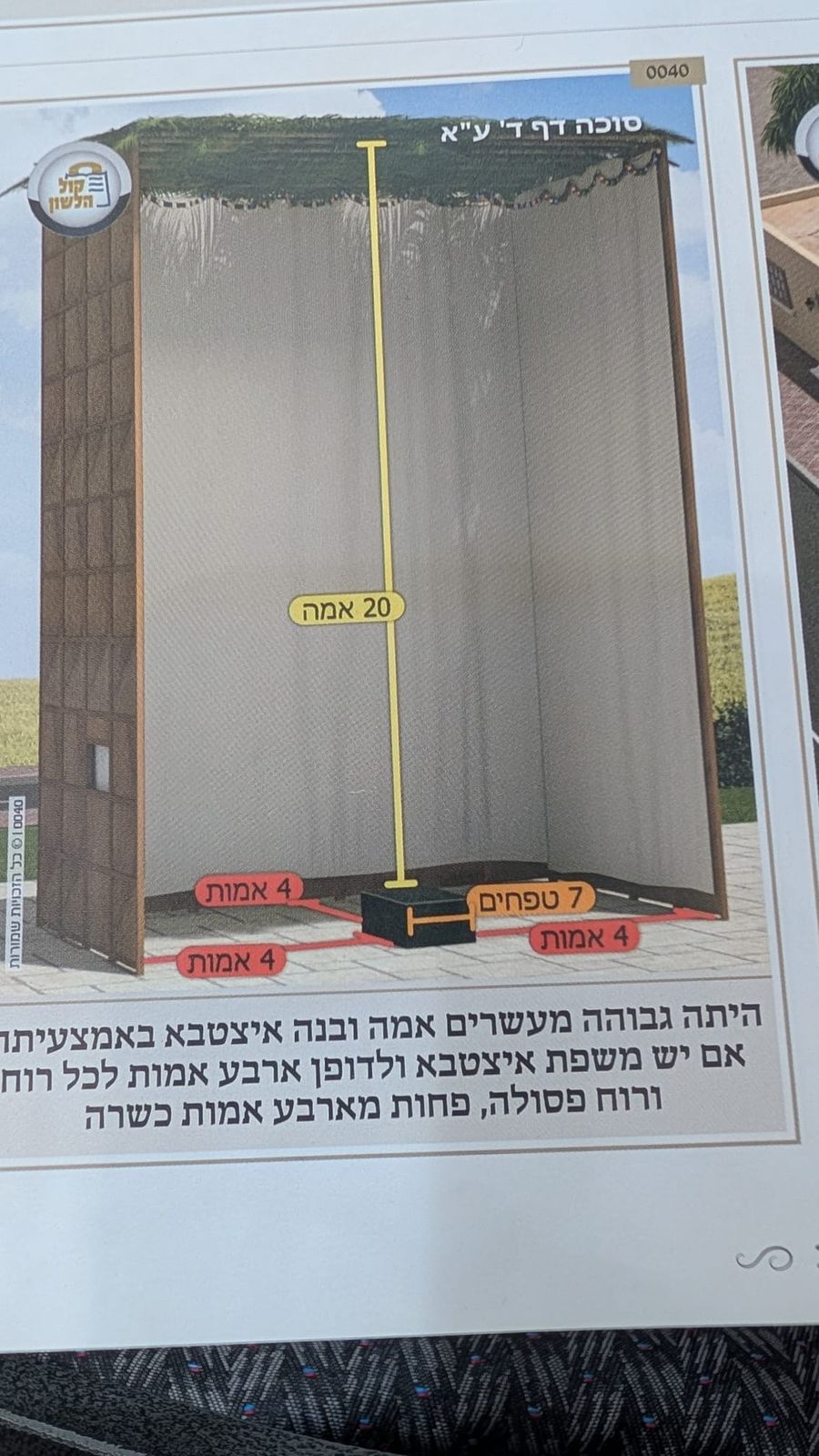
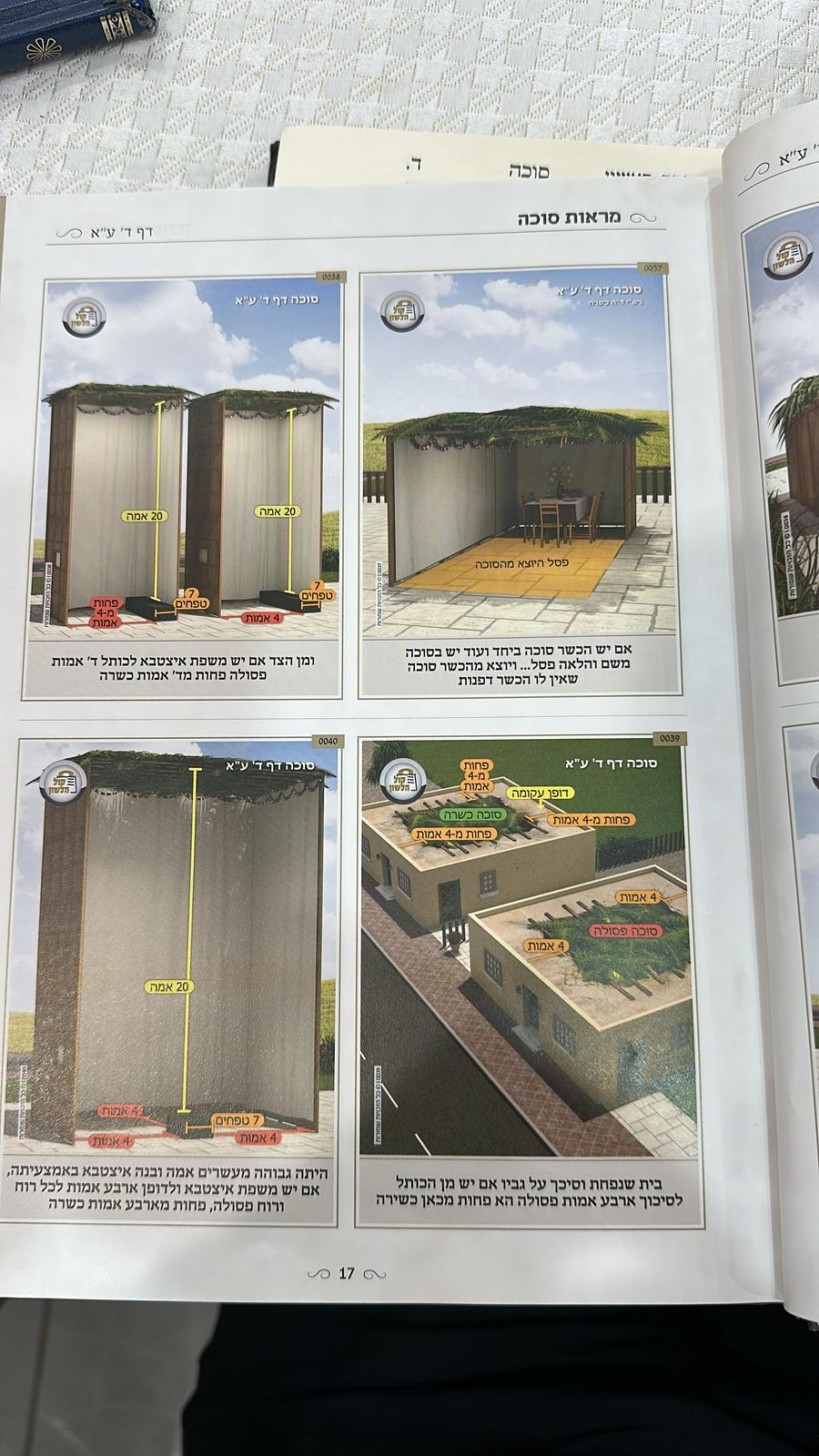
A sukkah higher than 20 amos cannot be lowered with pillows and blankets even with bitul, but straw or dirt with bitul does lower it. Straw one does not plan to remove, and plain dirt, are a machlokes R' Yosi and Rabbanan. The Gemara shows this from a Mishnah about a house filled with straw or pebbles regarding tumas ohel, together with R' Yosi's addendum. The Rebbi spent much of the shiur explaining the ohel background and ended by laying out the full range from never-batel to always-batel.
Step by step (shakla v’tarya)
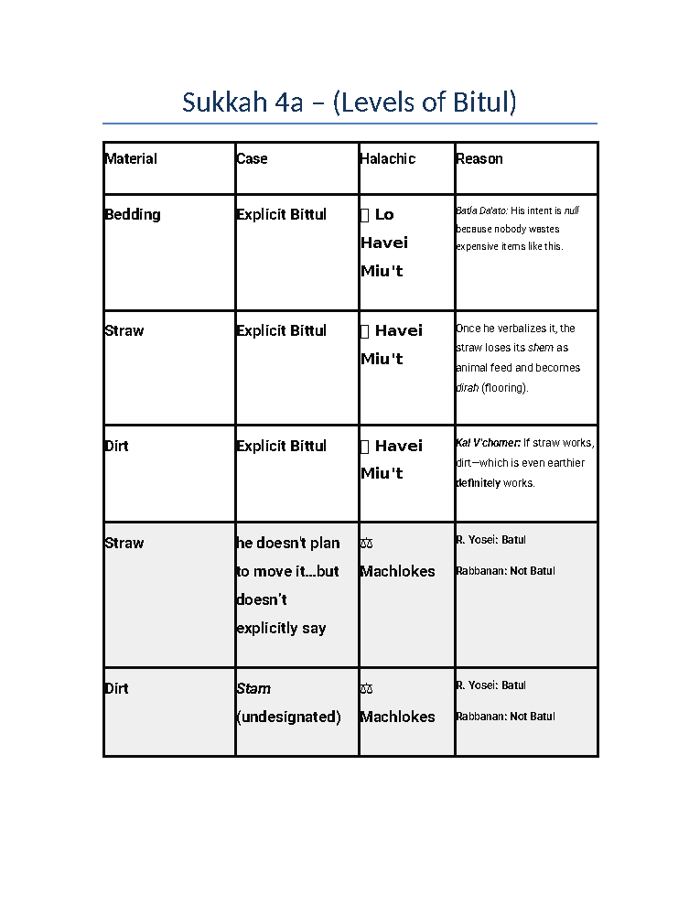
- GemaraIf the sukkah is higher than 20 amos and one lowers it with karim u'kesasos (pillows and blankets), it is not a mi'ut. This holds even if he was mevatel them for all seven days.
- GemaraThe reason: batla da'ato etzel kol adam. His intention is batel next to every normal person, who does not think that way.
- GemaraTeven u'vitlo (straw with bitul) is a mi'ut. Straw is used for food, but it also has other uses, so if he declares it his floor for the seven days it works.
- GemaraKol sheken afar u'vitlo. Dirt really belongs on the ground, so dirt with bitul certainly works.
- GemaraTeven v'ein asid l'fanoso (straw with no explicit bitul that he does not plan to remove) and afar stam (plain, undesignated dirt) are a machlokes R' Yosi and Rabbanan. The Rebbi noted this is where the previous shiur ended.
- The Gemara shows where this machlokes appears. It is not a sukkah-related machlokes; it comes from a Mishnah, which the Rebbi said he thinks is in Ohalos.
- MishnahBayis she'mil'uhu teven o tzeroros u'vitlo, mevutal: a house filled with straw or pebbles, and he was mevatel it, is batel. The Rebbi said to write afar over tzeroros, since pebbles and afar are the same thing.
- RashiBackground from the Rashi on the side. A k'zayis of meis in a house makes the house an ohel, so whatever is in the house is tamei with tumas ohel. A meis in the open air spreads tumah straight up to the rakia.
- RashiAn ohel needs a chalal tefach. If the house is packed with straw or pebbles all the way to the roof with no tefach left, it is no longer an ohel. The tumah then does not spread to the sides but goes straight up, so other items in the shed are not tamei, but whoever passes over the shed becomes tamei.
- GemaraDiyuk in the Mishnah: bitlo in, lo bitlo lo. If he was mevatel, yes; if not, no. This is the Tanna Kamma, who always requires bitul.
- The RebbiFor the house to stop being an ohel, the straw and dirt must be viewed as batel. Otherwise it is simply a house with a chalal tefach that happens to be packed.
- Why would someone fill a house like this? The Rebbi suggested he might want to protect tahor items in it, or someone may be about to die there and he does not want to move him out.
- The RebbiFor sukkah, bitul means for seven days. Here, to say the house is no longer an ohel, he has to mean he is never taking the material out.
- GemaraV'tani alah, an addendum on the Mishnah. R' Yosi says teven v'ein asid l'fanoso harei hu k'afar stam u'batel: straw he will never clear out is like plain dirt and is batel, without an explicit bitul.
- MachlokesThe machlokes: Rabbanan say both straw-not-to-be-removed and plain dirt are not batel without bitul. R' Yosi says that as long as he is not clearing it away, it is batel; both have the same status.
- GemaraR' Yosi's last line: afar v'asid l'fanoso harei hu k'stam teven v'lo batel. Dirt he plans to remove, because he is using it for something else, is like ordinary straw and is not batel, and everyone agrees.
- The RebbiDifference for sukkah: its whole world is seven days. If he has no plan to move the material on Yom Tov, that is enough. If he has in mind that it may be taken away on Chol HaMoed, he would need to be mevatel it before Yom Tov.
- The RebbiThe two bookends. Anything he plans to take away is no good, even the most earthy material, such as fill dirt left in the yard for a few days. Karim u'kesasos are no good even with an explicit bitul, because batla da'ato etzel kol adam.
- The RebbiThe middle ground is teven, which can go both ways (food or floor), and afar stam. These are the machlokes, each in varying degrees.
- ChazarahReview of the Gemara from line three: the machlokes, the Mishnah in Ohalos with its diyuk, R' Yosi's addendum, and afar v'asid l'fanoso.
- ChazarahFinal summary. Pillows and blankets are never batel, and dirt to be removed is never batel. In the middle, straw that will not be removed and undesignated dirt meet each other.
Kashas
- What would be the purpose of filling a house completely with straw or pebbles? This came up in the chabura's discussion.
Teirutzim
- Possibly to protect tahor items in the house, or because someone is about to die there and he does not want to move him out.
Rashi & Tosafos
- Rashi: The long Rashi on the side explains the ohel background. A meis in a house makes the house an ohel; an ohel needs a chalal tefach; a house packed to the roof is not an ohel, so the tumah goes straight up.
Mareh mekomos
- A Mishnah, which the Rebbi says he thinks is in Ohalos: bayis she'mil'uhu teven o tzeroros u'vitlo, mevutal. It is the source of the machlokes about bitul.
- The addendum on that Mishnah (v'tani alah) with R' Yosi's view on teven v'ein asid l'fanoso and afar v'asid l'fanoso.
The Rebbi’s chiddushim
- Straw with no plan to remove it and undesignated dirt are really on the same level.
- The Mishnah requires bitul because without it the straw is not part of the house, and the house remains an ohel with a chalal tefach.
- Bitul for sukkah means seven days; bitul for the house to stop being an ohel means forever.
- Framing as a scale: pillows and blankets, and dirt to be removed, are the two bookends that are never batel. Teven and afar stam are the middle ground in machlokes.
Unclear in recording
- How high the tumah of a meis in the open air rises: partly unclear in recording.
- Discussion of how the straw and dirt must be viewed in the ohel case: largely unclear in recording.
- Exact wording of what is required regarding Chol HaMoed for a sukkah: partly unclear in recording.
Drafted from the recording of the shiur, for chazarah. Torah terms follow the Rebbi’s own words; anything that could not be made out is marked “unclear in recording”. Tap a time to hear that point. Corrections welcome.