Shiur summary (draft from the recording)
Fixing a Sukkah Over 20 or Under 10
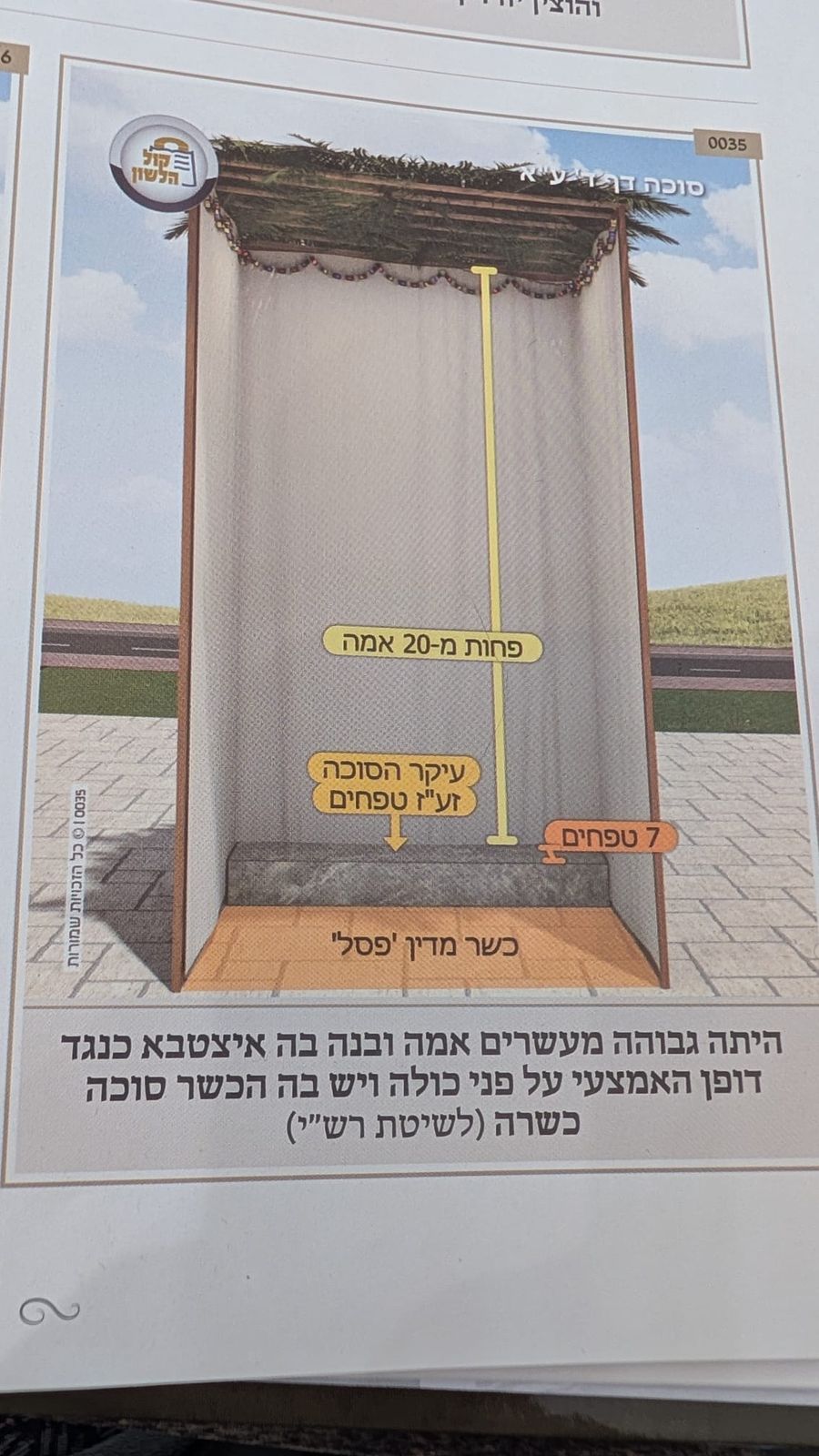
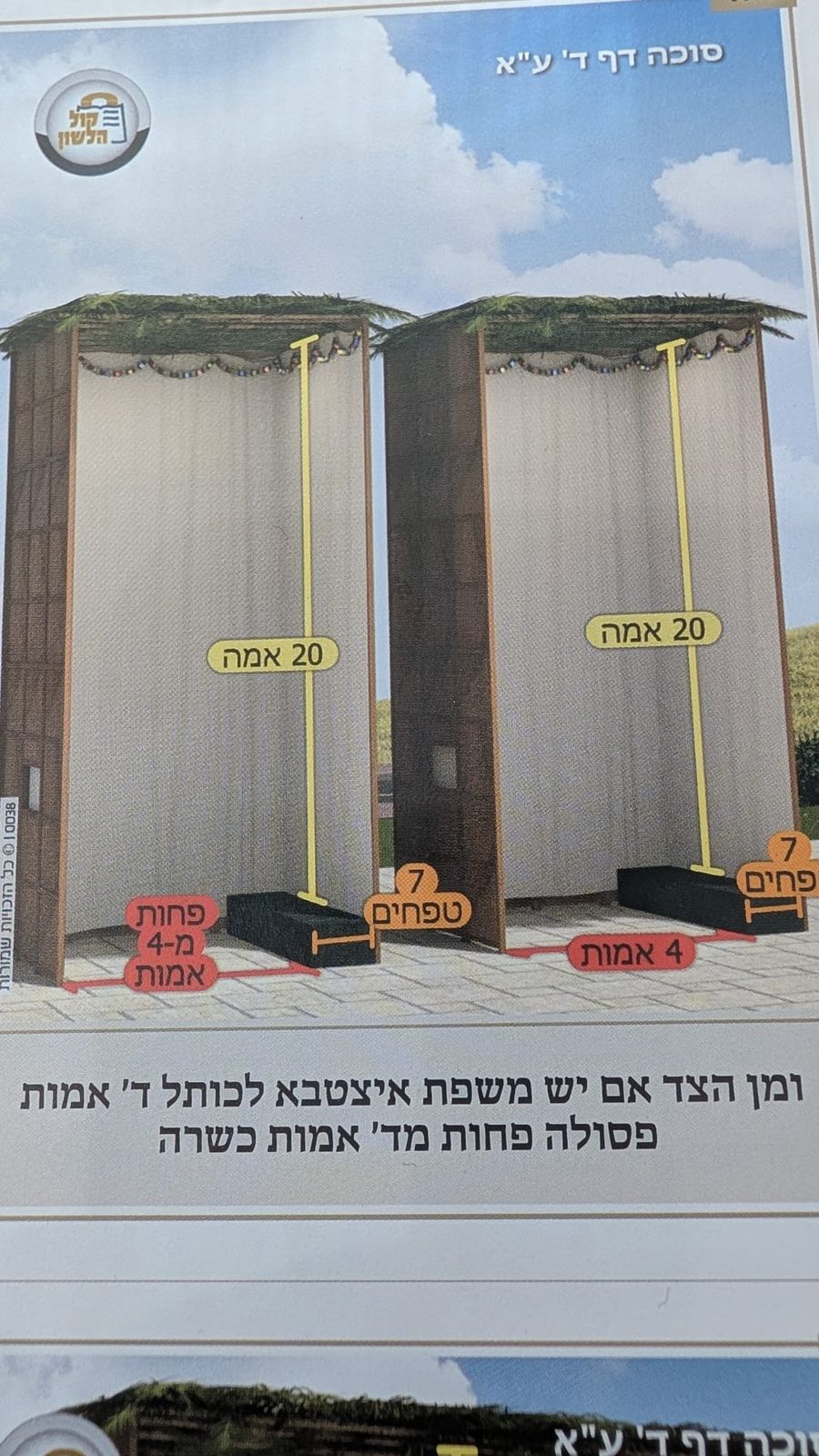
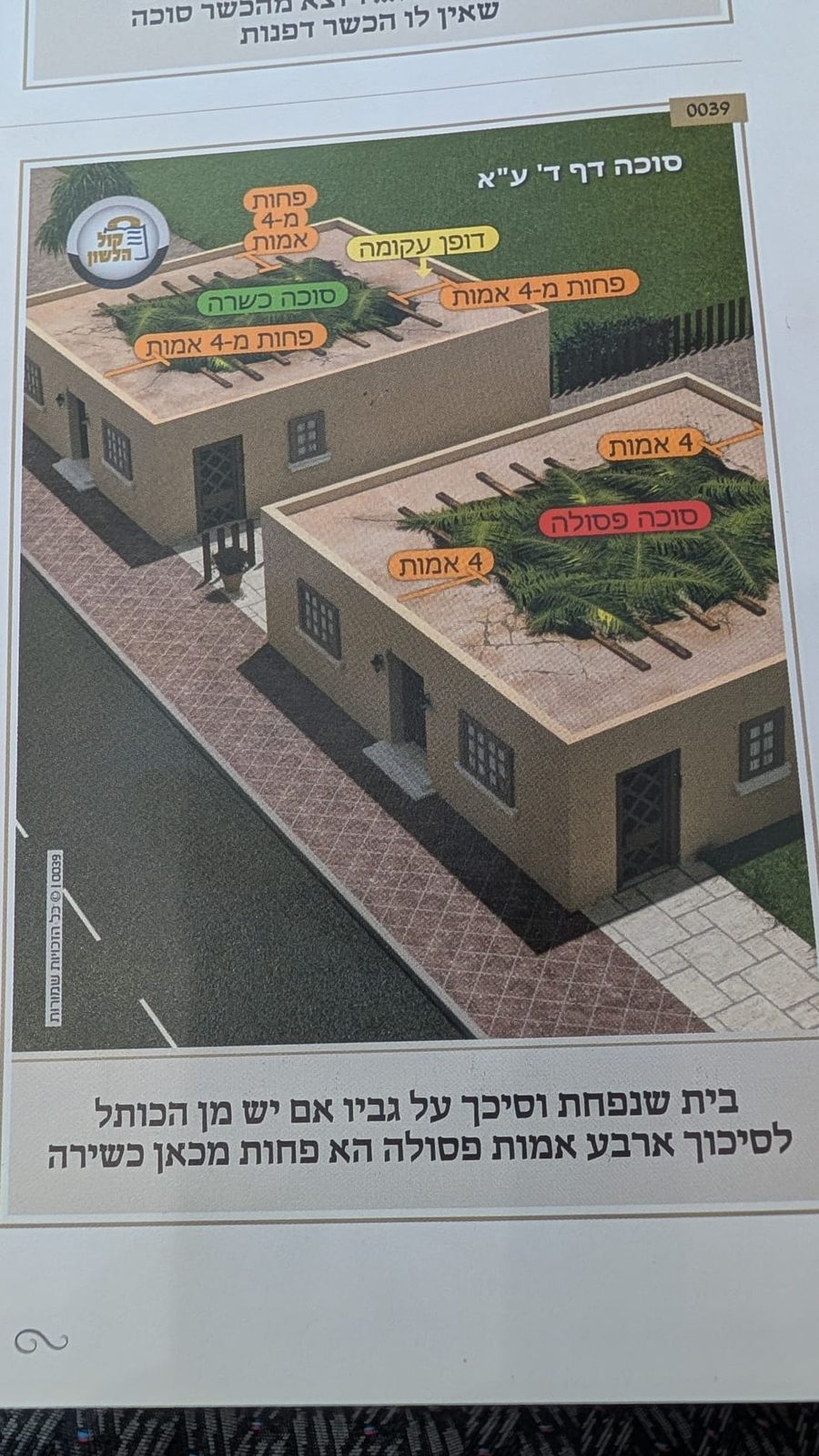
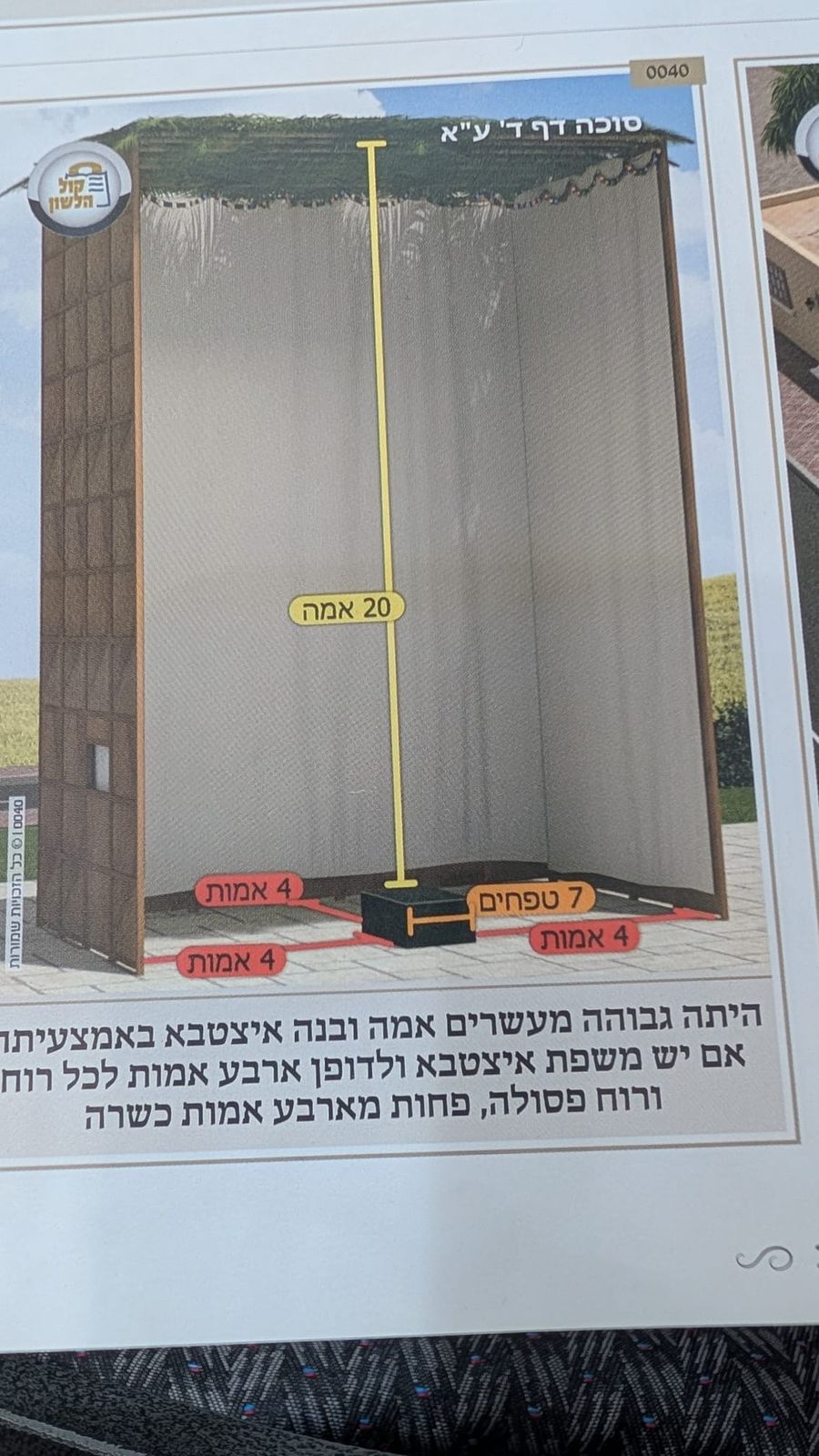
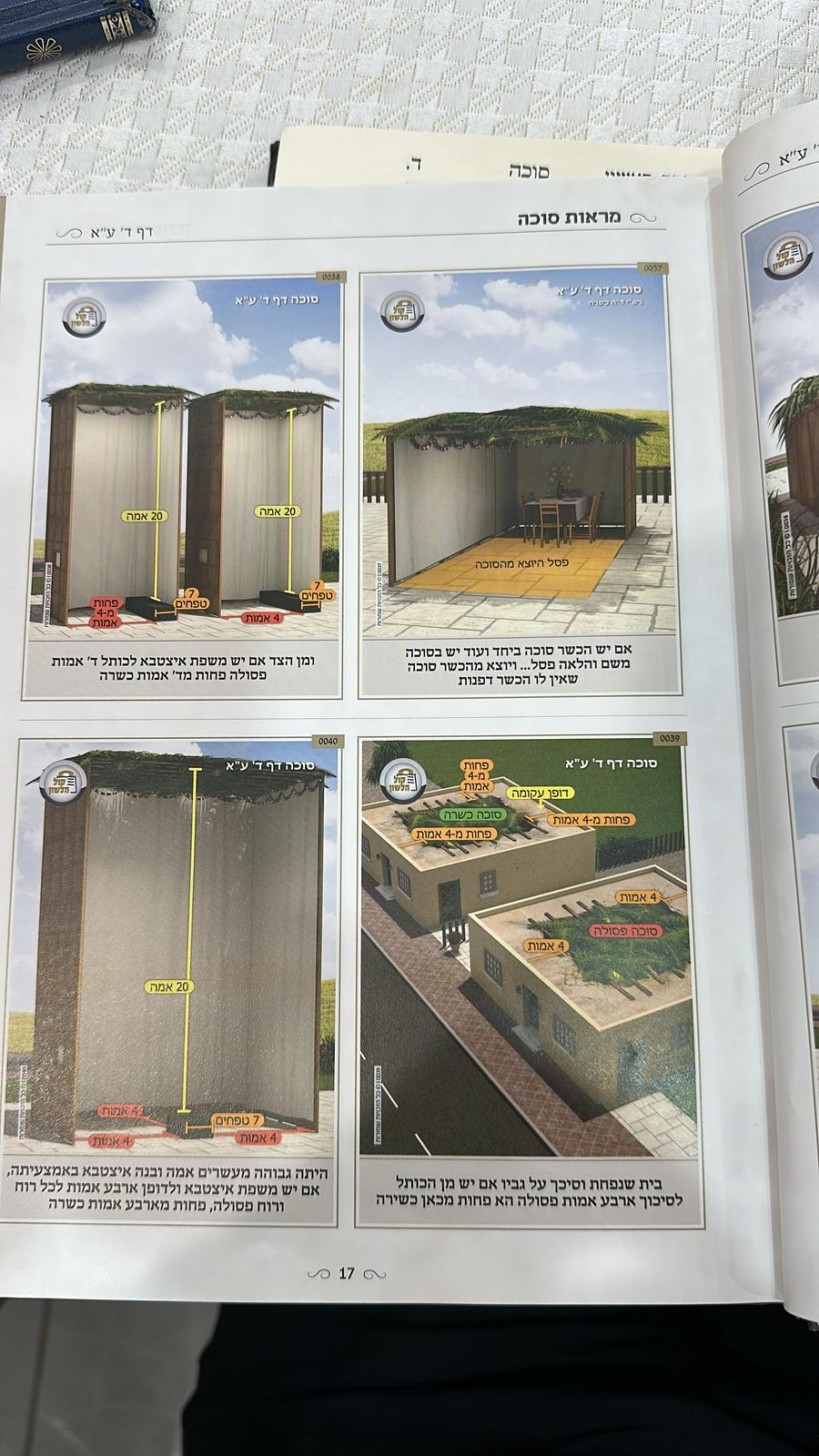
היתה גבוהה מעשרים אמה
Sukkah 4a · Monday, May 4, 2026
The sugya
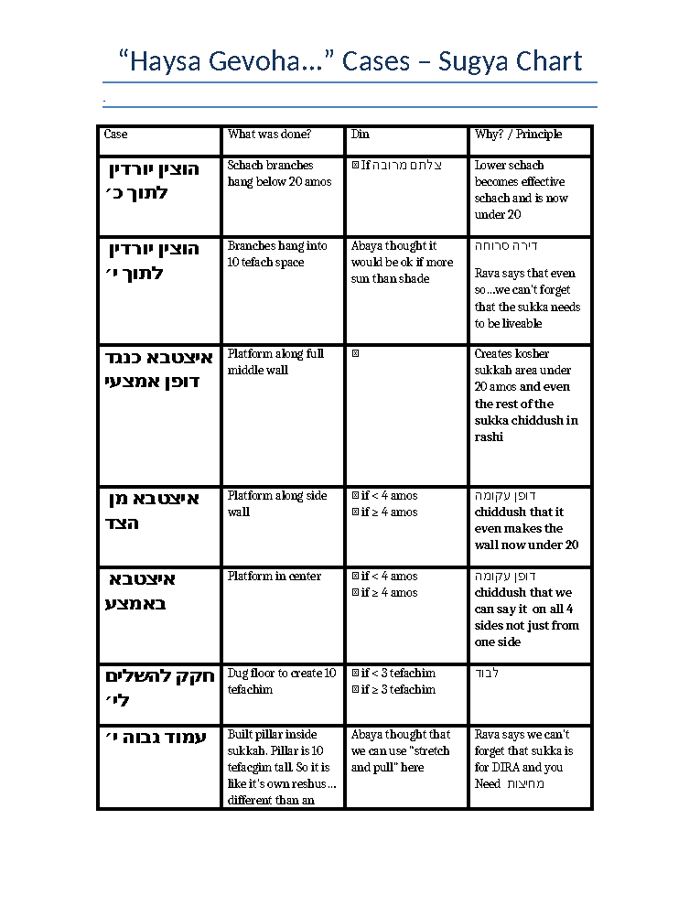
Back to the Mishnah's machlokes about a sukkah taller than 20 amos. The Gemara discusses ways to fix a sukkah that is over 20 amos or under 10 tefachim. First it asks which materials count as raising the floor (mi'ut), which brings in a machlokes R' Yosi and Rabbanan about bitul, learned from a Mishnah about a house filled with straw or pebbles regarding tumah. Then it discusses hutzin (hanging schach) that dip below 20 amos, and those that dip into the 10 tefachim, with Abaye's suggestion and Rava's rejection: dirah srucha.
Step by step (shakla v’tarya)
- ChazarahBack to the Mishnah's machlokes about 20 amos. This part of the sugya asks what can be done to fix a sukkah taller than 20 amos or lower than 10 tefachim.
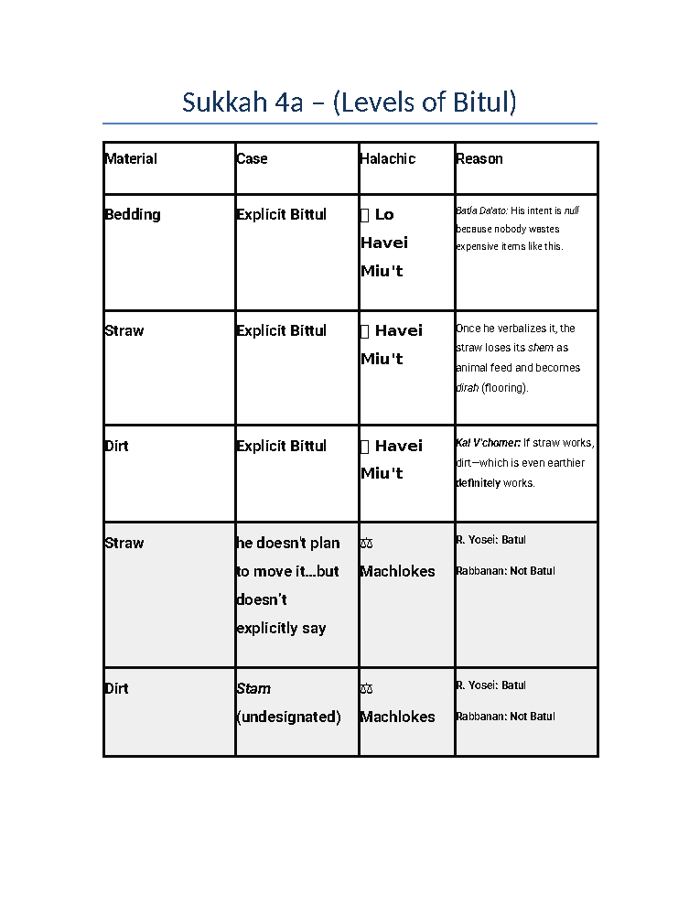
- GemaraA sukkah higher than 20 amos: he wants to lower it by putting pillows and blankets (kesasos) on the floor. This is not a mi'ut.
- GemaraThis is so even if he was mevatel them, because batlah da'ato etzel kol adam. No normal person makes pillows and blankets into a floor.
- GemaraTeven u'bitlo is a mi'ut. Straw can serve either as food or as a floor, so with bitul it becomes a floor. Kol shekein afar u'bitlo. You can fix the height from the bottom by filling it in.
- MachlokesWithout explicit bitul, there is a machlokes R' Yosi and Rabbanan. The cases are teven v'ein asid l'fanoso and afar stam.
- Ra'ayahThe source is a Mishnah: bayis shemilahu teven o tzroros u'bitlo, mevutal. The Rebbi explains this is about tumas ohel. Once the house is batel, it is no longer an ohel, so the tumah does not spread sideways and goes straight up.
- GemaraThe Gemara learns from the Mishnah: bitlo, yes; lo bitlo, no. Without bitul, the house is an ohel full of straw, fill and a kezayis meis, and any keili inside becomes tamei. This is the shita of the Tanna Kamma.
- ShitahA braisa (tani alah) brings R' Yosi: teven v'ein asid l'fanoso is like afar stam and is batel without saying so. Afar v'asid l'fanoso is like stam teven and is not batel, since we assume plain straw is kept for food.
- ChazarahThe Rebbi refers to a chart showing a sliding scale. It goes from explicit bitul all the way to explicitly not batel, across bedding, straw and dirt.
- The Tanna Kamma of the Mishnah is the Rabbanan. R' Yosi appears in a braisa on that Mishnah, not in the Mishnah itself.
- GemaraA sukkah higher than 20 amos where hutzin (branches of the schach) hang down within 20 amos. If tzilasan merubah mechamasan, it is kosher; if not, it is pasul.
- The RebbiNote the nun in tzilasan: it means the shade of the low-hanging part. The schach above 20 amos is disregarded, and we judge only the hanging part.
- GemaraA sukkah that was kosher, higher than 10 tefachim, but hutzin hang down into the 10 tefachim.
- ShitahSavar Abaye l'meimar (he thought to say), the converse of the first case: im chamasan merubah mitzilasan, kosher. His reasoning is that schach is measured by density, so thin hanging schach is as if not there.
- DechiyahAmar lei Rava (line 14): ha dirah srucha hi, v'ein adam dar b'dirah srucha. The hanging schach is there. We do not treat it as invisible, and it brushes against the person's back or head.
- MaskanaOver 20, dense hanging schach makes it kosher. Under 10, we cannot use the same density logic, because part of the halacha is whether you can live there.
- ChazarahThe Rebbi reviews both hutzin cases and Rava's statement again.
Kashas
- If he was mevatel the pillows and blankets as his floor, why are they not a mi'ut?
- A participant asks whether the hutzin case works according to Rava's reason for the 20-amos limit (kevah, not shivas yamim). The Rebbi says he does not know, and it is left open.
- In the 10-tefachim case, should we apply the converse of the 20-amos case and look at the density of the hanging schach?
Teirutzim
- Batlah da'ato etzel kol adam: no normal person uses pillows and blankets as a floor.
- Rava: dirah srucha hi, v'ein adam dar b'dirah srucha. Thin hanging schach still crowds the living space.
Mareh mekomos
- Mishnah: bayis shemilahu teven o tzroros u'bitlo, mevutal (tumas ohel). Source for the machlokes on bitul; the diyuk is bitlo in, lo bitlo lo.
- Braisa (tani alah) of R' Yosi: teven v'ein asid l'fanoso is like afar stam; afar v'asid l'fanoso is like stam teven.
The Rebbi’s chiddushim
- Straw has two possible uses, food or flooring (like a mattress). Bitul or intent decides which one it is.
- Tzroros (pebbles, gravel) is essentially the same as afar.
- The Rebbi suggests everyone would agree that afar v'asid l'fanoso is not batel.
- The cases form a sliding scale from explicit bitul to explicitly not batel.
- Tzilasan with a nun refers specifically to the shade of the hanging schach. The schach above 20 amos is out of the zone of kashrus and disregarded.
- Over 20, density can help. Under 10, the question is livability: part of the halacha is whether a person can live in the sukkah.
Unclear in recording
- The exact daf/amud named at the start.
- Where the Rebbi said the Mishnah of bayis shemilahu is found.
- A reference after the question about Rava.
- A question about where else the word srucha is used; answered 'not sure'.
- A remark about fixing the sukkah by lifting or cutting the schach, 'we'll get to later'.
- The closing discussion on why Rava's reason is needed ('two laws... a different reason').
Drafted from the recording of the shiur, for chazarah. Torah terms follow the Rebbi’s own words; anything that could not be made out is marked “unclear in recording”. Tap a time to hear that point. Corrections welcome.