Dofen Akumah vs. Lavud: Digging to Ten
The sugya
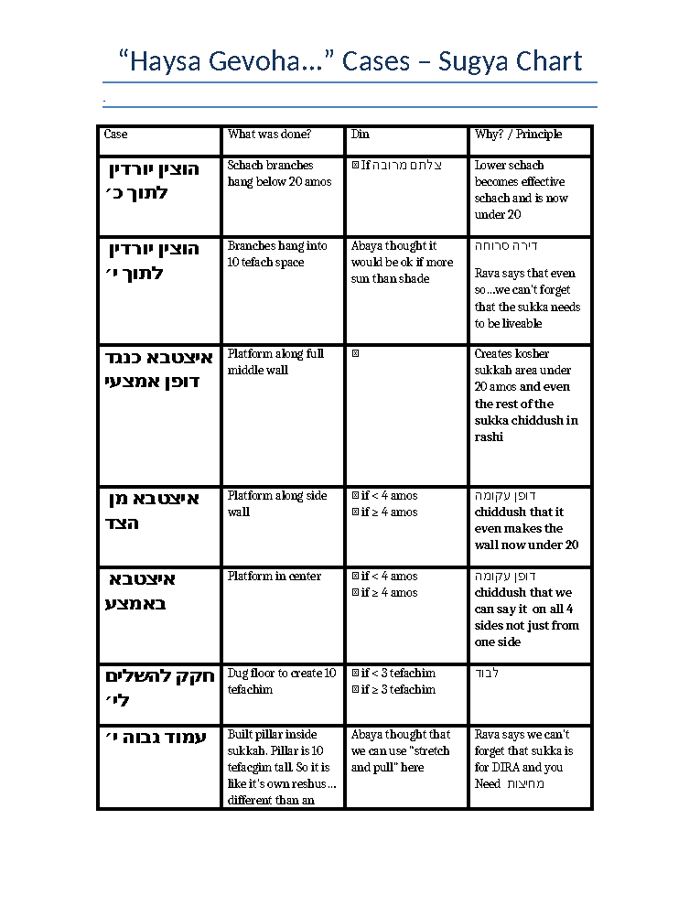
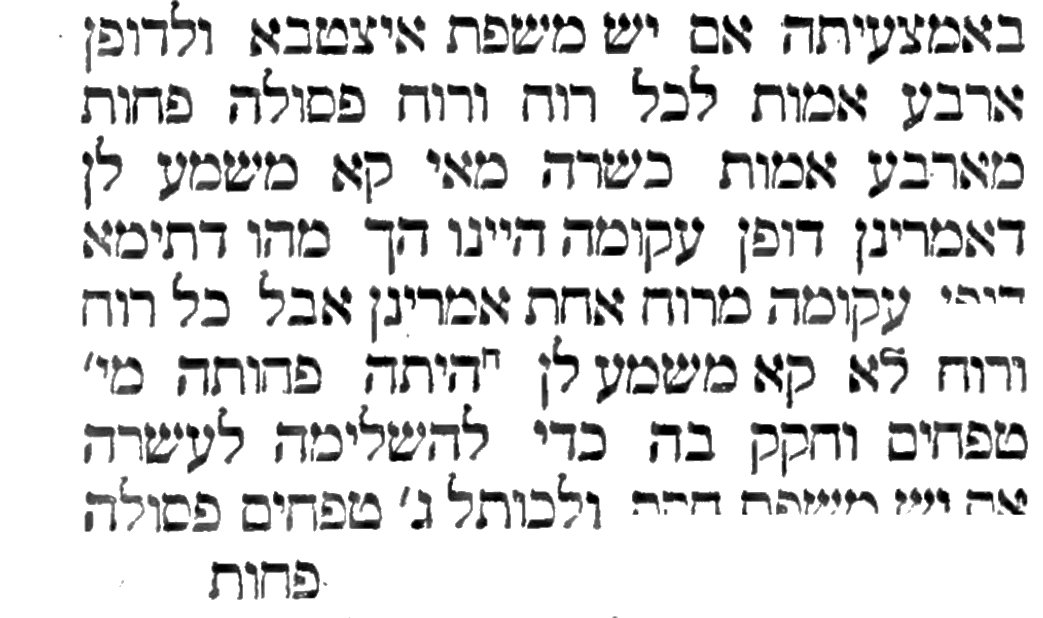
The shiur finished the istaba (platform) cases. It explained what each case adds to dofen akumah: shrinking a wall that is over 20 amos, and applying it on every side. It then learned the case of a sukkah under ten tefachim where one dug inside to make it ten. That case is kosher only if the edge of the dug area is within three tefachim of the wall. The Gemara asks why there we allow four amos and here only three tefachim. The Rebbi explained the answer this way: dofen akumah bends an existing wall, while lavud creates a wall.
Step by step (shakla v’tarya)
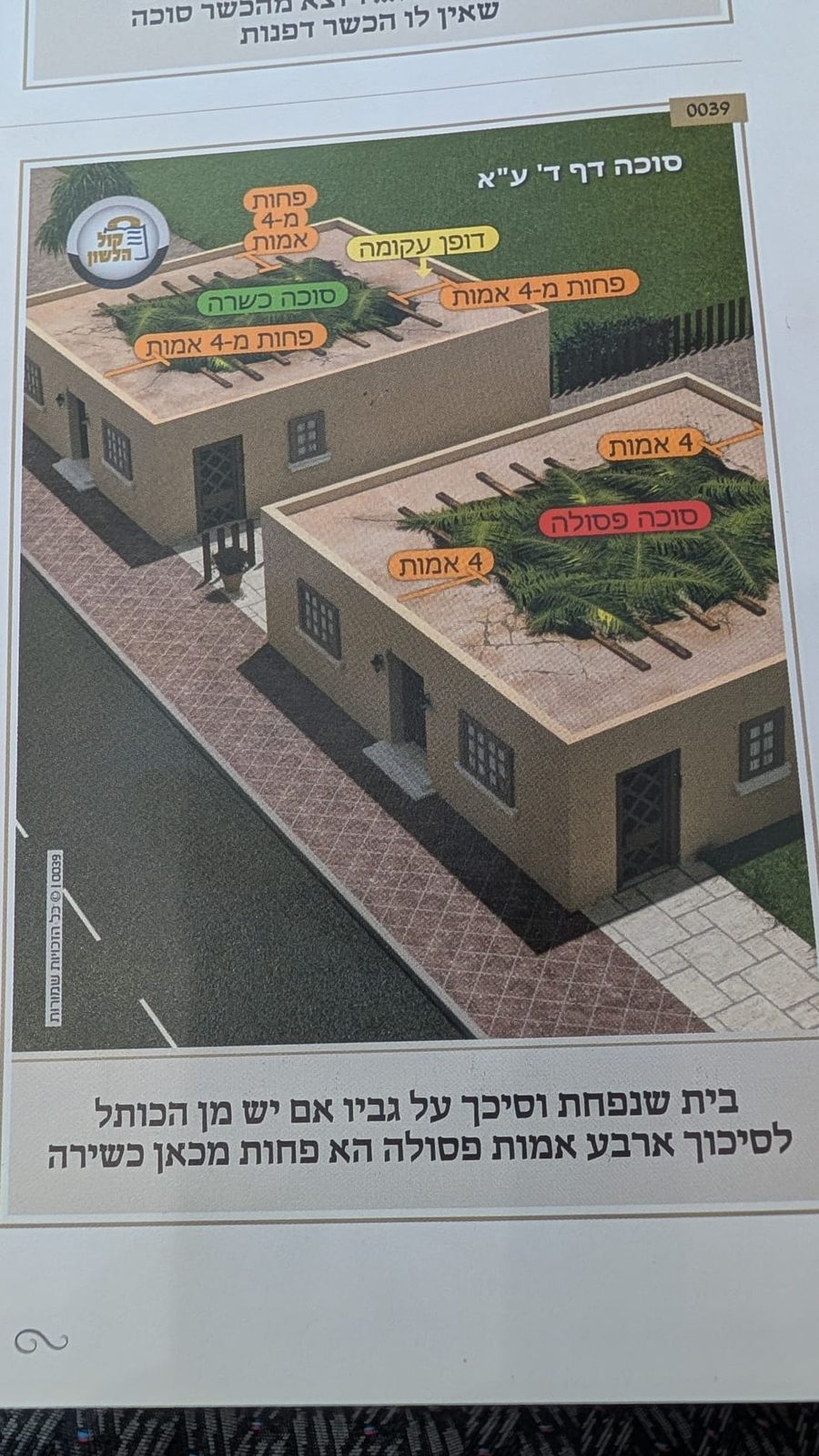
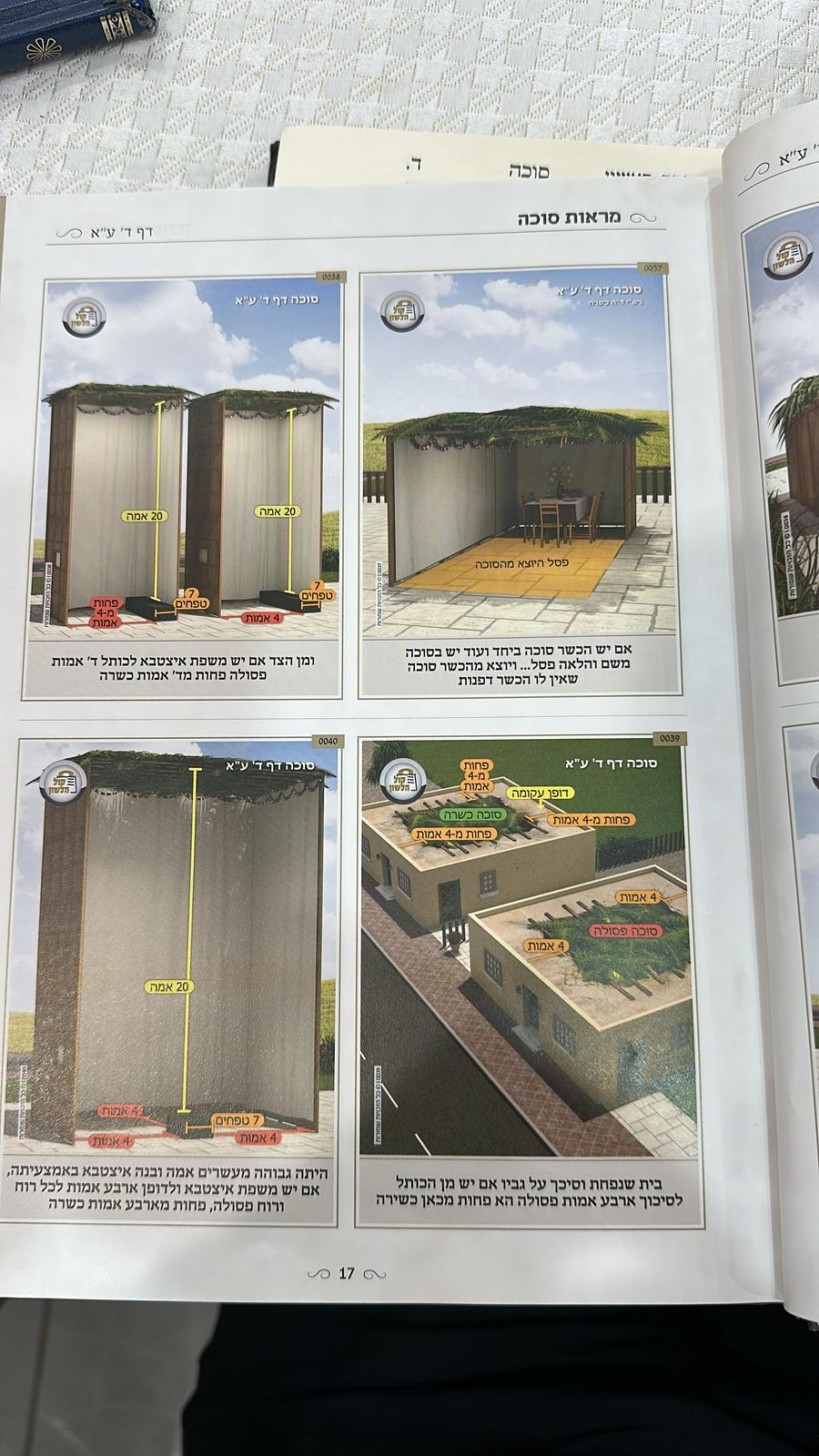
- ChazarahThe Gemara asks what the istaba case adds, since we already learned dofen akumah in a Mishnah. That Mishnah: a house that caved in and one put schach on top. If there are 4 amos from the wall to the schach it is pasul; less than that, kosher.
- TeirutzHava amina: in the Mishnah the wall is fit to be a wall, within the height limits. Here the wall is over 20 and not fit, and dofen akumah might only bring a wall in, not shrink it. Kamashma lan that it works here too.
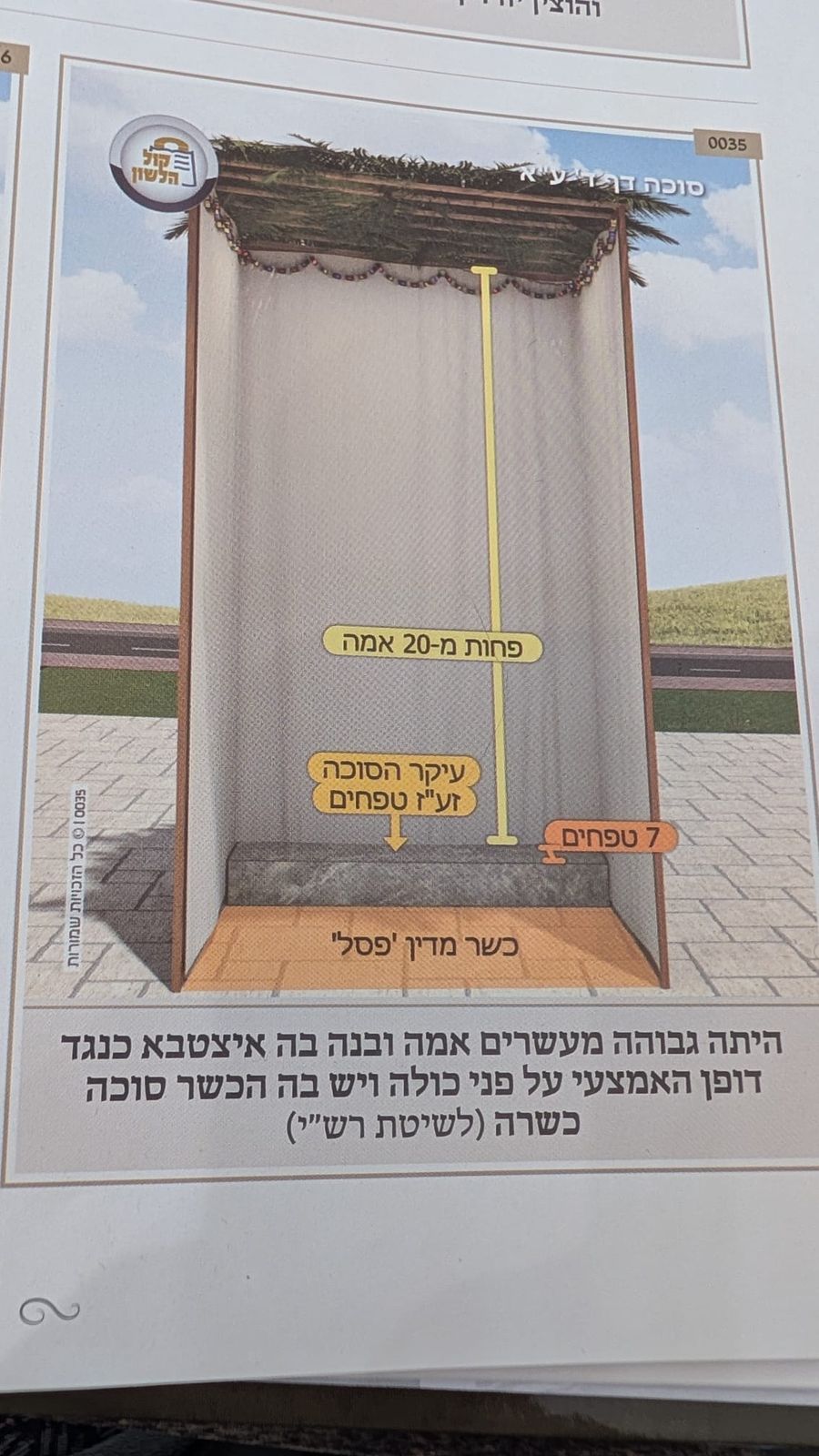
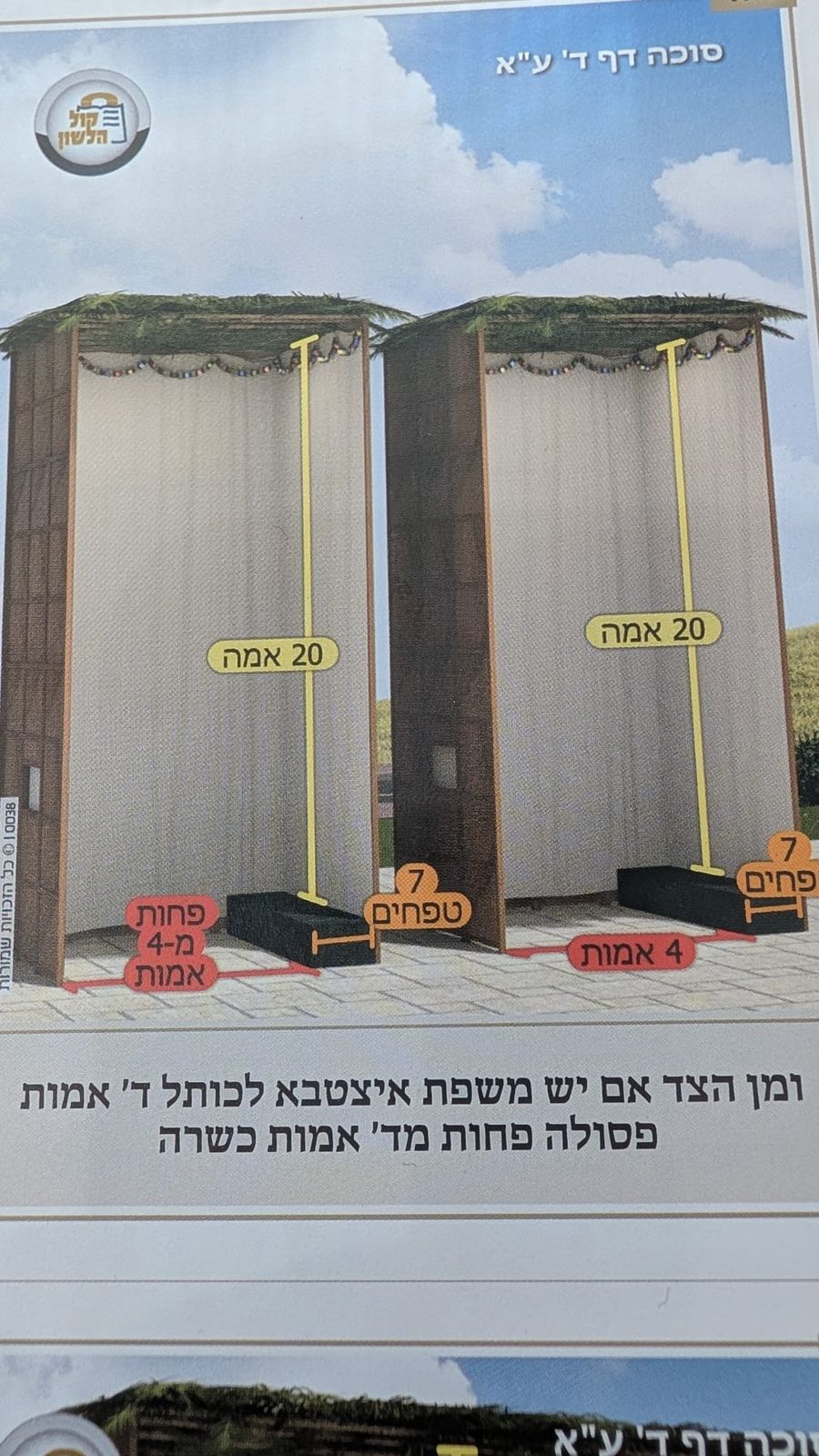
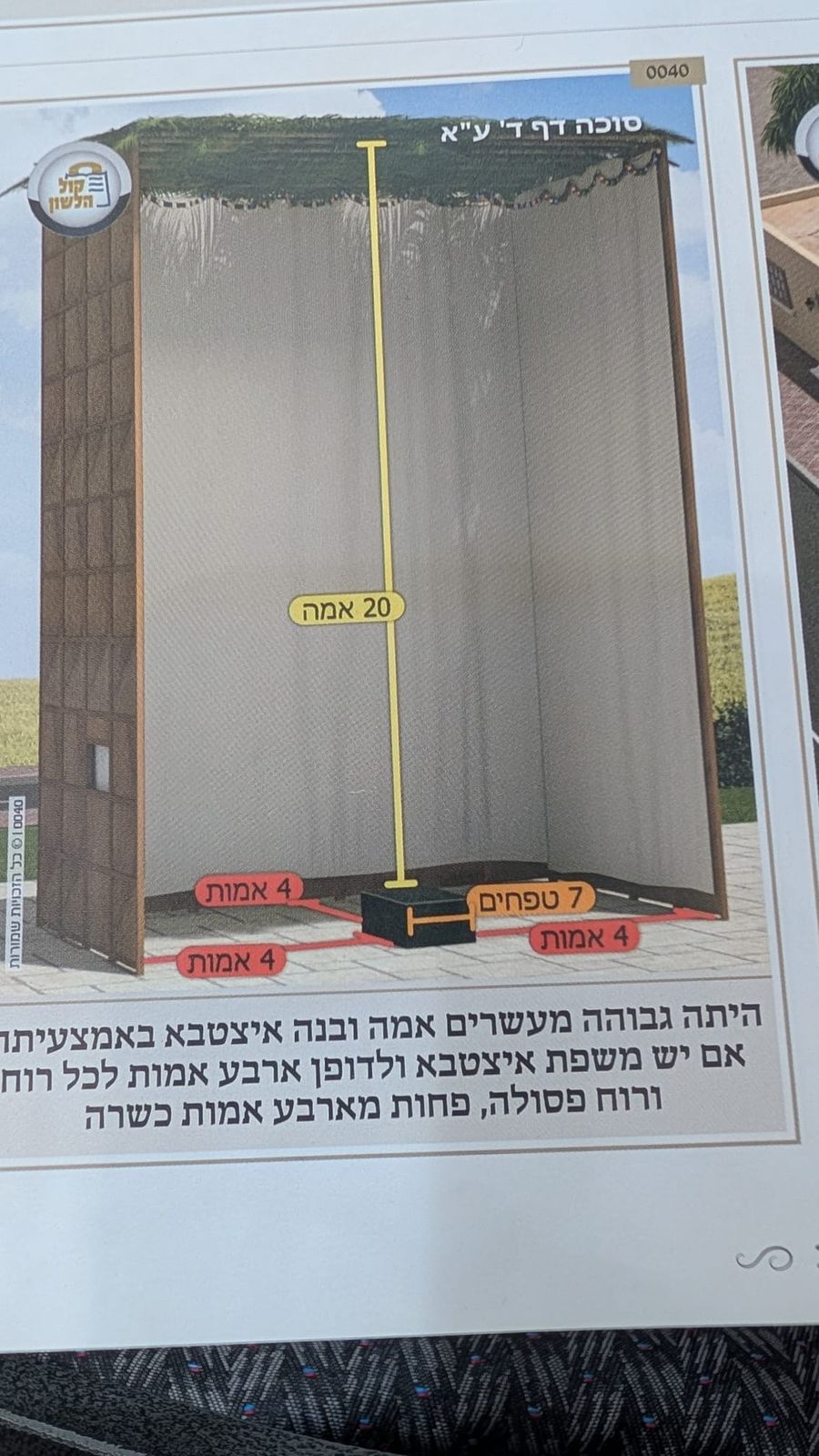
- GemaraNext case: the sukkah is higher than 20 amos and the platform is built in the middle. If there are 4 amos from the edge of the platform to the wall on each side it is pasul; less than 4 amos, kosher.
- KashaMai kamashma lan? This is the same as the previous case (haynu hach).
- TeirutzHava amina: dofen akumah is said for one side, but using it on every side is taking too much advantage. Kamashma lan that it works on all sides.
- A question was raised about the platform's own size. The Rebbi answered that it must hold a person's rosho v'rubo v'shulchano, 7 by 7 tefachim per Beis Hillel. The Gemara does not say this explicitly here, but a smaller platform would not work anyway. It is like a kosher sukkah within the sukkah.
- GemaraLine 33: the sukkah was less than ten tefachim and he dug in it to complete it to ten. If there are 3 tefachim from the edge of the dug area to the wall it is pasul; less than 3 tefachim, kosher.
- The RebbiUsing the picture: the dug area must be close to the walls, because the sukkah needs walls. Best would be to dig out the whole floor, like a sunken living room.
- A talmid asked whether one may sit on the undug ledge with feet hanging into the dug area. The Rebbi raised dirah srucha and returned to it later.
- Kasha4b line 1: Mai shna? There, by the istaba, we allowed less than 4 amos. Here, only less than 3 tefachim.
- The RebbiAn amah is 6 tefachim, so dofen akumah gives 24 tefachim before the schach must start. Here we allow only 3 tefachim.
- TeirutzThere, a wall already exists, and no one disputes that the wall outside the istaba is a wall. Less than 4 amos suffices because you are only bringing the wall closer. Here, to create a wall (l'shavuyei dofen), less than 3 tefachim works; otherwise it does not.
- The RebbiLavud is used throughout halacha, in eruv, Shabbos and gaps in walls. Dofen akumah does not make a wall; it bends a wall. Lavud makes a wall.
- A talmid asked whether the wall can combine with the dug part. The Rebbi answered that a wall need not be above ground level, so such a combination is certainly good.
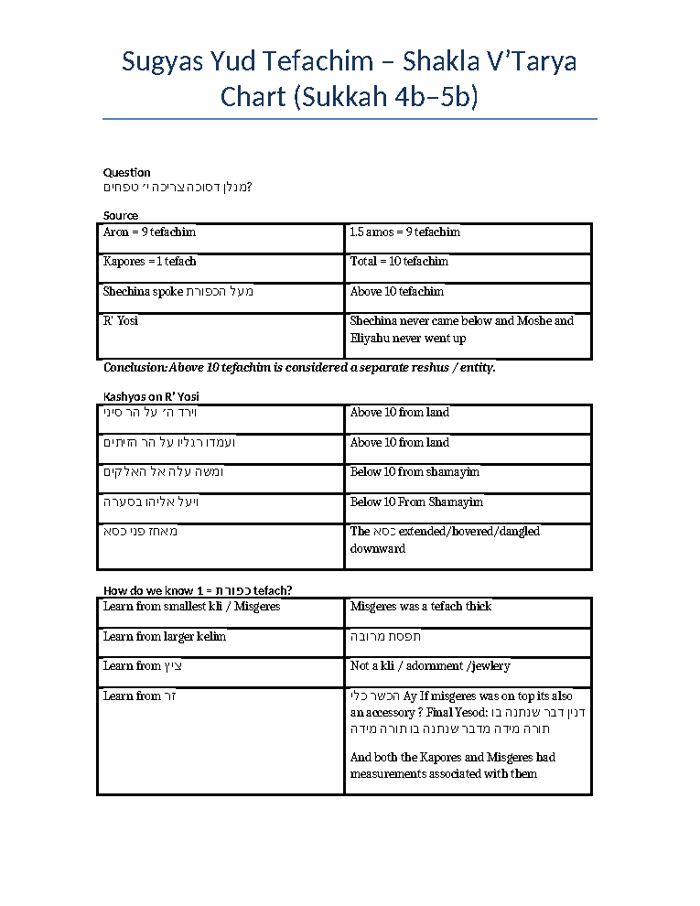
- The RebbiOn sitting on the ledge: does lavud extend the space outward or bring the wall inward? A sukkah must also be a dirah, so structural halachos alone are not enough. Compare Rava's twigs (dirah srucha). A dirah needs width and height, and the ledge part is not kosher.
- MaskanaReview: nothing in halacha counts as a wall under 10; to create a wall you must be within three tefachim. That rule is not specific to sukkah, while dofen akumah is a halacha specific to sukkah.
Kashas
- Mai kamashma lan in the istaba case? We already learned dofen akumah in the Mishnah of the house that caved in.
- Platform in the middle: mai kamashma lan, haynu hach?
- Why does the istaba case allow 4 amos, but digging to ten allows only 3 tefachim?
Teirutzim
- In the Mishnah the wall is fit to be a wall; here it is over 20. I might have thought dofen akumah cannot shrink a wall.
- I might have thought dofen akumah applies on one side only, not on every side.
- There the wall exists and is only bent closer, so 4 amos is enough. Here a wall must be created, which requires within 3 tefachim (lavud).
Mareh mekomos
- Mishnah in the first perek of Sukkah (house that caved in, schach on top, 4 amos from the wall): the source for dofen akumah.
- Beis Hillel, 7 by 7 tefachim (rosho v'rubo v'shulchano): the minimum size of the platform.
- Rava's ruling on the twigs coming down (dirah srucha), learned earlier: a sukkah must be livable, not only structurally valid.
The Rebbi’s chiddushim
- Dofen akumah bends an existing wall; lavud creates a wall. That is why the shiurim differ.
- Lavud is built into all of halacha, in eruv and Shabbos.
- Dofen akumah is specific to sukkah; the rule that a wall needs ten and can be created only within three tefachim applies everywhere.
- Every sukkah halacha must also be checked against the requirement that it be a dirah.
- A dirah needs width and height, so sitting on the undug ledge would not count.
Unclear in recording
- Opening words (possibly the daf and amud) are garbled.
- Remark about where the 7-tefachim requirement appears ('only says it on the first case').
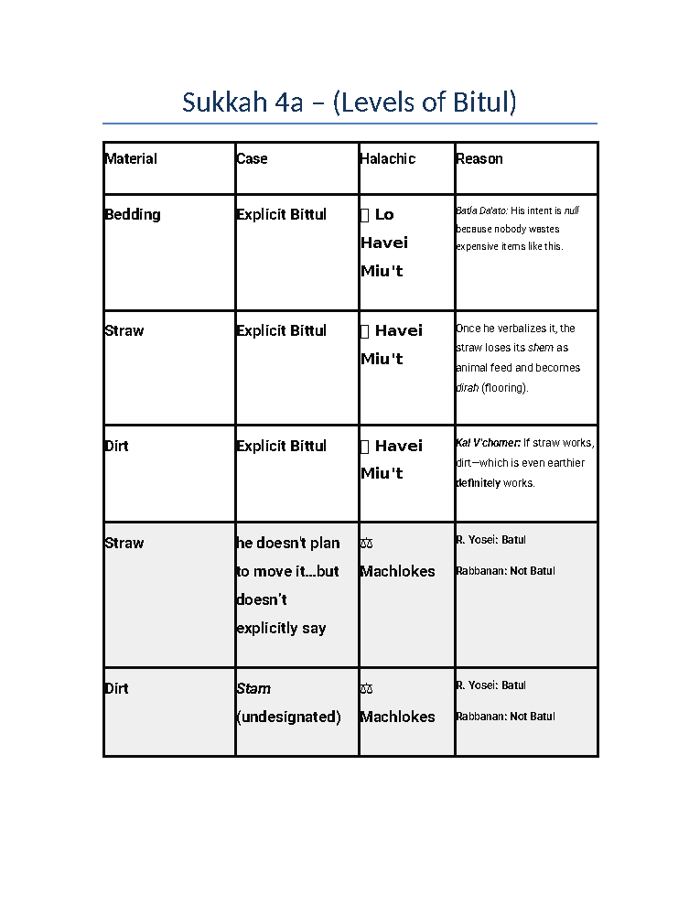
- Exchange about whether bittul is needed for the dug area.
- Name of the person the Rebbi heard the dirah point from.
- Remark that Rashi says something 'right away, the first word'.
Drafted from the recording of the shiur, for chazarah. Torah terms follow the Rebbi’s own words; anything that could not be made out is marked “unclear in recording”. Tap a time to hear that point. Corrections welcome.