Shiur summary (draft from the recording)
Pesukim for Geirim, Tosefes Inuy, and Ketanim
והשתא דאמרת סוכה הלכתא
Sukkah 28b · Friday, February 13, 2026
The sugya
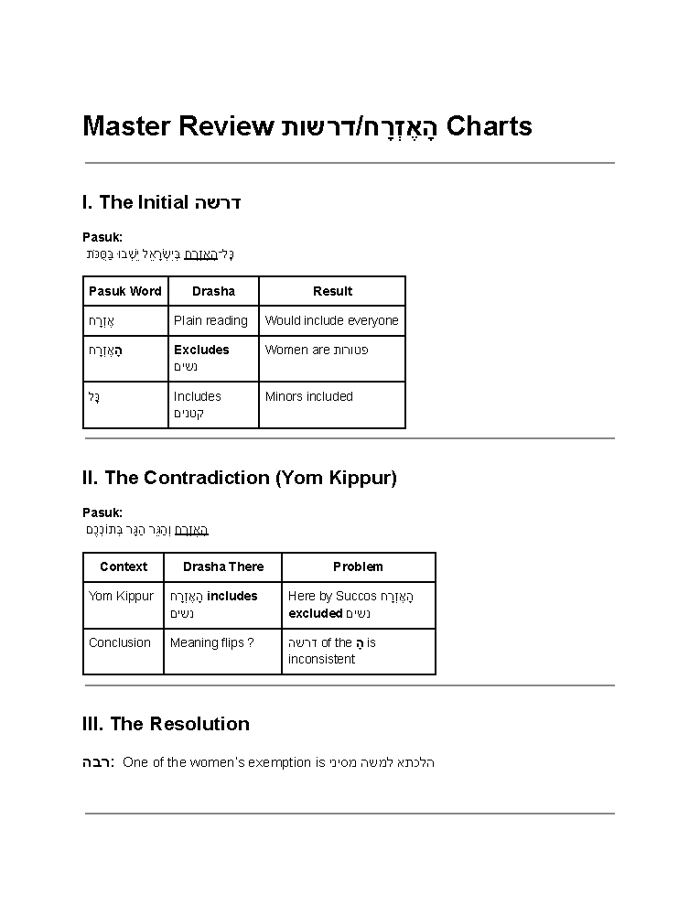
Once sukkah is established as a halachah, the Gemara asks why a pasuk is needed. It answers that the pasuk includes geirim, and that for Yom Kippur the pasuk teaches that women are chayav in tosefes inuy. The shiur then learned the kasha from the Mishnah that ketanim are patur, the teirutz of a katan who reached chinuch, and that this is only midrabanan with the pasuk an asmachta b'alma. The Rebbi then reviewed the whole piece from line 8 for the recording, adding a point on punctuation and on what an asmachta is.
Step by step (shakla v’tarya)
- KashaV'hashta d'amrat sukkah halachta: now that we say sukkah is a halachah, why do we need the extra hey?
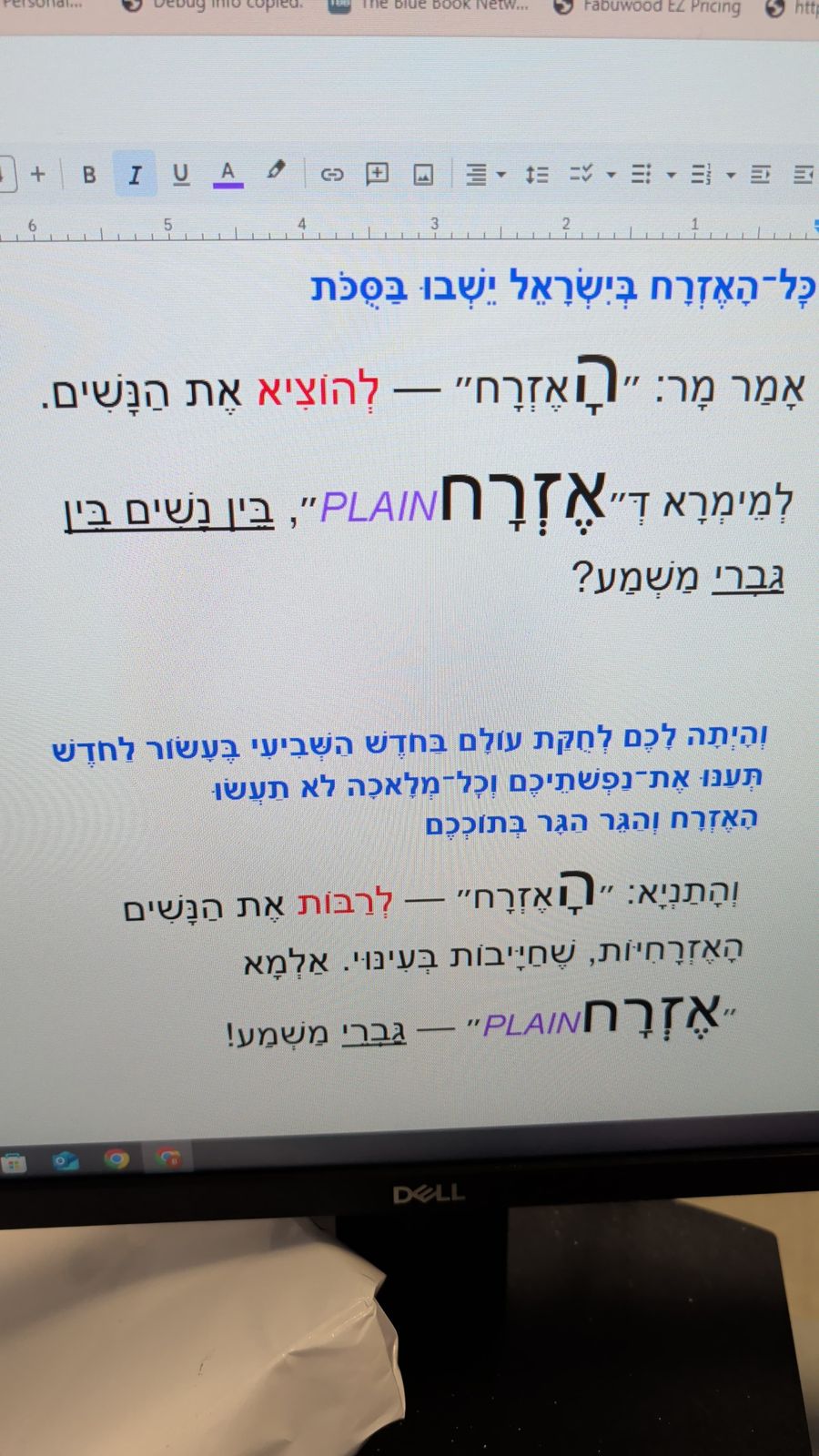
- TeirutzTo include geirim. Hava amina: ha'ezrach b'Yisrael means only a born citizen of Yisrael, so geirim would not sit in the sukkah. Kamashma lan: the extra hey teaches that geirim do sit in the sukkah.
- KashaThe lingering question: why do we need a pasuk to tell us women are chayav in the fasting of Yom Kippur? Don't we know it from Rav Yehuda amar Rav, that the Torah equates a woman to a man for all onshin?
- TeirutzLo nitzracha ela l'tosefes inuy. The inclusion is a small one, for adding to the fast.
- Tosefes inuy explained: there is a mitzvah on Yom Kippur to accept the fast a little before the actual zman kicks in. It is learned from pesukim, at least stopping eating and drinking a minute before.
- Hava amina: since the Torah excluded tosefes inuy from onesh and azharah, one might think women are not chayav in it at all.
- The RebbiSomeone who eats on Yom Kippur gets kares. Someone who does not add a minute or two to the fast gets no kares, yet it is halachah. Since the whole limud of Rav Yehuda was that the Torah equates a woman to a man for onshin, and tosefes inuy has no onesh, you would think women are not chayav.
- Discussion of the word 'klal'. He concluded it means she would have no connection at all to tosefes inuy.
- MaskanaKamashma lan: the extra hey teaches she is also fully chayav in tosefes inuy, even though there is no onesh.
- GemaraAmar mar: kol l'rabos es haketanim, the word kol includes ketanim.
- KashaBut we just learned in the Mishnah: nashim, avadim uketanim peturin min hasukkah.
- TeirutzLo kashya. The pasuk of kol refers to a katan shehigia l'chinuch. The Mishnah, which says they are patur, refers to a katan shelo higia l'chinuch.
- KashaA katan shehigia l'chinuch is only midrabanan. No katan in the world is chayav in anything min haTorah; shaking a lulav or sitting in a sukkah is a mitzvah of chinuch. So why is the Torah's kol involved in something d'rabanan?
- TeirutzMidrabanan, and the pasuk is an asmachta b'alma, just a reference.
- ChazarahHe reviewed the sugya again from line 8: the pasuk is needed for geirim, the Yom Kippur question and tosefes inuy, and the ketanim kasha with its teirutzim.
- The RebbiPunctuation: there should be no comma after rachmanah. Read it as one run-on: hoil umiet rachmanah l'tosefes inuy me'onesh ume'azharah.
- The RebbiAn asmachta is like the Torah giving a smile and a nod, a salute, to what the chachamim instituted, as if to say it is maskim.
Kashas
- Since sukkah is a halachah, why do we need the pasuk (the extra hey)?
- Why do we need a pasuk for women and the fasting of Yom Kippur? We know it from Rav Yehuda amar Rav, that a woman is equated to a man for all onshin.
- Kol includes ketanim, but the Mishnah says nashim, avadim uketanim are patur from sukkah.
- A katan shehigia l'chinuch is only chayav midrabanan, so how can the Torah's kol include him?
Teirutzim
- The pasuk includes geirim. Otherwise ha'ezrach b'Yisrael would imply only born Jews.
- The pasuk is needed only for tosefes inuy. Since it carries no onesh or azharah, we might have thought women are not chayav in it at all; the pasuk teaches that they are.
- The pasuk refers to a katan who reached chinuch; the Mishnah refers to a katan who did not reach chinuch.
- It is indeed midrabanan, and the pasuk is an asmachta b'alma.
Rashi & Tosafos
- Rashi: Rashi was cited on tosefes inuy; the wording of the quote is unclear in recording. The point given was that one must stop eating and drinking at least a minute before the zman.
Mareh mekomos
- Pasuk ha'ezrach b'Yisrael (Vayikra 23): the extra hey includes geirim in sukkah.
- Rav Yehuda amar Rav: hishvah hakasuv ishah l'ish l'chol onshin shebaTorah, the source that women are chayav in the Yom Kippur fast.
- Tosefes inuy is learned from pesukim; he said he did not have time to look them all up.
- Our Mishnah: nashim, avadim uketanim peturin min hasukkah, used as the kasha on kol l'rabos es haketanim.
The Rebbi’s chiddushim
- Why women might be exempt from tosefes inuy: eating on Yom Kippur carries kares, but not adding a minute or two carries no kares, though it is halachah. Since the limud equating women to men is about onshin, a mitzvah with no onesh would seem not to be included.
- No katan is chayav in anything min haTorah. Even when a father brings his son to shul to shake the esrog or sit in the sukkah, it is a mitzvah of chinuch.
- Punctuation: read hoil umiet rachmanah l'tosefes inuy me'onesh ume'azharah as one phrase, with no comma after rachmanah.
- An asmachta is the Torah giving a smile and a nod, a salute, to what the chachamim instituted.
Unclear in recording
- Opening remark before the recording restarted; unclear in recording.
- A comparison to Shabbos (adding to Shabbos); unclear in recording.
- Exact wording of the Rashi quoted; unclear in recording.
- A remark about 'two asmachtas in a row' and dikdukei Torah; unclear in recording.
- A brief reference to the Mishnah's maaseh with Shammai (opening the ceiling, a baby); unclear in recording, and he said to pass it over.
Drafted from the recording of the shiur, for chazarah. Torah terms follow the Rebbi’s own words; anything that could not be made out is marked “unclear in recording”. Tap a time to hear that point. Corrections welcome.