Shiur summary (draft from the recording)
Istava in a sukkah above twenty amos
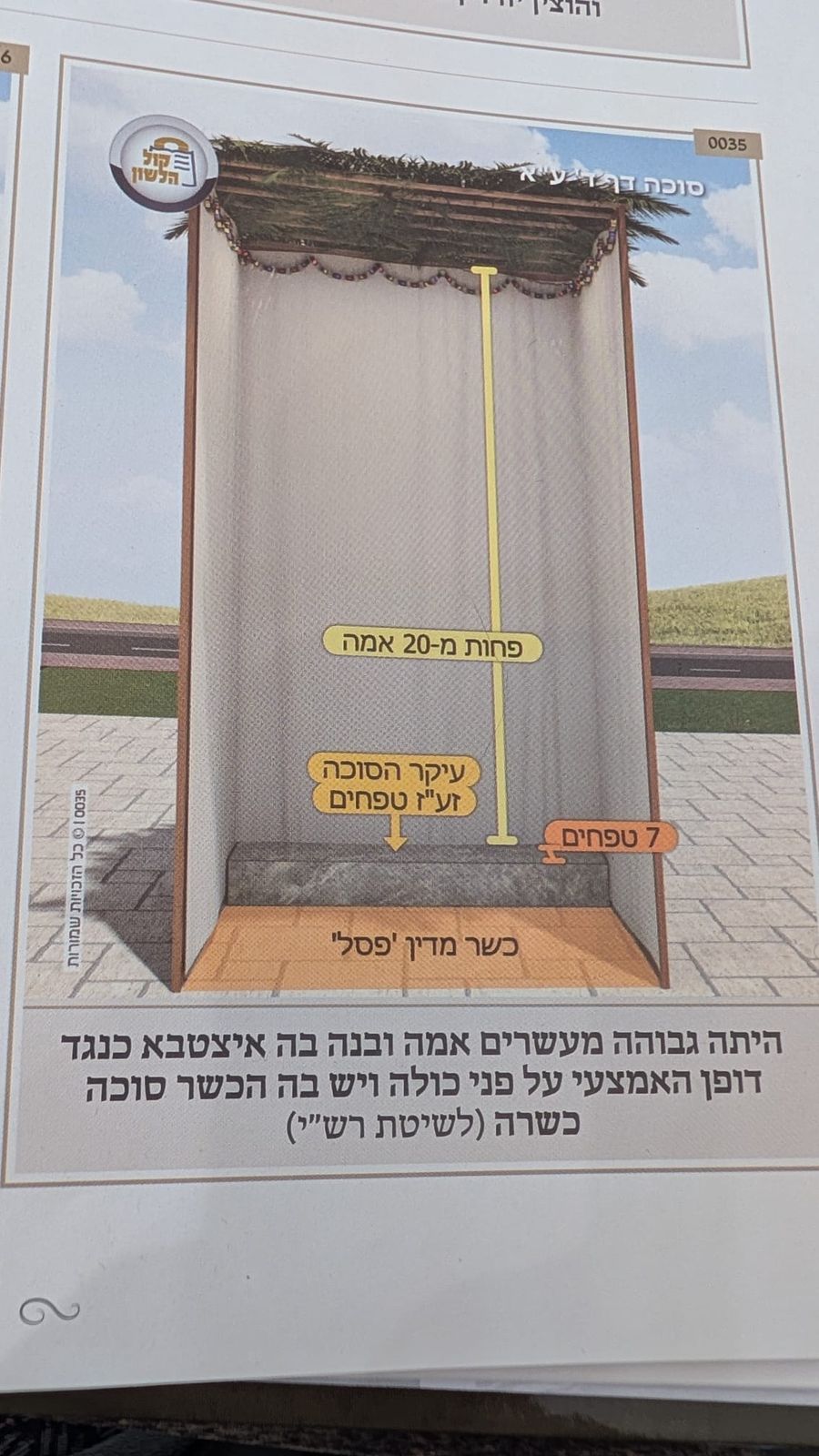
היתה גבוהה מעשרים אמה
Sukkah 4a · Wednesday, May 6, 2026
The sugya
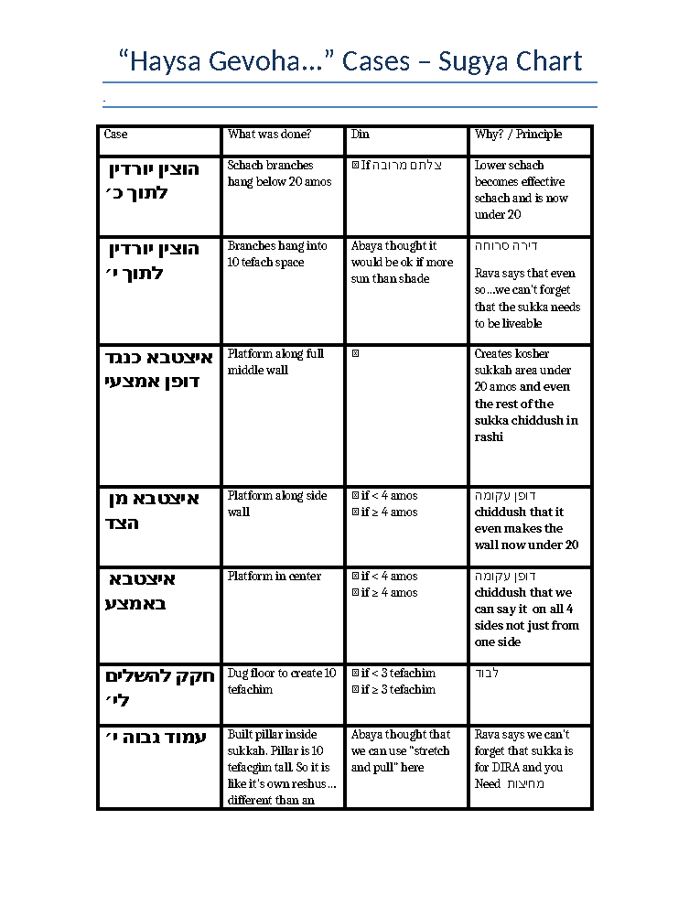
The shiur continues the cases of a sukkah taller than twenty amos. Two cases were done yesterday and two today. In the first case a platform (istava) is built along the middle wall. In the second it is built in the middle of the sukkah. In both, the Gemara asks 'mai ka mashma lan', since dofen akumah is already taught in the Mishnah of bayis shenifchas. It answers with a chiddush each time: a wall that is itself too tall can still be bent in, and dofen akumah works on every side, not just one.
Step by step (shakla v’tarya)
- GemaraLine 15: the sukkah was higher than twenty amos and he built an istava in it.
- RashiRashi: the istava is a real, permanent structure built of stones and cement. So none of the problems of the earlier Gemara (pillows, straw and the like) apply.
- GemaraThe istava is built alongside the middle wall ('k'neged' here means alongside) and covers its whole span. It has three walls and holds a hechsher sukkah, so the sukkah is kosher.
- The RebbiThe istava itself is not the chiddush, since it is a real floor. The chiddush, per Rashi, is that even the rest of the sukkah, which is higher than twenty amos, is kosher.
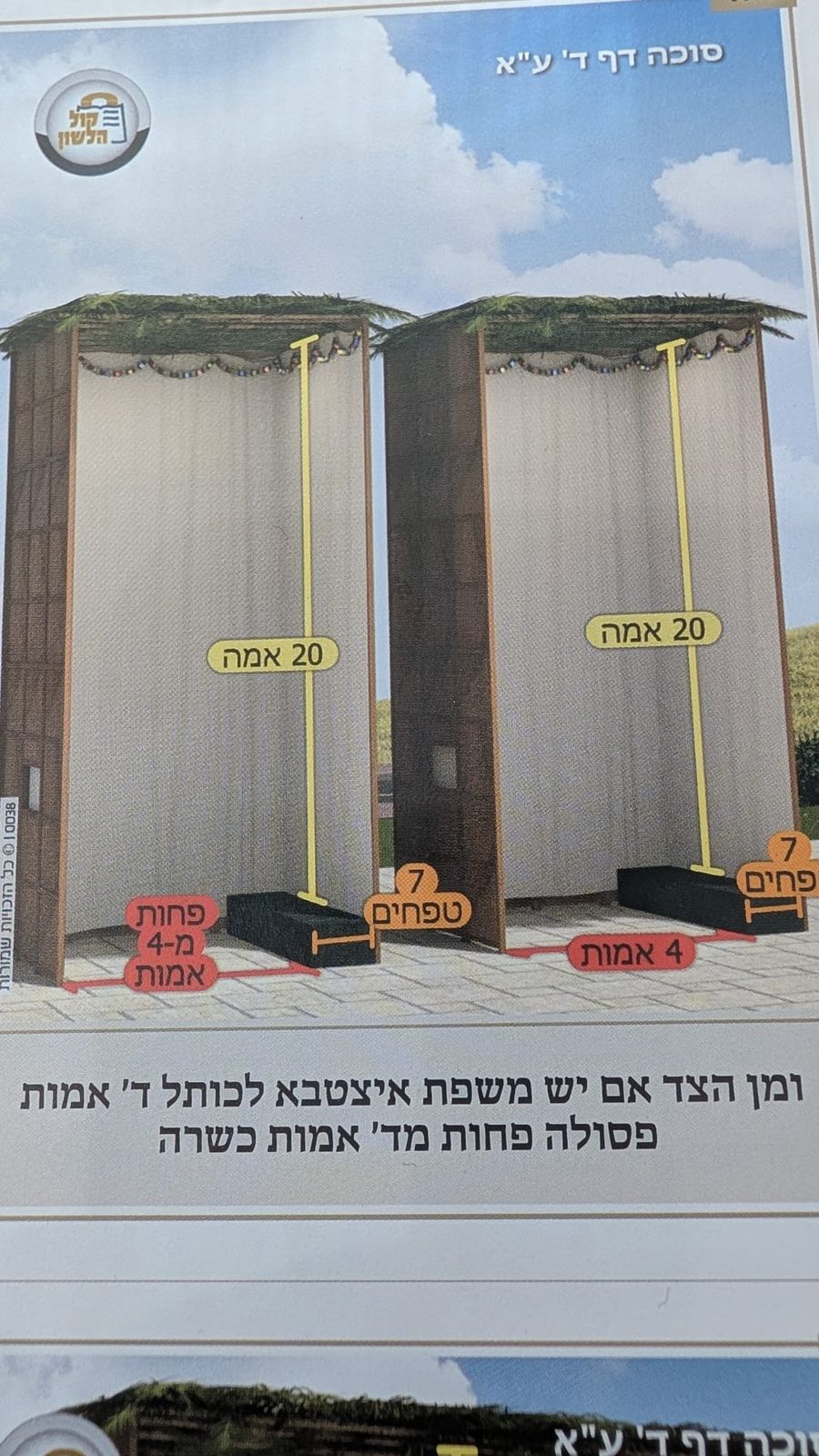
- GemaraAnd from the side: if there are four amos or more from the edge of the istava to the wall, it is pasul. Less than four amos, it is kosher.
- KashaMai ka mashma lan, that we say dofen akumah? Tanina: we already learned this in a Mishnah.
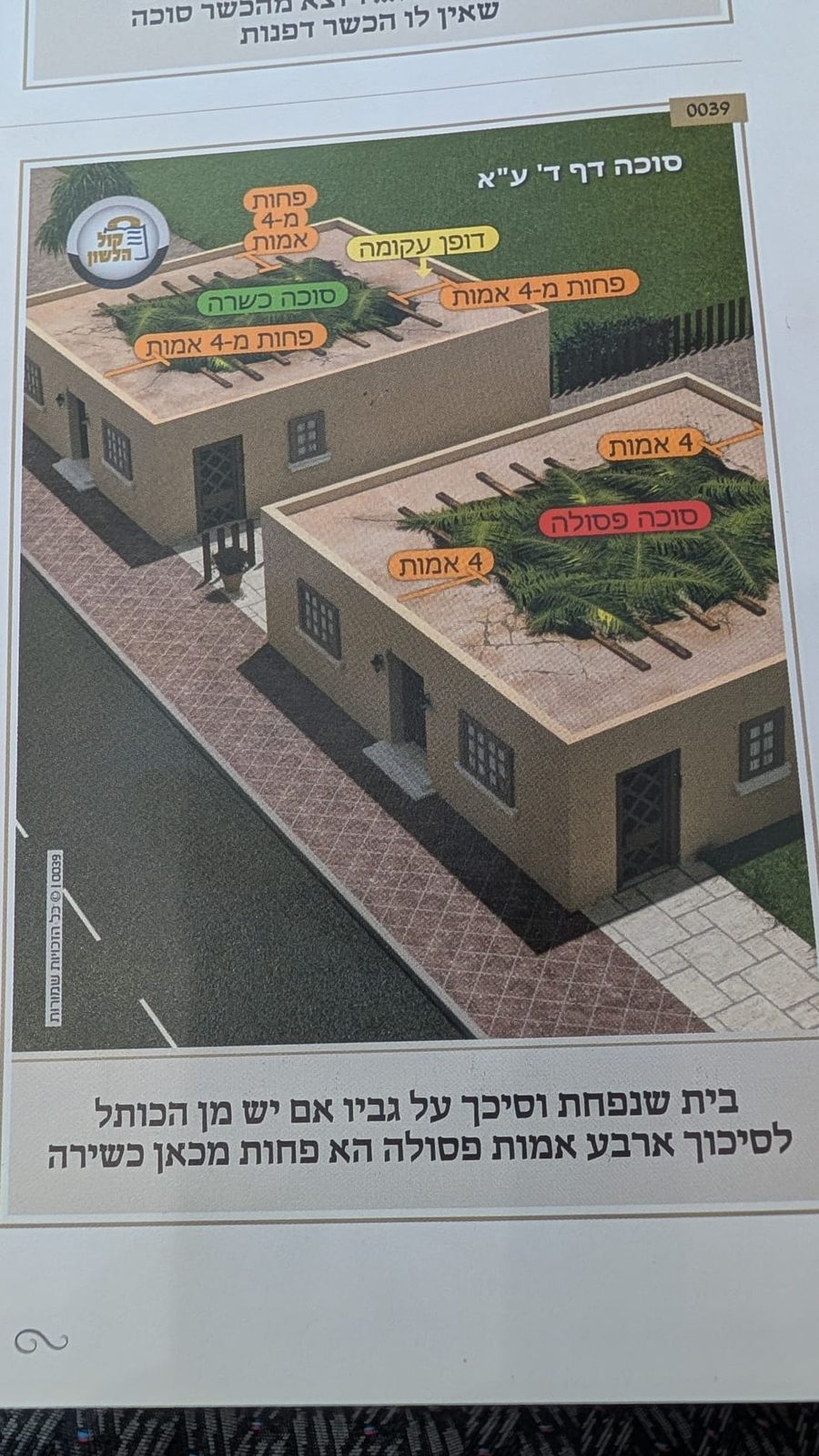
- MishnahThe Mishnah of bayis shenifchas: a house whose roof caved in, and he put schach on top. If there are four amos or more from the wall to the schach, it is pasul. Less than that, it is kosher.
- TeirutzLine 26, mahu d'teima: there, by the house, the wall is fit to be a wall, since it is under twenty amos and only needs to be bent in. Here the wall is not fit, because it is too high. Ka mashma lan that it still works.
- The RebbiThe difference between the two cases: in the first, according to Rashi, you can eat in the whole sukkah. In the dofen akumah case, nobody holds you can eat beyond the platform, because you cannot eat under a wall.
- The RebbiBayis shenifchas is the source of dofen akumah. It teaches that schach can begin away from the wall, but you cannot eat under the bent-in part because it is still a wall.
- In contrast, by certain cases of schach pasul or gaping holes in the schach, one could sometimes eat under it, depending on the size. This will come later.
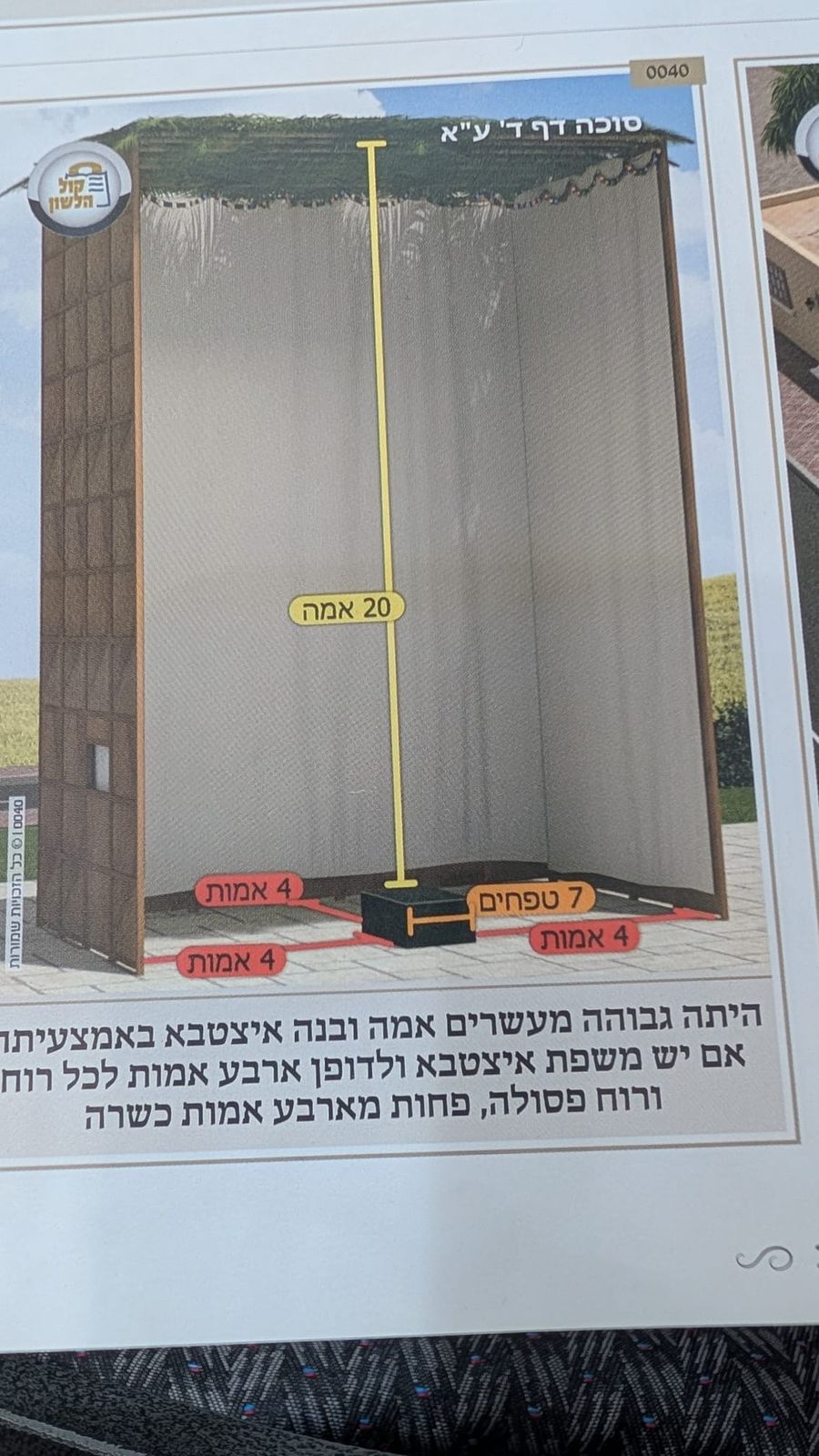
- GemaraLine 28: the sukkah was higher than twenty amos and he built the istava in the middle, not against any wall. If there are four amos from the edge of the istava to the wall on each side, it is pasul. Less than four amos, it is kosher.
- Each side means each of the walls. In the Gemara a sukkah is generally taken as three walls.
- KashaMai ka mashma lan, that we say dofen akumah? Hayinu hach: it is the same as the previous case.
- TeirutzMahu d'teima: dofen akumah is said from one direction, but not on every side. Ka mashma lan that we say it on every side too.
- The RebbiOne might have thought dofen akumah is a practical allowance, e.g. using the back wall of your house to save putting up a wall. The Gemara teaches it is a rule that applies wherever it can be used.
- A talmid (Aaron) asked: if bayis shenifchas is the source, we already know it works on all walls. The Rebbi said that is so unless the house fell in only on one side or in a corner.
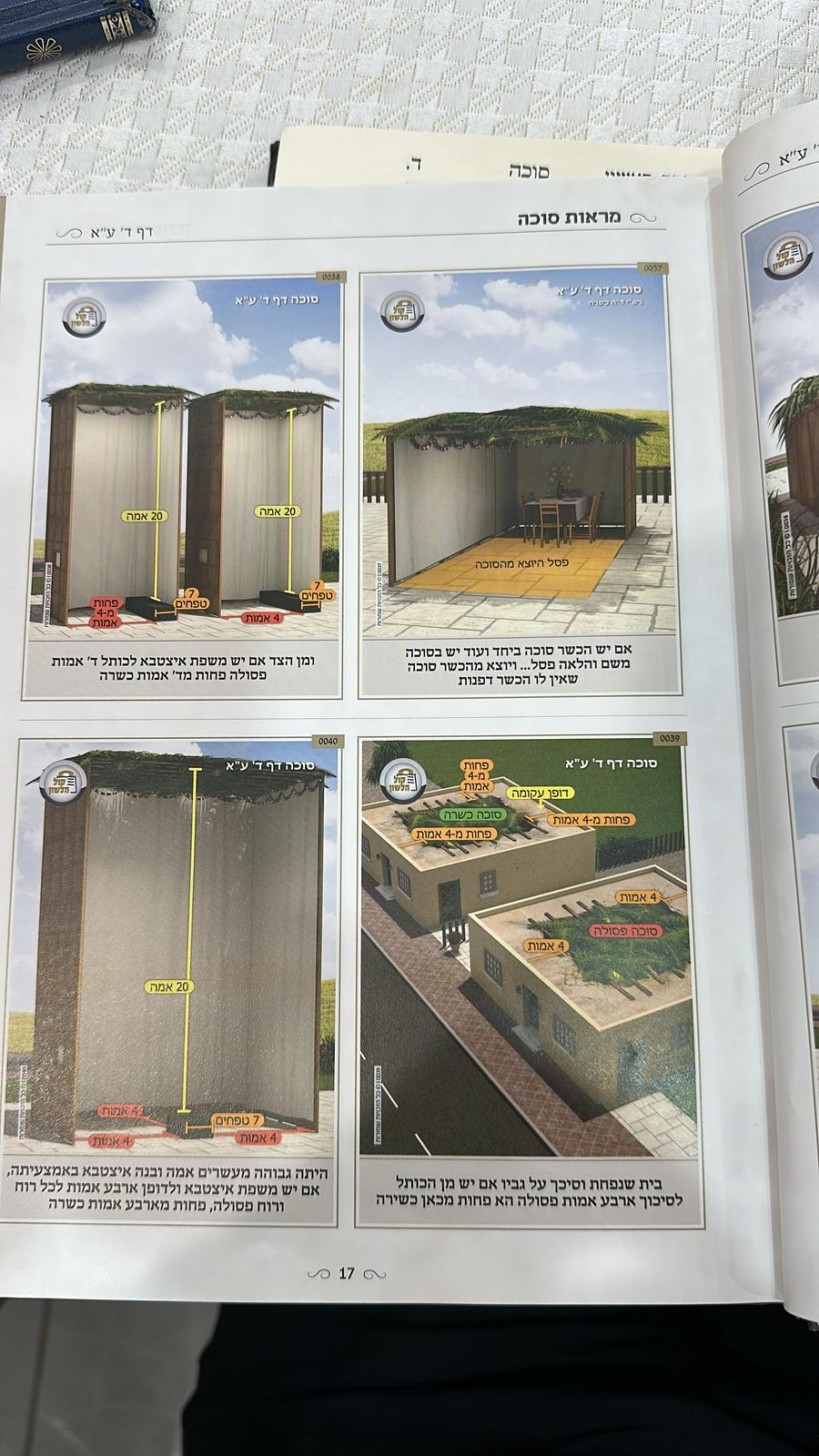
- The RebbiThe picture in the book shows a double chiddush here. Each wall is more than twenty amos, and dofen akumah is used on every side.
- ChazarahReview of the reading and punctuation of both pieces of Gemara.
Kashas
- On the istava along the middle wall: mai ka mashma lan, dofen akumah? We already learned it in the Mishnah of bayis shenifchas.
- On the istava in the middle: mai ka mashma lan, dofen akumah? Hayinu hach, it is the same as the previous case.
Teirutzim
- By bayis shenifchas the wall is fit to be a wall, since it is under twenty amos. Here it is too high. We might have thought it cannot be bent in, so the Gemara teaches that it can.
- We might have thought dofen akumah is said only from one direction. The Gemara teaches it is said on every side.
Rashi & Tosafos
- Rashi: The istava is a real, permanent platform made of stones and cement.
- Rashi: The chiddush of the first case is that even the rest of the sukkah, which is higher than twenty amos, is kosher, and one can eat in the whole sukkah.
Mareh mekomos
- Mishnah of bayis shenifchas, which appears later in the masechta. It is the source of dofen akumah: less than four amos from the wall to the schach is kosher.
The Rebbi’s chiddushim
- The istava is not the chiddush, since it is a real floor. The chiddush is the kashrus of the rest of the sukkah.
- The problem is that the wall is too high, not too far. The distance is what dofen akumah takes care of.
- You cannot eat under the bent-in portion, because it is still a wall, unlike some cases of schach pasul or holes.
- Dofen akumah is not merely a practical one-wall allowance, like using the back wall of your house. It applies wherever it can be used.
- The second case contains a double chiddush: walls over twenty amos, and bending on every side.
Unclear in recording
- The exact daf of the Mishnah of bayis shenifchas (said as 'zayim and aleph') is unclear in recording.
- The demonstration with hand gestures of how dofen akumah bends is unclear in recording.
- The talmidim's discussion about the first case (exhibit A) is unclear in recording.
- Part of the discussion about the height is unclear in recording.
Drafted from the recording of the shiur, for chazarah. Torah terms follow the Rebbi’s own words; anything that could not be made out is marked “unclear in recording”. Tap a time to hear that point. Corrections welcome.